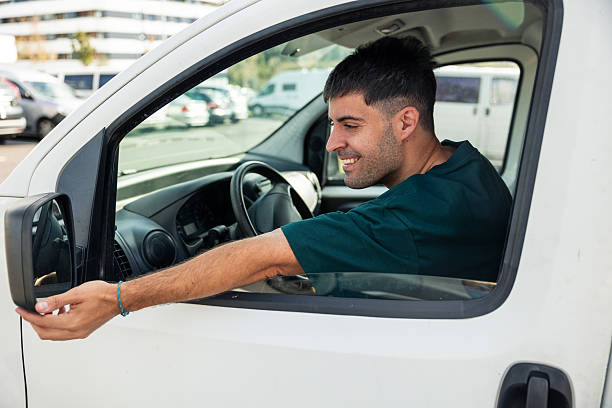
How To Use Mirrors On Vehicles
Mirrors are one of the most important tools for safe driving and riding.
A car has a number of mirrors and while it is obvious that they are meant to reflect the different activities happening around the car as you drive.
Proper mirror use allows you to see traffic behind and around you, anticipate hazards, and make safer driving decisions.
REAR-VIEW MIRROR (INTERIOR MIRROR)
Located inside the vehicle, above or on the dashboard.
Shows vehicles and obstacles behind you.
Helps judge distance and speed of approaching or following vehicles.
Made of flat glass for an accurate image of traffic behind.
Adjust only when the vehicle is stationary.
Should show the entire rear window.
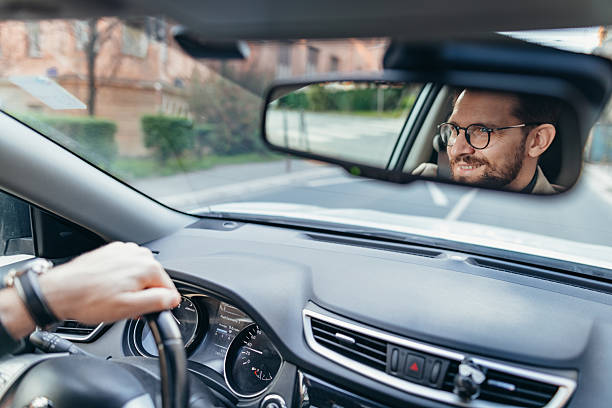
SIDE MIRRORS (EXTERIOR MIRRORS)
Located on the left and right sides of the vehicle.
Shows traffic on the sides and slightly behind.
Helps when changing lanes, overtaking, and reversing.
Made of curved (convex) glass for a wider view.
Vehicles appear smaller and further away than they really are, so judging distance is harder.
Adjust mirrors for the best rear view with minimal head movement.
The horizon should appear in the middle of the mirror.
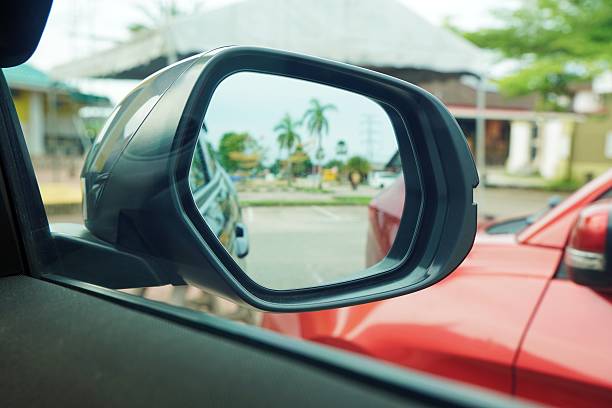
TYPES OF EXTERIOR MIRRORS
Nearside Mirror: Closest to the kerb (left side in most countries).
Offside Mirror: Closest to the inner lane marker (right side in most countries).
ADJUSTING MIRRORS CORRECTLY
Rear-view mirror: Position so you can see the entire rear window without moving your head.
Side mirrors: Angle to reduce blind spots, you should see a small part of your vehicle and the lane next to you.
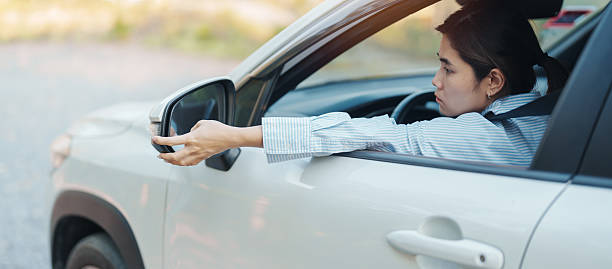
Motorcycle mirrors: Adjust so you can see both lanes behind you and detect vehicles approaching quickly.
Always check and adjust mirrors before starting your journey.
Mirrors should be checked regularly while driving to stay aware of your surroundings.
Key situations include:
Before Moving Off: Check mirrors to ensure the road behind is clear.
Before Changing Lanes
Check rear-view and side mirrors.
Perform a shoulder check to cover blind spots.
Before Overtaking
Use mirrors to check traffic behind.
Make sure it is safe to move into the next lane.
Before Turning: Check mirrors to ensure no vehicle is overtaking or beside you.
Before Slowing or Stopping: Ensure vehicles behind have enough distance to stop safely.
While Reversing: Use mirrors to see obstacles behind and avoid collisions.
MIRROR SAFETY TIPS
Adjust mirrors while stationary, not while driving.
Check mirrors every 5–8 seconds on highways and every 2–3 seconds in traffic.
Don’t rely solely on mirrors, perform shoulder checks for blind spots.
Keep mirrors clean and undamaged for maximum visibility.
Make small, smooth steering corrections based on mirror observations.
Keep checking mirrors while driving to anticipate hazards.
Watch for vehicles that may suddenly change lanes or brake.
Always include mirror checks in Mirror, Signal, Manoeuvre (MSM) routine when performing any maneuver.
Mirrors give you information about your surroundings, but your eyes and judgment must guide your actions.
Being alert and using mirrors correctly can prevent most accidents.
COMMON MISTAKES IN USING MIRRORS
Not checking mirrors before changing lanes or overtaking.
Failing to check for vehicles in blind spots.
Using mirrors that are dirty, broken, or misaligned.
Relying solely on mirrors without looking around.
Checking mirrors too infrequently and being unaware of fast-approaching traffic.
REVERSING
Use mirrors to see behind you.
Tilt your head to see past the headrest if needed.
Reverse slowly to maintain control.
Turn the wheel in the direction you want the rear of the car to go.
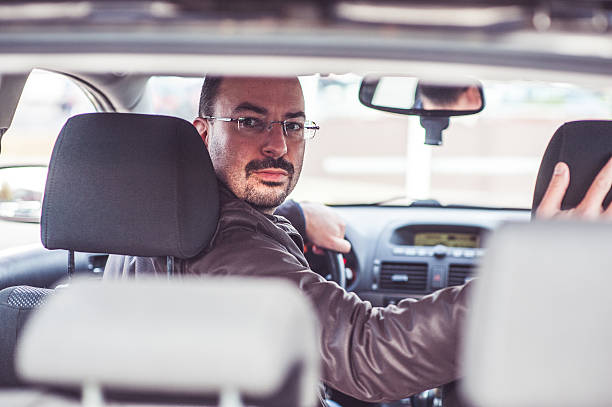
Wheel right → rear goes right.
Wheel left → rear goes left.
HANDLING POTENTIAL HAZARDS
If a vehicle is too close behind, gently slow down earlier to give them more reaction time.
If a vehicle is approaching fast from behind, you may need to slow down slightly later to give them enough stopping distance.
Motorcyclists and cyclists may try to move past slowing traffic, so always check all mirrors and your blind spots.
BLIND SPOT
The area around your vehicle that you cannot directly see while driving.
It varies depending on the type of vehicle and driver. Always check it before changing lanes or turning.
MIRRORS AND BLIND SPOTS
Mirrors help the driver see around the vehicle and reduce blind spots. Always check blind spots before changing direction, especially:
When motorcyclists or cyclists are nearby
When overtaking on a dual carriageway
When changing lanes
When there is a potential hazard