Dmv Permit Test 119

By Teacher David Global  •  Free

1. You should increase the distance between your vehicle and the vehicle ahead when you:
A. Are following a small passenger vehicle.
B. Are being tailgated by another driver.
C. Are driving more slowly than the posted speed limit.
2. Alcohol in any concentration is:
A. A stimulant.
B. A depressant.
C. Neither of the above.
3. Two sets of solid double yellow lines that are two or more feet apart:
A. May be crossed to enter or exit a private driveway.
B. May not be crossed for any reason.
C. Should be treated as a separate traffic lane.
4. You have allowed the wheels of your vehicle to run off the edge of the pavement. What should you do first?
A. Turn the front wheels slightly to the left to edge the car back onto the pavement.
B. Hold the steering wheel firmly, release the gas pedal, and gently apply the brakes.
C. Apply the brakes and turn the front wheels sharply to the left.
5. It is legal to make a left turn at a red traffic light after stopping only if:
A. You are traveling on a two-way street and turning onto a two-way street.
B. You are traveling on a one-way street and turning onto another one-way street.
C. You yield to all other traffic at the intersection.
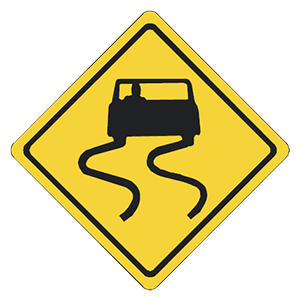
6. This sign means:
illinois-slippery pavement
A. Slippery when wet.
B. Stop sign ahead.
C. No U-turn.
7. In inclement weather, you should:
A. Steer off the road.
B. Drive in a low gear.
C. Steer and brake smoothly.
8. If you have a sudden tire blowout:
A. Use the brakes lightly.
B. Pump the brakes.
C. Apply the brakes firmly.
9. What is the benefit of a space cushion around your vehicle?
A. Other drivers can cut in front of you, improving the flow of traffic.
B. If another driver makes a mistake, you have time to react.
C. It inflates to protect you from injury in the case of a collision.
10. If you plan to pass another vehicle, you should:
A. Not assume the other driver will make space for you to return to your lane.
B. Assume the other driver will let you pass if you use your turn signal.
C. Assume the other driver will maintain a constant speed.
11. Alcohol is:
A. A stimulant.
B. An antihistamine.
C. A depressant.
12. You should always travel:
A. At the speed of vehicles surrounding you.
B. At the speed limit.
C. At a speed appropriate for road and weather conditions.
13. When driving at night, you should:
A. Always use your high beams.
B. Look directly at the headlights of an oncoming vehicle.
C. Increase your following distance.
14. When changing lanes:
A. Rely on the rearview mirror.
B. Look over your shoulder in the direction you plan to move.
C. Rely on the left side mirror.
15. If your wheels drop off the roadway or pavement edge, you should:
A. Wait until it is safe to do so, then gradually re-enter the roadway.
B. Turn back onto the roadway immediately.
C. Stop.
16. You have been involved in a minor traffic collision with a parked vehicle and you can't find the owner. You must:
A. Leave a note on the vehicle.
B. Report the collision without delay to the city police or, in unincorporated areas, to the California Highway Patrol.
C. Both of the above.
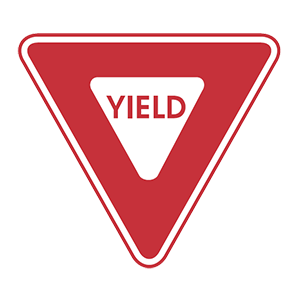
17. This sign is a:
nebraska-yield
A. Yield sign.
B. School crossing sign.
C. Stop sign.
18. If you approach a flashing red traffic light, you:
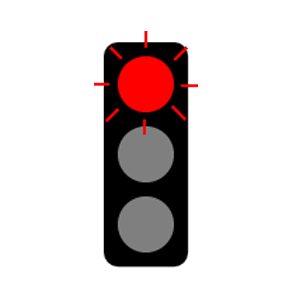
maryland-flashing red light
A. Are traveling in the wrong direction.
B. Must treat the intersection as if it is controlled by a stop sign.
C. May not proceed until it changes to green.
19. Which of these vehicles must always stop before crossing railroad tracks?
A. Tank trucks marked with hazardous materials placards.
B. Motor homes or pickup trucks towing a boat trailer.
C. Any vehicle with three or more axles and weighing more than 4,000 pounds.
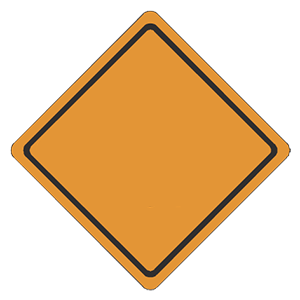
20. This sign means:
illinois-construction
A. Road construction/maintenance area.
B. Side road.
C. Railroad ahead.
21. Regulatory signs are:
A. Green.
B. Yellow.
C. White.
22. Your license can be suspended if you are under 21 and drive with a blood alcohol level of:
A. 0.15 percent or more.
B. 0.08 percent or more.
C. Any amount.
23. When merging onto the freeway, you should be driving:
A. At or near the speed of the freeway traffic.
B. At the legal speed limit.
C. More slowly than the freeway traffic.
24. If you are continually being passed on the right and the left while driving in the center lane of an expressway, you should:
A. Stay in the center lane.
B. Move to the lane on your right.
C. Move to the lane on your left.
25. What does a traffic signal with a yellow left arrow indicate?
A. Drivers should prepare to yield to oncoming traffic.
B. The protected left turn is about to end.
C. Both of the above.
26. At intersections, crosswalks, and railroad crossings, you should always:
A. Stop, listen, and proceed cautiously.
B. Look to the sides of your vehicle to see what is coming.
C. Slowly pass vehicles that seem to be stopped for no reason.
27. In traffic moving at 50 to 55 mph, you are least likely to have an accident if you:
A. Drive a few miles per hour faster than most other vehicles.
B. Stay within that speed range.
C. Drive a few miles per hour slower than most other vehicles.
28. A large truck is ahead of you and is turning right onto a street with two lanes in each direction. The truck:
A. May complete its turn in either of the two lanes.
B. May have to swing wide to complete the right turn.
C. Must stay in the right lane at all times while turning.
29. A flashing yellow traffic signal at an intersection means:
A. You should treat the signal like a stop sign.
B. Stop. Yield to all cross traffic before crossing in the intersection.
C. Slow down and be alert at the upcoming intersection.
30. Large trucks are likely to lose speed when:
A. Driving up long or steep hills.
B. Driving in long, gradual curves.
C. Driving down long, gradual hills.
31. A peace officer is signaling for you to drive to the edge of the roadway. You decide to ignore the officer's warning and flee the scene. You are guilty of a misdemeanor and can be punished by being:
A. Fined up to $1,000.
B. Jailed in the county jail for not more than one year.
C. Given a warning and a citation.
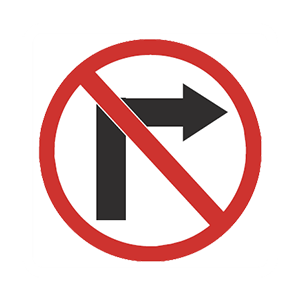
32. This sign means:
illinois-no right turn
A. No right turn.
B. Stop sign ahead.
C. Divided highway.
33. Roads are slippery after it first starts to rain. When the road is slippery, you should:
A. Avoid making turns and stops while driving at high speeds.
B. Test your tires' traction while going uphill.
C. Decrease the distance you look ahead of your vehicle.
34. The first thing that alcohol effects is:
A. Vision.
B. Judgment.
C. Balance.
35. When preparing to make a left turn from a two-way street, you should drive:
A. Near the right-hand side of the road.
B. Near the centerline.
C. On the left of the centerline.
36. If you miss your exit on the freeway, you should not:
A. Continue on the freeway and find an alternate route to your destination.
B. Proceed to the next exit, leave the freeway, and return to your proper exit.
C. Back up on the road or shoulder.