Dmv Permit Test 120

By Teacher David Global  •  Free

1. When used on roadways, bicycles are considered:
A. Hazards.
B. Vehicles.
C. Dangerous.
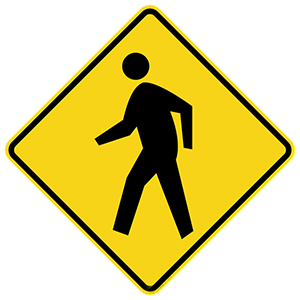
2. This sign means:
georgia-pedestrian crossing
A. Pedestrians walking along the road ahead.
B. Pedestrian crossing ahead.
C. Pedestrians must not cross here.
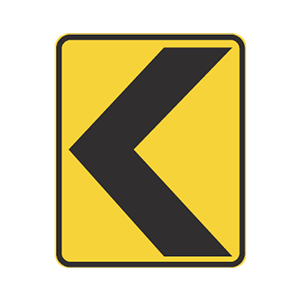
3. This sign means:
illinois-change in direction
A. Change in direction or narrowing of roadway.
B. No right turn.
C. No passing zone.
4. There are oncoming vehicles to your left and a row of parked vehicles to your right. You should steer:
A. Closer to the oncoming vehicles than the parked vehicles.
B. Closer to the parked vehicles than the oncoming vehicles.
C. A middle course between the oncoming and parked vehicles.
5. Which lane must you be in before making a left turn from a one-way street?
A. The lane nearest the left curb.
B. The lane nearest the center of the street.
C. The lane nearest the right curb.
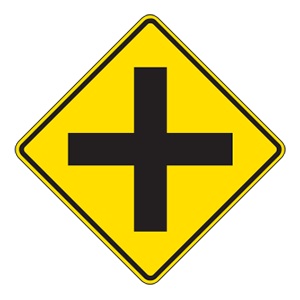
6. This sign shows one type of:
indiana-intersection ahead
A. Intersection.
B. Road curve.
C. Right turn.
7. Never make a U-turn:
A. in residential districts.
B. at or on a railroad crossing.
C. where there isn't a "No U-turn" sign posted.
8. If you are convicted of driving with an excessive blood alcohol concentration (BAC), you may be sentenced to serve:
A. Up to six months in jail.
B. Up to 12 months in jail.
C. No jail time, but you must pay a fine of $500.
9. Which of the following is most likely to be slippery in cold weather after snow or rain?
A. A hilly, open road
B. A residential road
C. A road in a shaded area
10. You are driving on a one-way street. You may only turn left onto another one-way street if:
A. You increase your speed before the turn.
B. Traffic on the street moves to the right.
C. Traffic on the street moves to the left.
11. You drive defensively when you:
A. Put one car length between you and the car ahead.
B. Look only at the car in front of you while driving.
C. Keep your eyes moving to look for possible hazards.
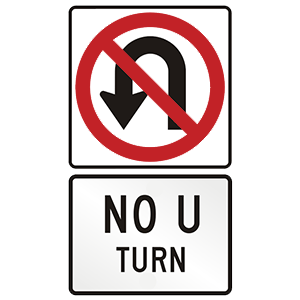
12. This sign means:
georgia-no u turn
A. No U-turn.
B. No turning.
C. No left turn.
13. It is illegal to park your vehicle:
A. In an unmarked crosswalk.
B. Within three feet of a private driveway.
C. In a bicycle lane.
14. When should you yield your legal right-of-way?
A. Often, even at controlled intersections.
B. Whenever it helps prevent collisions.
C. Never. It confuses other drivers.
15. Having a driver license is a:
A. Right, not a privilege.
B. Privilege, not a right.
C. Requirement.
16. You want to turn left at an upcoming corner. Yield the right-of-way to:
A. Oncoming vehicles also turning left.
B. All approaching vehicles.
C. Pedestrians on the sidewalk waiting for a "Walk" signal.
17. You want to park uphill on a two-way road and there is no curb. Which direction do you turn your front wheels?
A. Straight ahead
B. Right, toward the side of the road
C. Left, toward the center of the road
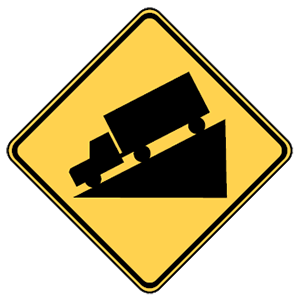
18. This road sign means:
maryland-steep hill
A. Intersection ahead.
B. Merging traffic.
C. Steep hill ahead.
19. There are two traffic lanes moving in your direction. You are driving in the left lane and many vehicles are passing you on the right. If the driver behind you wishes to drive faster, you should:
A. Stay in your lane so you don't impede the flow of traffic.
B. Drive onto the left shoulder to let the other vehicles pass.
C. Move into the right lane when it is safe.
20. When you see a flashing yellow light at an intersection, you should:
A. Yield to all traffic before crossing the intersection.
B. Stop, then enter the intersection when it is safe to do so.
C. Slow down and cross the intersection carefully.
21. When driving on an interstate, to avoid traffic merging from on-ramps to your right, the best thing to do is to:
A. Change lanes to the left.
B. Slow down.
C. Maintain your speed and position.
22. When driving on the highway, consistently looking far ahead of your vehicle:
A. Helps you keep up with traffic.
B. Reduces the need for last-minute braking or turning.
C. Allows you to spot upcoming police officers.
23. While in a motor vehicle on a highway, it is:
A. Illegal to either drink from or possess open containers of alcohol.
B. Legal to drink alcohol if you're not driving.
C. Legal to drink alcohol if you're driving but not drunk.
24. If it feels like your tires have lost contact with the surface of the road, you should:
A. Slow down by shifting into a lower gear.
B. Ease your foot off the gas pedal.
C. Slow down by pumping the brakes quickly and firmly.
25. Yellow lines separate:
A. Traffic lanes on one-way streets.
B. Traffic moving in opposite directions on two-way roads.
C. All carpool lanes from regular traffic lanes.
26. Excessive speed:
A. Does not increase the chance of a crash.
B. Increases your ability to react to a hazard.
C. Often leads to high-risk decision-making.
27. This road sign means:
georgia-pedestrian crossing
A. School crossing.
B. Pedestrian crossing.
C. Jogging trail.
28. When driving at night, you should:
A. Always use your high beams.
B. Look directly at the headlights of an oncoming vehicle.
C. Increase your following distance.
29. Give the right-of-way to any pedestrian who is:
A. In a marked crosswalk.
B. In any crosswalk or intersection.
C. Crossing any street.
30. You see a flashing yellow traffic signal at an upcoming intersection. The flashing yellow light means:
A. Stop before entering the intersection, as long as you can do so safely.
B. Stop. Yield to all cross traffic before crossing the intersection.
C. Slow down and cross the intersection carefully.
31. When driving in fog, you should:
A. Slow down and use your low beam headlights.
B. Slow down and use your high beam headlights.
C. Turn your lights on and off to warn other drivers.
32. Highway pavement will be particularly treacherous and most slippery:
A. If it has been raining several hours.
B. If it has just begun to rain.
C. If it has been raining for one to two hours.
33. A U-turn is not permitted:
A. In a parking lot.
B. On or near any curve or hill.
C. On a straight roadway with a clear view for 500 feet in both directions.
34. When entering the interstate on a short entrance ramp where there is no acceleration lane, you should:
A. Immediately enter the far-right traffic lane on the interstate and speed up to match the flow of traffic.
B. Use the shoulder of the main road to get up to the speed of traffic.
C. Speed up and enter the interstate only after you have identified a gap in traffic.
35. The best way to avoid a dangerous situation while driving is to:
A. Know what is happening around your vehicle.
B. Turn off the radio.
C. Always keep your eyes focused ahead of your car.
36. When approaching an intersection with a flashing red light, you must:
A. Come to a complete stop, yield to oncoming traffic and pedestrians, then proceed.
B. Reduce your speed and proceed with caution.
C. Come to a complete stop and remain stopped as long as the light is red.