Dmv Permit Test 114

By Teacher David Global  •  Free

1. Large trucks turning onto a street with two lanes in each direction:
A. May complete the turn in either of the two lanes.
B. Often have to use the left lane to complete the turn.
C. Must stay in the right lane at all times while turning.
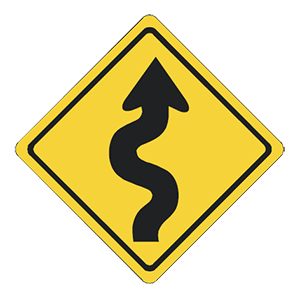
2. This sign means:
illinois-winding road ahead
A. Winding road ahead.
B. Do not enter.
C. Pedestrian crossing.
3. The speed limit at an uncontrolled railroad crossing is:
A. 25 mph.
B. 15 mph.
C. 20 mph.
4. You reach an intersection with stop signs on all four corners at the same time as the driver on your left. Who has the right-of-way?
A. The driver on your left has the right-of-way.
B. You have the right-of-way.
C. Whoever is signaling to make a turn has the right-of-way.
5. When parking your vehicle parallel to the curb on a level street:
A. Your front wheels must be turned toward the street.
B. Your wheels must be within 18 inches of the curb.
C. One of your rear wheels must touch the curb.
6. When turning left from a two-way street onto a one-way street, you should:
A. Turn into any lane.
B. Turn into first lane.
C. Turn into second lane.
7. If you see orange construction signs and cones on a freeway, you must:
A. Slow down because the lane ends ahead.
B. Be prepared for workers and equipment ahead.
C. Change lanes and maintain your current speed.
8. This sign is used to warn drivers about:
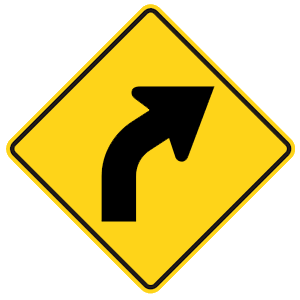
georgia-curve right
A. Upcoming intersections.
B. Road construction.
C. Road curves ahead.
9. Blocking an intersection during "rush hour" traffic is not permitted:
A. Unless you entered the intersection on a green light.
B. Under any circumstances, even if your light is green.
C. Unless you have the right-of-way or a green light.
10. You should use your horn when:
A. Another vehicle is in your way.
B. It may help prevent a collision.
C. Another driver makes a mistake.
11. You see pedestrians near the road. You should:
A. Sound your horn and maintain your speed.
B. Speed up to clear the area quickly.
C. Slow down and pass with caution.
12. When passing another vehicle:
A. Pass the vehicle as slowly as possible.
B. Drive at the same speed as the vehicle you are passing.
C. Pass the vehicle as safely and as quickly as possible.
13. When you are behind a motorcycle, you should:
A. Be ready to use your horn.
B. Drive more slowly.
C. Allow a larger following distance.
14. When double solid yellow lines separate lanes of traffic:
A. Passing is permitted from the left.
B. Passing is permitted from the right.
C. Passing is not permitted from either direction.
15. If you see a pedestrian using a guide dog or carrying a white cane:
A. The pedestrian must yield the right-of-way.
B. You must yield the right-of-way.
C. Honk your horn to let them know you are there.
16. If a traffic signal light is not working, you must:
A. Stop, then proceed when safe.
B. Stop before entering the intersection and let all other traffic go first.
C. Slow down or stop, only if necessary.
17. If a truck or bus is making a right turn where you also need to make a right turn, you should:
A. Quickly turn before the truck or bus is able to.
B. Wait until the truck or bus turns before you turn.
C. Squeeze between the truck or bus and the curb.
18. Safely backing your vehicle requires all of the following, except:
A. Looking over your right shoulder as you back up.
B. Checking your vehicle's surroundings.
C. Tapping your horn before you back up.
19. If bad weather makes it difficult for you to see clearly, you should:
A. Speed up to get off the road quickly.
B. Drive in the lane closest to oncoming traffic.
C. Increase your following distance.
20. When driving in fog, you should:
A. Use your high beam headlights.
B. Use your parking lights.
C. Use your low beam headlights.
21. Animals may be transported in the back of a pickup truck only if:
A. The sides of the truck bed are at least 18 inches high.
B. They are properly secured.
C. The tailgate of the truck is closed.
22. Which of the following roadways freeze first when wet?
A. Bridges and overpasses
B. Intersections
C. Tunnels
23. To turn left from a multilane one-way street onto a one-way street, you should start your turn from:
A. Any lane (as long as it is safe).
B. The lane closest to the left curb.
C. The lane in the center of the road.
24. When driving under snowy or icy conditions:
A. It is safe to use your cruise control.
B. Make speed and directional changes more gradually than you would otherwise.
C. Drive as you would under normal conditions.
25. When passing another vehicle, it is safe to return to your lane if you:
A. Cannot see the vehicle directly to your right.
B. See the vehicle’s headlights in your rearview mirror.
C. Have passed the other vehicle’s front bumper.
26. If a child is riding a bicycle near your vehicle:
A. Beep your horn.
B. Expect the child to be in total control of the bicycle.
C. Expect the unexpected.
27. If a motorist sees pedestrians in an upcoming crosswalk, what should the motorist do?
A. Continue ahead. The motorist has the right-of-way.
B. Wait for the pedestrians to cross the street.
C. Pull to the right and go around the pedestrians.
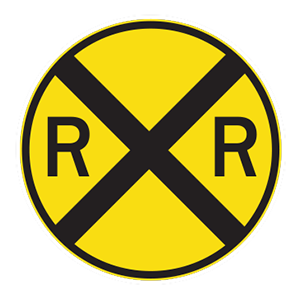
28. This sign means:
tennessee-railroad crossing
A. Stop sign ahead.
B. Railroad crossing ahead.
C. Construction ahead.
29. You want to park downhill on a two-way road and there is no curb. Which way do you turn your front wheels?
A. Straight ahead
B. Right, toward the side of the road
C. Left, toward the center of the road
30. Slowing down just to look at collisions or anything else out-of-the-ordinary:
A. Causes traffic congestion.
B. Prevents rear-end collisions.
C. Improves traffic flow by preventing collisions.
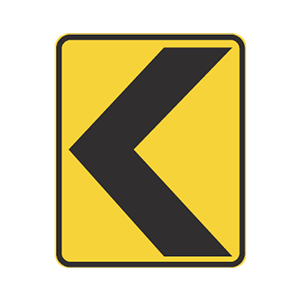
31. This sign means:
illinois-change in direction
A. Change in direction or narrowing of roadway.
B. No right turn.
C. No passing zone.
32. "No zones" are areas around trucks where cars:
A. Disappear into blind spots or are so close that they restrict the truck driver's ability to stop and maneuver safely.
B. Have sufficient space to travel behind the truck.
C. Have several car lengths between their vehicle and the truck.
33. On a freeway, you should look farther ahead than you would on a city street:
A. In order to see potential hazards early.
B. Because it takes a quarter of a mile to stop your vehicle completely.
C. Because it helps you keep up with traffic.
34. A distraction when driving is:
A. Anything that causes evasive action while driving.
B. Anything that takes your attention away from driving.
C. Anything that causes you to pay more attention to driving.
35. Abandoning an animal on the highway may result in:
A. Jail time.
B. A point against your license.
C. No legal consequences.
36. A driver should:
A. Assume all drivers automatically obey the right-of-way rules.
B. Assume most drivers obey the right-of-way rules.
C. Always be prepared to yield the right-of-way.