Dmv Permit Test 112

By Teacher David Global  •  Free

1. You are merging onto an interstate highway. You should:
A. Select a safe gap and merge into the lane of traffic.
B. Merge across two lanes at once.
C. Always stop before entering the highway.
2. When double solid yellow lines separate lanes of traffic:
A. Passing is permitted from the left.
B. Passing is permitted from the right.
C. Passing is not permitted from either direction.
3. This sign means:
illinois-railroad warning
A. Railroad ahead.
B. No passing zone.
C. School zone.
4. You should use your horn when:
A. Another vehicle is in your way.
B. It may help prevent a collision.
C. Another driver makes a mistake.
5. You have been involved in a minor traffic collision with a parked vehicle and you can't find the owner. You must:
A. Leave a note on the vehicle.
B. Report the collision without delay to the city police or, in unincorporated areas, to the California Highway Patrol.
C. Both of the above.
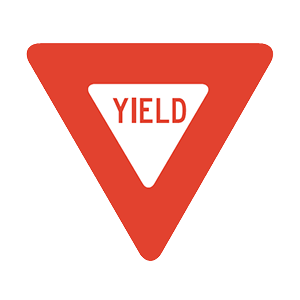
6. This sign means:
iowa-yield
A. Cars on the right move first.
B. You have the right-of-way.
C. Let cross traffic pass before proceeding.
7. When driving in fog, you should:
A. Use your high beam headlights.
B. Use your parking lights.
C. Use your low beam headlights.
8. To know where traffic is behind you:
A. Frequently check your rearview mirror.
B. Turn and look out your back window.
C. Keep other vehicles out of your blind spots.
9. When parking uphill on a two-way street with no curb, your front wheels should be:
A. Turned to the left (toward the street).
B. Turned to the right (away from the street).
C. Parallel with the pavement.
10. To avoid traction loss on wet roads, you should:
A. Make abrupt turns.
B. Apply the brakes firmly.
C. Slow down.
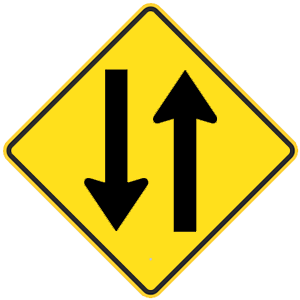
11. This sign means:
california-two way traffic
A. Four-lane traffic ahead.
B. Divided highway ahead.
C. Two-way traffic ahead.
12. If a child is riding a bicycle near your vehicle:
A. Beep your horn.
B. Expect the child to be in total control of the bicycle.
C. Expect the unexpected.
13. Various traffic control devices in construction and maintenance work areas are the color:
A. Red.
B. Orange.
C. Yellow.
14. Which of these statements is true about roadwork zones?
A. Fines are the same for violations committed in work zones as they are under normal traffic conditions.
B. You must "Slow for the Cone Zone.
C. Slow down only if you think workers are present.
15. A pedestrian starts to cross the street after the "Don't Walk" signal begins to flash. The pedestrian is in the middle of the street when your signal light changes to green. You should:
A. Proceed if you have the right-of-way.
B. Proceed if the pedestrian is not in your lane.
C. Wait until the pedestrian crosses the street before proceeding.
16. If you approach a stopped school bus that has its lights flashing and signal arm extended, you should:
A. Stop.
B. Proceed at 15 mph if no children are present.
C. Proceed at normal speed, but watch for children.
17. If weather or light conditions require you to have your lights on while driving:
A. Use your parking lights.
B. Use your high beams.
C. Use your low beams.
18. Slowing down just to look at collisions or anything else out-of-the-ordinary:
A. Causes traffic congestion.
B. Prevents rear-end collisions.
C. Improves traffic flow by preventing collisions.
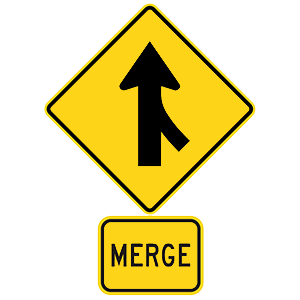
19. What does this road sign mean?
georgia-merge
A. Be ready to merge with traffic entering your lane.
B. Always stop.
C. Divided highway ahead.
20. Hydroplaning occurs when tires ride on a thin film of water instead of on the surface of the road. To prevent hydroplaning in rainy weather, you should:
A. Put on your cruise control to maintain a constant speed.
B. Decrease your speed.
C. Move to the shoulder of the road as soon as it starts to rain.
21. After passing a vehicle, it is safe to return to your driving lane when:
A. The driver you passed signals for you to return to your lane.
B. You signal your intention for three seconds.
C. You see the headlights of the passed vehicle in your rearview mirror.
22. When you want to change lanes, you should never:
A. Move into another lane while within an intersection.
B. Check your blind spot by looking over your shoulder.
C. Check for other drivers moving into the same lane.
23. Only ____ can reduce blood alcohol content (BAC) and alcohol's effects on the body.
A. Drinking caffeine
B. Eating foods high in fat
C. Time
24. Placard abuse will result in:
A. Placard revocation only.
B. Only a fine.
C. Placard revocation, a fine, and/or jail time.
25. You should not start across an intersection if you know you will block the intersection when the light turns red:
A. Under any circumstances.
B. Unless you entered the intersection on a yellow light.
C. Unless you entered the intersection on a green light.
26. When parking your vehicle on any hill:
A. One of your rear wheels should touch the curb.
B. Use your parking brake and leave the vehicle in "park."
C. Your front wheels should be parallel to the road, if there is no curb.
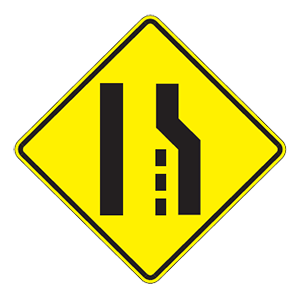
27. This sign means:
nebraska-lane ends
A. Merge right.
B. Divided highway begins.
C. Lane ends.
28. When a bicyclist is making a left turn:
A. They may use the left lane.
B. They may cut through all lanes.
C. They may wait on the side of the road.
29. When parking next to a curb, you should use your turn signals:
A. Only when pulling away from the curb.
B. When pulling next to, but not away from, the curb.
C. When pulling next to or away from the curb.
30. You want to pass a bicyclist in a narrow traffic lane when an oncoming vehicle is approaching. You should:
A. Honk your horn then pass the bicyclist.
B. Slow down and let the vehicle pass you before you pass the bicyclist.
C. Wait until the bicyclist rides off the roadway.
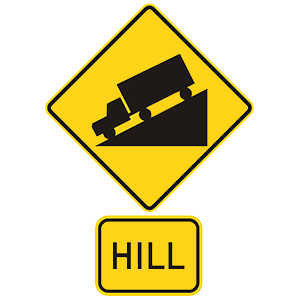
31. This sign means:
georgia-hill
A. Trucks under 18,000 pounds are allowed.
B. Hill ahead.
C. Truck stop ahead.
32. On a freeway, you should look farther ahead than you would on a city street:
A. In order to see potential hazards early.
B. Because it takes a quarter of a mile to stop your vehicle completely.
C. Because it helps you keep up with traffic.
33. Adjust your rearview and side mirrors:
A. Before you start driving.
B. Whenever you need to use them.
C. Before you get into the car.
34. Water on the road can cause a vehicle to hydroplane. Your car may hydroplane at speeds as low as:
A. 45 miles per hour.
B. 35 miles per hour.
C. 40 miles per hour.
35. You are on the freeway and traffic is merging into your lane. You should:
A. Make room for the merging traffic, if possible.
B. Assert your right-of-way by driving faster.
C. Always maintain your position.
36. To improve visibility lowered by rain or fog, drivers should use their:
A. Low beam headlights.
B. High beam headlights.
C. Parking lights.