Dmv Permit Test 111

By Teacher David Global  •  Free

1. What is the difference between traffic lights with red arrows and those with solid red lights?
A. Red arrows are only used to stop traffic which is turning.
B. Red arrows are only used for protected turn lanes.
C. You cannot turn on a red arrow, even if you stop first.
2. A safety zone is a specially marked area for passengers to get on or off of buses or trolleys. You may not drive through a safety zone:
A. When a bus or trolley is present.
B. When a bus or trolley is unloading passengers.
C. At any time for any reason.
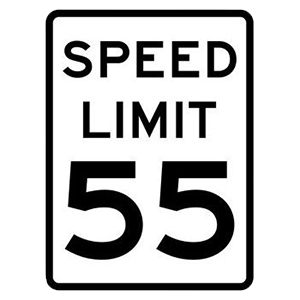
3. This road sign means:
arkansas-speed limit 55
A. You must travel through the intersection at the posted speed limit.
B. The maximum speed limit under ideal conditions is 55 mph.
C. You must not travel below the speed indicated.
4. While driving on a roadway with a single broken white centerline:
A. You must stay within your lane.
B. You may cross the centerline to change lanes.
C. You may change lanes only from the left lane.
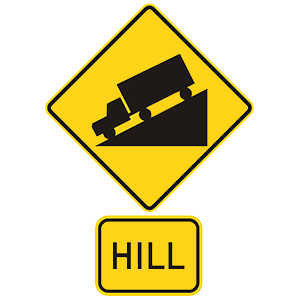
5. This sign indicates that:
georgia-hill
A. There is a steep hill ahead.
B. No trucks are allowed on the upcoming hill.
C. A logging road is ahead.
6. Which of the following are factors commonly contributing to traffic crashes?
A. Exceeding the posted speed limit and driving too fast for conditions or circumstances.
B. Getting adequate rest and staying alert.
C. Scanning the environment and staying focused on the driving task.
7. On a multilane road, a dashed yellow line next to a solid yellow line means:
A. Passing is prohibited from both directions.
B. Passing is permitted from both directions.
C. Passing is permitted only from the direction next to the dashed line.
8. To enter a gap in highway traffic:
A. Watch only the vehicles behind the gap.
B. Check behind you, then watch the vehicle ahead.
C. Speed up and let the other vehicles make way.
9. For which of the following traffic lights must you always stop your vehicle?
A. Solid red lights, flashing red lights, and blacked out traffic signals.
B. Solid red lights, red arrows, and flashing yellow lights.
C. Solid red lights, flashing red lights, and yellow lights.
10. A driver should:
A. Assume all drivers automatically obey the right-of-way rules.
B. Assume most drivers obey the right-of-way rules.
C. Always be prepared to yield the right-of-way.
11. When passing a row of parked vehicles, you should:
A. Be prepared for a person or vehicle to unexpectedly enter your lane.
B. Expect all other drivers and pedestrians to respect your right-of-way.
C. Drive closely to the parked vehicles to allow more room for moving traffic.
12. It is illegal to drive in a bicycle lane unless you are:
A. in need of the space and the bike lane is empty.
B. Passing another vehicle
C. Parking (where permitted), entering or leaving the road, turning (within 200 feet of an intersection).
13. When approaching a person who is crossing the street while using a white cane or guide dog, you should:
A. Stop until the person is well away from your path of travel.
B. Honk your horn as you proceed past them.
C. Carefully drive around them.
14. If your vehicle has a two-part safety belt system, you should:
A. Use only the lap belt.
B. Use both the lap and shoulder belts.
C. Use only the shoulder belt.
15. Remove all snow, frost, and ice from:
A. Just the windshield.
B. All windows.
C. Just the windshield and passenger window.
16. You can drive off the road to pass another vehicle:
A. If the vehicle ahead is turning left.
B. If there are two or more lanes traveling in your direction.
C. Under no circumstances.
17. Increase your following distance when driving behind a large vehicle:
A. To better see around the sides of the vehicle.
B. Because other drivers tend to pull behind large vehicles before trying to pass them.
C. Because following too closely will get you caught in the vehicle's slipstream.
18. When changing lanes on a freeway, you should:
A. Signal for at least five seconds.
B. Slow down before you start to change lanes.
C. Assume there is enough space in the next lane for your vehicle, if you signal first.
19. You are driving on the freeway. The vehicle in front of you is a large truck. You should drive:
A. Closely behind the truck in bad weather because the driver can see farther ahead than you can.
B. Farther behind the truck than you would when following a passenger vehicle.
C. No more than one car length behind the truck so the driver can see you.
20. Unless otherwise posted, the speed limit in a residential area is:
A. 20 mph.
B. 25 mph.
C. 30 mph.
21. If you hit an animal with your vehicle while driving on a California highway, you should:
A. Move the injured animal off the road.
B. Call the humane society.
C. Continue driving.
22. Drivers turning left must yield to:
A. Overtaking cars.
B. Oncoming cars.
C. No one.
23. When making a right turn from a highway with two lanes traveling in your direction, you may turn from:
A. The lane closest to the center of the road.
B. The lane nearest the curb or edge of the roadway.
C. Either lane, depending on oncoming traffic.
24. Blocking an intersection during "rush hour" traffic is not permitted:
A. Unless you entered the intersection on a green light.
B. Under any circumstances, even if your light is green.
C. Unless you have the right-of-way or a green light.
25. When you see this sign, you should stop and:
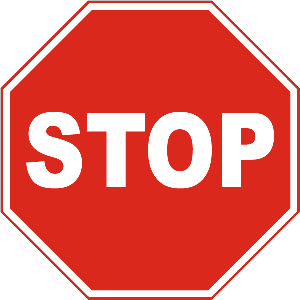
california-stop
A. Check for vehicles only in the direction that you plan on going, then proceed.
B. Let all vehicles that arrive before or after you go first.
C. Check for traffic in all directions before proceeding.
26. You may legally block an intersection:
A. If you entered the intersection on the green light.
B. During rush hour traffic.
C. Under no circumstances.
27. You want to park downhill on a two-way road and there is no curb. Which way do you turn your front wheels?
A. Straight ahead
B. Right, toward the side of the road
C. Left, toward the center of the road
28. With a Class C driver license, a person may drive:
A. A three-axle vehicle if the Gross Vehicle Weight is less than 6,000 pounds.
B. Any three-axle vehicle, regardless of the weight.
C. A vehicle pulling two trailers.
29. Safely backing your vehicle requires all of the following, except:
A. Looking over your right shoulder as you back up.
B. Checking your vehicle's surroundings.
C. Tapping your horn before you back up.
30. You are driving on a freeway with a posted speed limit of 65 mph. Traffic is traveling at 70 mph. You may legally drive:
A. 70 mph or faster to keep up with the speed of traffic.
B. Between 65 mph and 70 mph.
C. No faster than 65 mph.
31. If a truck or bus is making a right turn where you also need to make a right turn, you should:
A. Quickly turn before the truck or bus is able to.
B. Wait until the truck or bus turns before you turn.
C. Squeeze between the truck or bus and the curb.
32. The proper way to make a right turn is to:
A. Signal, slow down, and get into the lane closest to the centerline before turning.
B. Signal, slow down, and get into the lane closest to the right curb before turning.
C. Approach the corner in the lane nearest the right curb, but move over toward the middle of the street before turning.
33. What message will be found on this yellow pennant-shaped sign?

pennsylvania-no passing zone2
A. Right turns only.
B. Right turns permitted.
C. No passing zone.
34. When parking your vehicle parallel to the curb on a level street:
A. Your front wheels must be turned toward the street.
B. Your wheels must be within 18 inches of the curb.
C. One of your rear wheels must touch the curb.
35. You can help keep the driver behind you a safe distance away from your vehicle by:
A. Driving 10 mph faster than the car behind you.
B. Driving 10 mph slower than the car behind you.
C. Maintaining a steady speed.
36. When driving in a construction zone:
A. Slightly increase your speed.
B. Expect the unexpected.
C. Expect construction workers to yield to motorists.