Dmv Permit Test 104

By Teacher David Global  •  Free

1. If the rear of your vehicle is skidding to the left, you should:
A. Not turn your steering wheel.
B. Turn your steering wheel to the left to correct the skid.
C. Turn your steering wheel to the right to correct the skid.
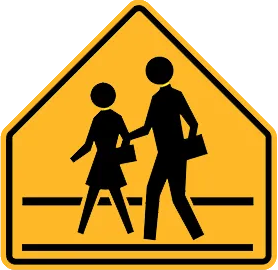
2. This yellow warning sign means:
A. You are approaching a school or school crosswalk.
B. Slow down, drive with caution, and watch for children.
C. Both of the above.
3. If you find that the roadway ahead of you is flooded, you should:
A. Slam on the brakes.
B. Not drive through the flooded area. Turn around and find another route.
C. Drive only in the center of the roadway.
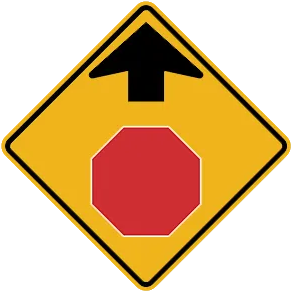
4. This sign means:
A. Yield sign ahead.
B. Side road entering from left.
C. Stop sign ahead.
5. You want to park downhill on a two-way road and there is no curb. Which way do you turn your front wheels?
A. Straight ahead
B. Right, toward the side of the road
C. Left, toward the center of the road
6. Which of these statements is true about driving and taking medications?
A. Most cold medications can make a person drowsy.
B. Over-the-counter medications cannot impair driving ability if taken in the recommended dosages.
C. Medications are safe to take at any time, if prescribed by a doctor.
7. It is illegal to drive in a bicycle lane unless you are:
A. in need of the space and the bike lane is empty.
B. Passing another vehicle
C. Parking (where permitted), entering or leaving the road, turning (within 200 feet of an intersection).
8. When approaching a person who is crossing the street while using a white cane or guide dog, you should:
A. Stop until the person is well away from your path of travel.
B. Honk your horn as you proceed past them.
C. Carefully drive around them.
9. If your car's suspension is bad, it can cause:
A. Vehicle control problems.
B. Squealing brakes.
C. Slack in the steering.
10. Abandoning an animal on the highway may result in:
A. Jail time.
B. A point against your license.
C. No legal consequences.
11. At an intersection with stop signs on all corners, yield the right-of-way to any driver:
A. On your left.
B. Who arrived before you.
C. Across from your vehicle.
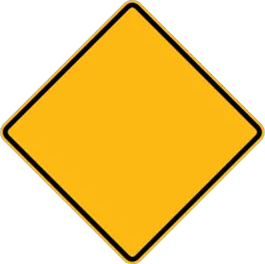
12. A sign with this shape means:
A. Railroad crossing.
B. Warning.
C. Signal ahead.
13. To enter a gap in highway traffic:
A. Watch only the vehicles behind the gap.
B. Check behind you, then watch the vehicle ahead.
C. Speed up and let the other vehicles make way.
14. What is the difference between traffic lights with red arrows and those with solid red lights?
A. Red arrows are only used to stop traffic which is turning.
B. Red arrows are only used for protected turn lanes.
C. You cannot turn on a red arrow, even if you stop first.
15. A broken yellow line beside a solid yellow line indicates that:
A. Passing is permitted from the lane next to the solid yellow line.
B. Passing is not permitted from either direction.
C. Passing is permitted from the lane next to the broken yellow line.
16. You are driving on a one-way street. You may only turn left onto another one-way street if:
A. You increase your speed before the turn.
B. Traffic on the street moves to the right.
C. Traffic on the street moves to the left.
17. When a bicyclist is making a left turn:
A. They may use the left lane.
B. They may cut through all lanes.
C. They may wait on the side of the road.
18. You drive defensively when you:
A. Put one car length between you and the car ahead.
B. Look only at the car in front of you while driving.
C. Keep your eyes moving to look for possible hazards.
19. When driving on a multilane street with two-way traffic:
A. Drive alongside other vehicles so the drivers can see you.
B. You should drive ahead of or behind the other vehicles.
C. It is safest to drive in the lane next to the centerline.
20. Which of these statements is true about drinking alcohol and driving?
A. If you can walk in a straight line after drinking, it is safe to drive.
B. If you are under the legal blood alcohol concentration limit, your driving isn't impaired.
C. Alcohol affects judgement, which is needed to drive safely.
21. To know where traffic is behind you:
A. Frequently check your rearview mirror.
B. Turn and look out your back window.
C. Keep other vehicles out of your blind spots.
22. Only ____ can reduce blood alcohol content (BAC) and alcohol's effects on the body.
A. Drinking caffeine
B. Eating foods high in fat
C. Time
23. What is an important step in turning?
A. Check traffic in all directions.
B. Increase your speed.
C. Always move to the left lane.
24. An orange and red triangular sign on a vehicle always means:
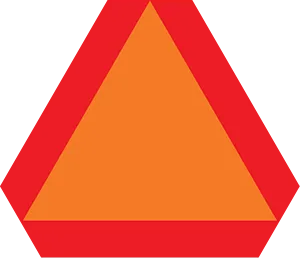
A. The vehicle has the right-of-way.
B. Slow-moving vehicle.
C. Shoulder work ahead.
25. A white painted curb indicates a:
A. Loading zone for freight or passengers.
B. Loading zone for passengers or mail only.
C. Loading zone for freight only.
26. Two sets of solid double yellow lines that are two or more feet apart:
A. May be crossed to enter or exit a private driveway.
B. May not be crossed for any reason.
C. Should be treated as a separate traffic lane.
27. A driver should:
A. Assume all drivers automatically obey the right-of-way rules.
B. Assume most drivers obey the right-of-way rules.
C. Always be prepared to yield the right-of-way.
28. A blood alcohol concentration of 0.02 percent:
A. Won't have any effect on your driving.
B. Won't put other drivers at risk.
C. Will double your chances of having an accident.
29. A flashing red traffic light at an intersection means:
A. Slow down before entering.
B. Stop before entering.
C. Stop and wait for the green light.
30. Which of these vehicles must always stop before crossing railroad tracks?
A. Tank trucks marked with hazardous materials placards.
B. Motor homes or pickup trucks towing a boat trailer.
C. Any vehicle with three or more axles and weighing more than 4,000 pounds.
31. Never make a U-turn:
A. in residential districts.
B. at or on a railroad crossing.
C. where there isn't a "No U-turn" sign posted.
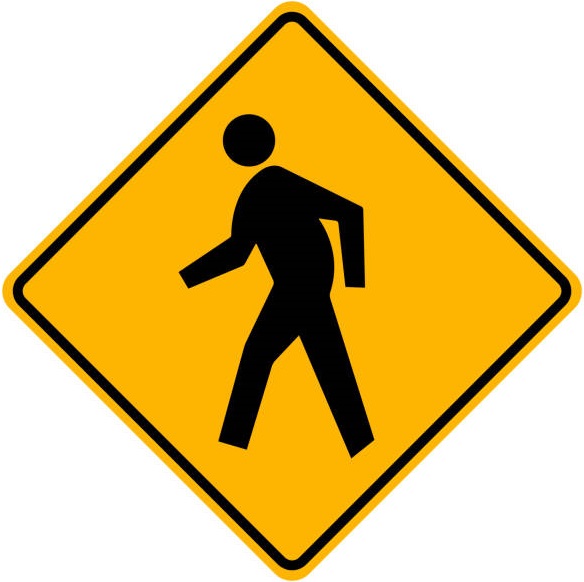
32. This road sign means:
A. Pedestrian crossing.
B. School crossing.
C. Jogging trail.
33. Which of the following statements about blind spots is true?
A. They are eliminated if you have one outside mirror on each side of the vehicle.
B. Large trucks have bigger blind spots than most passenger vehicles.
C. Blind spots can be checked by looking in your rearview mirrors.
34. Before you enter an intersection, you should look to your:
A. Left, your right, then your left again.
B. Right.
C. Left.
35. Stopping distances and severity of crashes:
A. Decrease as vehicle speed increases.
B. Are not affected by vehicle speed.
C. Increase as vehicle speed increases.
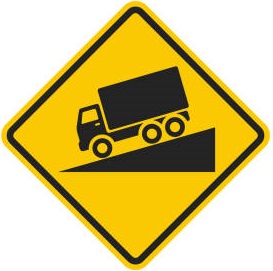
36. This road sign means:
A. Intersection ahead.
B. Steep grade ahead.
C. Winding road.