Dmv Permit Test 101

By Teacher David Global  •  Free

1. This road sign means:
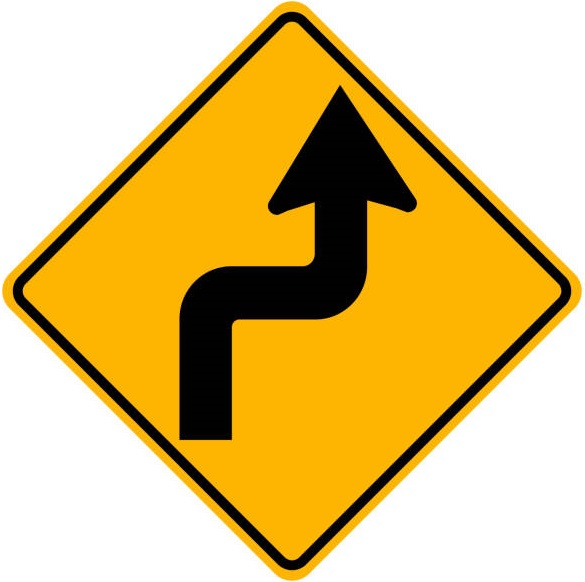
A. Sharp right turn ahead.
B. A road joins from the right.
C. The road ahead turns sharply right then sharply left.
2. If you are driving on a highway next to a single broken white line marking:
A. You cannot cross the line to pass.
B. You may cross the line to pass and change lanes.
C. You may only cross the line to change lanes if you are in the left lane.
3. While in a motor vehicle on a highway, it is:
A. Illegal to either drink from or possess open containers of alcohol.
B. Legal to drink alcohol if you're not driving.
C. Legal to drink alcohol if you're driving but not drunk.
4. After you have passed a vehicle moving in the same direction, it is safe to move back into the right lane:
A. After about three seconds.
B. When you can no longer see the passed vehicle over your right shoulder.
C. When you can see the entire front of the passed vehicle in your rearview mirror.
5. You are involved in a minor collision at an intersection. There are no injuries and there is very little vehicle damage. You should:
A. Leave your vehicle in the traffic lane until law enforcement arrives.
B. Move your vehicle out of the traffic lane, if possible.
C. Not move your vehicle for any reason
6. You may pass a vehicle when:
A. You are on a hill or curve.
B. You are on a road with a solid line next to your lane.
C. You are on a road with a broken line next to your lane.
7. To turn left from a one-way street with multiple lanes onto a two-way street, start the turn in:
A. The far left lane.
B. Any available lane.
C. The lane closest to the middle of the street.
8. While driving at night, a vehicle coming toward you has its high beams on, making it hard for you to see the road ahead. You should:
A. Look ahead toward the left edge of your lane.
B. Look ahead toward the right edge of your lane.
C. Look straight ahead in your lane.
9. A steady yellow traffic signal light is a warning that the light is about to change to red. If you are already within the intersection when a green light changes to yellow, you should:
A. Stop.
B. Continue moving and clear the intersection safely.
C. Increase your speed so as not to cause an accident.
10. If you come to an intersection controlled by a flashing yellow light, you must:
A. Wait for the green light before proceeding.
B. Slow down and cross the intersection carefully.
C. Stop before crossing the intersection.
11. Where is it safe to pass another vehicle?
A. Within an intersection where there are no oncoming vehicles
B. Wherever signs and/or pavement markings permit passing
C. Within a curve where there are no oncoming vehicles
12. Work zone barriers, drums, cones, and signs are used to:
A. Make drivers angry about slow traffic.
B. Inconvenience drivers.
C. Keep traffic out of hazardous work zones.
13. For which of the following traffic lights must you always stop your vehicle?
A. Solid red lights, flashing red lights, and blacked out traffic signals.
B. Solid red lights, red arrows, and flashing yellow lights.
C. Solid red lights, flashing red lights, and yellow lights.
14. If your vehicle has a mechanical problem:
A. Signal and pull into the slow lane.
B. Stop in your lane and put on your hazard lights.
C. Put on your hazard lights and pull off the road.
15. When backing up:
A. Look through the rear window.
B. Press hard on the gas pedal.
C. Rely only on your rearview mirror.
16. Increase your following distance when driving behind a large vehicle:
A. To better see around the sides of the vehicle.
B. Because other drivers tend to pull behind large vehicles before trying to pass them.
C. Because following too closely will get you caught in the vehicle's slipstream.
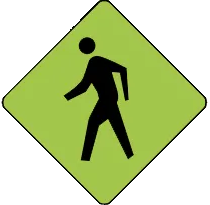
17. This sign means:
A. Pedestrian crossing.
B. Side road.
C. Railroad ahead.
18. You see pedestrians near the road. You should:
A. Sound your horn and maintain your speed.
B. Speed up to clear the area quickly.
C. Slow down and pass with caution.
19. Fatigue increases the risk of:
A. Missing an exit.
B. Being late for an appointment.
C. Falling asleep behind the wheel and crashing.
20. You should turn on your headlights:
A. One half hour after sunset.
B. When stopped at a railroad crossing.
C. When parked at a school.
21. When driving at night on a dimly lit street, you should:
A. Drive slowly enough that you can stop within the area illuminated by your headlights.
B. Turn on your high beam headlights to better see the vehicles ahead of you.
C. Keep the instrument panel lights bright to be more visible to other drivers.
22. It is more dangerous to drive at night than during the day because:
A. You cannot see as far ahead at night.
B. The road is always more slippery at night.
C. Your reaction time is slower at night.
23. To avoid hydroplaning while driving in rainy conditions, you should:
A. Drive at a speed appropriate for ideal conditions.
B. Apply your brakes as soon as your car starts to skid.
C. Slow down.
24. Signs with orange backgrounds are:
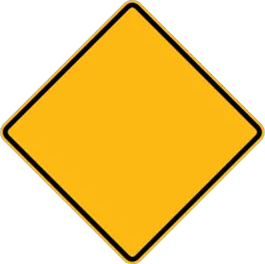
A. General warning signs.
B. Construction and maintenance warning signs.
C. Regulatory signs.
25. A large truck is ahead of you and is turning right onto a street with two lanes in each direction. The truck:
A. May complete its turn in either of the two lanes.
B. May have to swing wide to complete the right turn.
C. Must stay in the right lane at all times while turning.
26. When using a roundabout, drivers should:
A. Stop in the middle of the roundabout.
B. Yield to traffic already in the roundabout.
C. Yield to entering traffic.
27. A distraction when driving is:
A. Anything that causes evasive action while driving.
B. Anything that takes your attention away from driving.
C. Anything that causes you to pay more attention to driving.
28. Double solid yellow lane markings mean that:
A. Neither lane may pass.
B. Both lanes may pass.
C. The lane to the right may pass.
29. Roadways are the most slippery:
A. During a heavy downpour.
B. After it has been raining for awhile.
C. During the first rain after a dry spell.
30. Fines in a construction zone are:
A. Doubled.
B. Tripled.
C. Cut in half.
31. When turning left from a two-way street onto a one-way street, you should:
A. Turn into any lane.
B. Turn into first lane.
C. Turn into second lane.
32. When you want to change lanes, you should never:
A. Move into another lane while within an intersection.
B. Check your blind spot by looking over your shoulder.
C. Check for other drivers moving into the same lane.
33. When passing another vehicle, it is safe to return to your lane if you:
A. Cannot see the vehicle directly to your right.
B. See the vehicle’s headlights in your rearview mirror.
C. Have passed the other vehicle’s front bumper.
34. If a road is slippery, maintain a following distance that is:
A. No different than normal.
B. Farther from the car ahead than normal.
C. Closer to the car ahead than normal.
35. When driving in work zones, you should:
A. Increase your speed to get through the zone as quickly as possible.
B. Reduce your speed and be prepared to stop suddenly.
C. Maintain your normal speed the whole way through the zone.
36. When driving under snowy or icy conditions:
A. It is safe to use your cruise control.
B. Make speed and directional changes more gradually than you would otherwise.
C. Drive as you would under normal conditions.