Dmv Permit Test 100

By Teacher David Global  •  Free

1. When you are behind a motorcycle, you should:
A. Be ready to use your horn.
B. Drive more slowly.
C. Allow a larger following distance.
2. When driving in fog, it is best to drive with:
A. High beam headlights.
B. Low beam headlights.
C. Four-way flashers.
3. A school bus is stopped ahead of you in your lane with its red lights flashing. You should:
A. Stop and proceed when you think all of the children have exited the bus.
B. Slow to 25 mph and pass cautiously.
C. Stop for as long as the red lights are flashing.
4. When driving on gravel or dirt roads:
A. Your tires grip the road better than when you are driving on pavement.
B. Your tires do not have as much traction as they do on pavement, so you must slow down.
C. Visibility is better than on pavement.
5. You should signal at least how many feet before you turn?
A. 50
B. 75
C. 100
6. If you have had several beers, the effects of alcohol will be reduced only by:
A. Taking a cold shower.
B. Waiting several hours.
C. Drinking several cups of coffee.
7. When driving in work zones, you should:
A. Follow the driver in front of you closely.
B. Pass the driver in front of you as soon as you can.
C. Avoid tailgating and keep a safe following distance.
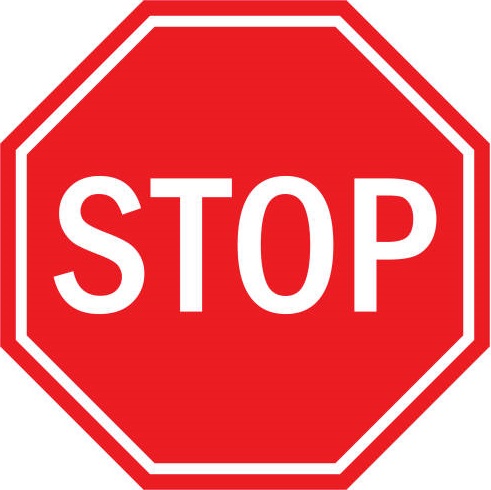
8. This sign means:
A. Stop.
B. Merge.
C. Upcoming change in direction.
9. Which of these statements is true about changing lanes?
A. You only need to turn and look over your right shoulder for lane changes to the right or left.
B. Look over your right shoulder for a right lane change and your left shoulder for a left lane change.
C. Vehicles with two outside mirrors do not have blind spots.
10. Which statement is true?
A. You should put on your cruise control near a railroad crossing to maintain a constant speed.
B. You must stop at a railroad crossing when directed to do so by a flagger or stop sign.
C. You have the right-of-way at a railroad crossing and do not need to stop.
11. When a pedestrian guided by a dog or carrying a white cane is crossing the street:
A. You must always yield the right-of-way.
B. You must tell them where to cross the street.
C. You only have to yield the right-of-way if you are at a corner.
12. You must notify the DMV within five days if you:
A. Sell or transfer your vehicle.
B. Fail a smog test.
C. Get a new prescription for lenses or contacts.
13. Before returning to your original lane after passing another vehicle, you should:
A. Beep your horn.
B. See both headlights of the passed vehicle in your rearview mirror.
C. Flash your headlights.
14. At dawn or dusk and in rain or snow, it can be hard to see and be seen. A good way to let other drivers know you are there is to turn:
A. Up the instrumental panel lights.
B. On your parking lights.
C. On your headlights.
15. If a motorist sees pedestrians in an upcoming crosswalk, what should the motorist do?
A. Continue ahead. The motorist has the right-of-way.
B. Wait for the pedestrians to cross the street.
C. Pull to the right and go around the pedestrians.
16. Children on bicycles should be given extra space by motor vehicle operators because:
A. They do not have the same physical reflexes as adults.
B. They are smaller and more difficult to see than adults.
C. Both of the above.
17. A driver should:
A. Stare directly in front of their car.
B. Only focus on the middle of the road.
C. Watch beside, ahead, and to the rear of their car.
18. Before you enter an intersection, you should look to your:
A. Left, your right, then your left again.
B. Right.
C. Left.
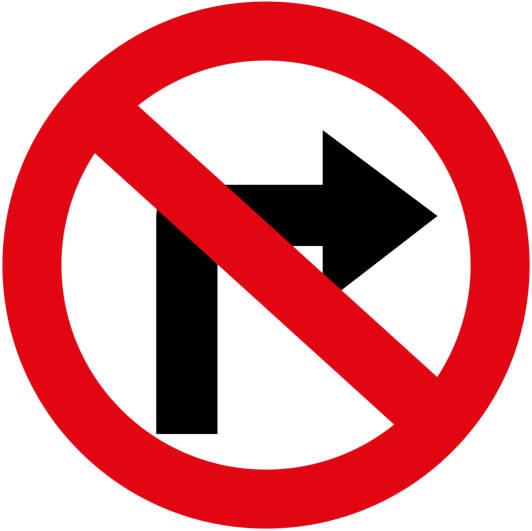
19. This sign means:
A. No right turn.
B. Right turn on red light permitted with caution.
C. All traffic must turn right at next intersection.
20. Any amount of alcohol in the blood may affect a driver's:
A. Right-of-way privileges.
B. Judgment and physical coordination.
C. Knowledge.
21. Which of these statements is true about large trucks?
A. They take longer to stop than passenger vehicles.
B. They all have air brakes that allow them to stop quickly.
C. They are more maneuverable than passenger vehicles.
22. All of the following are dangerous to do while driving. Which is also illegal?
A. Wearing a headset that covers both ears
B. Having one or more interior lights on
C. Using cruise control on residential streets
23. "No passing zone" signs tell drivers:
A. To speed up slightly.
B. That it is not safe to pass.
C. To maintain a steady speed.
24. You want to make a right turn at an upcoming intersection. You should slow down and:
A. Move toward the left side of your lane.
B. Avoid driving in the bicycle lane.
C. Signal for 100 feet before turning.
25. Placard abuse will result in:
A. Placard revocation only.
B. Only a fine.
C. Placard revocation, a fine, and/or jail time.
26. You may drive off of the paved roadway to pass another vehicle:
A. If the shoulder is wide enough to accommodate your vehicle.
B. If the vehicle ahead of you is turning left.
C. Under no circumstances.
27. The maximum posted speed limit should be driven only:
A. During the night.
B. During the day.
C. Under ideal conditions.
28. Which of the following substances can affect the ability to drive?
A. Tranquilizers, marijuana, and sedatives.
B. Cough syrups and cold tablets containing codeine or antihistamines.
C. All of the above.
29. If a tire suddenly blows out while you are driving, you should:
A. Grip the steering wheel firmly, slow down, and exit the traffic lane.
B. Pump the brakes rapidly.
C. Brake hard and steer toward the right edge of the roadway.
30. If you want to pass a pedestrian who is walking along the roadway and an oncoming vehicle is approaching, you should:
A. Slow down and let the oncoming vehicle pass before you pass the pedestrian.
B. Keep driving at a steady speed. The oncoming vehicle must stop for you.
C. Honk your horn to get the pedestrian to move over.
31. If a vehicle is equipped with airbags:
A. Seat belts should still be worn.
B. Seat belts do not need to be worn.
C. Seat belts should be worn behind the back.
32. Tailgating other drivers (driving too closely to their rear bumper):
A. Can frustrate other drivers and make them angry.
B. Cannot result in a traffic citation.
C. Reduces collisions by preventing being "cut off."
33. If you have an argument with another person and you are angry, you should:
A. Loudly play the radio while driving so you won’t think about your argument.
B. Take a few minutes to cool off before driving.
C. Drive on the interstate to let off steam.
34. The amount of alcohol in the blood is referred to as:
A. Implied consent (IC).
B. Blood alcohol concentration (BAC).
C. Rate of alcohol consumption (RAC).
35. If you become drowsy while driving, you should:
A. Try to fight it.
B. Take a break.
C. Take some caffeine pills.
36. Which of the following is a dangerous habit when driving in work zones?
A. Tailgating another vehicle
B. Failing to carefully watch for workers and moving equipment
C. Both of the above