Dmv Permit Test 99

By Teacher David Global  •  Free

1. Driving under the influence of any medication which impairs your driving is permitted:
A. Under no circumstances.
B. If you don't feel drowsy.
C. If it is prescribed by a physician.
2. This sign indicates that the road ahead:
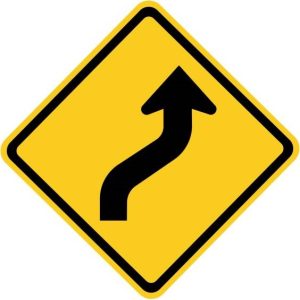
A. Turns sharply right, then left.
B. Curves right, then left.
C. Curves right.
3. Before stopping your vehicle at a traffic signal or sign, you should:
A. Press down hard on the accelerator.
B. Check your mirrors for surrounding traffic.
C. Set the parking brake.
4. If pedestrians are illegally crossing in the middle of the street instead of in a crosswalk, you:
A. Must stop for them.
B. Do not have to stop for them.
C. Should honk your horn at them.
5. When turning left at an intersection:
A. You should always yield to oncoming traffic and pedestrians.
B. Oncoming traffic and pedestrians should yield to you.
C. You should never yield to oncoming traffic and pedestrians.
6. Interstate driving requires drivers to:
A. Have the ability to safely drive at increased speeds.
B. Be constantly alert.
C. Both of the above.
7. Remove all snow, frost, and ice from:
A. Just the windshield.
B. All windows.
C. Just the windshield and passenger window.
8. What should a driver do when approaching a traffic control signal that is not in operation?
A. Come to a full stop and yield the right-of-way before entering the intersection.
B. If the intersection is clear, the driver does not need to stop.
C. Drive quickly through the intersection to get out of the way of other vehicles.
9. If you come across livestock or other animals on the roadway, you should:
A. Swerve out of the way.
B. Slow down and stop.
C. Ignore them.
10. You see a signal person at a road construction site ahead. You should obey his or her instructions:
A. Only if you see orange cones on the road ahead.
B. Unless they conflict with existing signs, signals, or laws.
C. At all times.
11. A solid yellow line on your side of the centerline means:
A. Reduce your speed.
B. Traffic light ahead.
C. Do not pass.
12. Before switching on the ignition, you should:
A. Buckle your safety belt.
B. Be sure all passengers have buckled their safety belts.
C. Both of the above.
13. When driving in fog, it is best to drive with:
A. High beam headlights.
B. Low beam headlights.
C. Four-way flashers.
14. When you are facing a green light and there are pedestrians in the intersection:
A. You must yield the right-of-way to pedestrians.
B. You have the right-of-way over pedestrians.
C. Pedestrians must wait for you to cross.
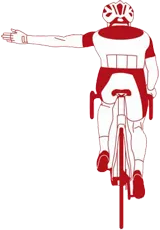
15. This bicyclist is signaling:
A. A left turn.
B. An upcoming stop.
C. A right turn.
16. Drivers are required to obey instructions from:
A. Security guards patrolling parking lots.
B. Other drivers whose vehicles are broken down on the roadway.
C. Flaggers (signal persons) at construction sites.
17. Distracted driving is:
A. Anything that causes evasive action while driving.
B. Anything that takes your attention away from driving.
C. Anything that causes you to pay more attention to driving.
18. You are required to stop your vehicle:
A. At any intersection where a police officer orders you to stop.
B. Where there is a red traffic light.
C. Both of the above.
19. You must obey instructions from school crossing guards:
A. At all times.
B. Only during school hours.
C. Unless you do not see any children present.
20. When being passed by another vehicle:
A. Brake hard.
B. Maintain a constant speed.
C. Speed up.
21. Just like alcohol and other drugs, drowsiness can:
A. Help you to be a better driver.
B. Make you feel better.
C. Impair your judgment.
22. At a railroad crossing, you must:
A. Watch for vehicles that must stop at all railroad crossings (school buses, trucks carrying hazardous materials, etc.).
B. Watch for multiple trains.
C. Both of the above.
23. Night driving presents unique problems because:
A. The speed limit is increased at night.
B. There are fewer cars on the roads at night.
C. Distance and vehicle speed are difficult to judge in the dark.
24. This sign is a warning that you are approaching:
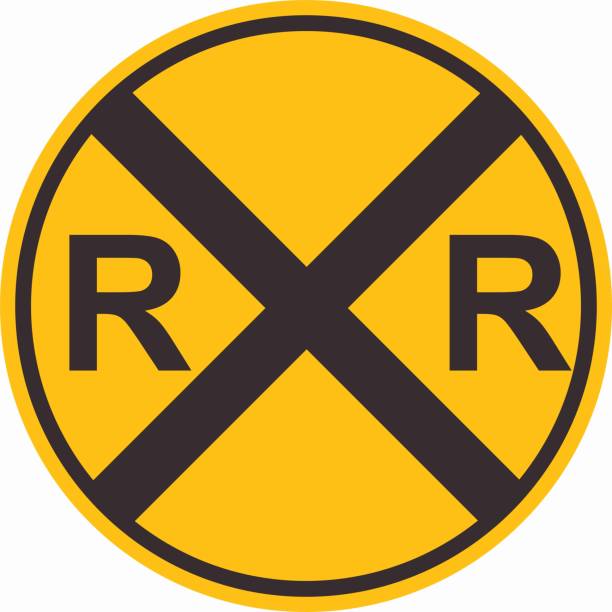
A. An intersection.
B. A crosswalk.
C. A railroad crossing.
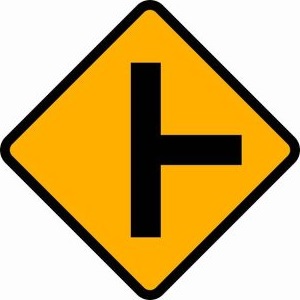
25. This road sign means:
A. All traffic must turn right.
B. All traffic must go straight.
C. A side road intersects ahead.
26. The best thing to do if you become tired while driving is to:
A. Stop to rest or change drivers.
B. Drink coffee.
C. Open a window.
27. All of the following practices are dangerous to do while driving. Which of these is also illegal?
A. Listening to music through headphones that cover both ears.
B. Adjusting your outside mirrors.
C. Transporting an unrestrained animal inside the vehicle.
28. If the roadway is wet or icy, you should:
A. Reduce your speed.
B. Drive at the posted speed.
C. Speed up.
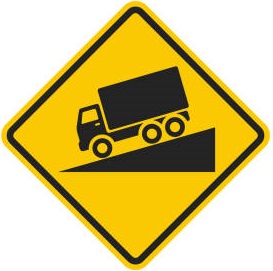
29. This sign means:
A. Trucks entering.
B. Truck exit only.
C. Steep downgrade ahead.
30. Smoking inside a vehicle with a person younger than 18 years of age is:
A. Legal, if it is your child.
B. Illegal at all times.
C. Not restricted by law.
31. You must file a report of a traffic accident occurring in California when:
A. Your vehicle fails a smog test.
B. You are involved in a collision and there is an injury.
C. You change your insurance company.
32. Which of the following driving skills are affected by the use of alcohol and/or drugs?
A. Alertness and concentration.
B. Reaction time and coordination.
C. All of the above.
33. Which of the following statements about blind spots is true?
A. Blind spots are eliminated if you have one outside mirror.
B. Large trucks have bigger blind spots than most passenger vehicles.
C. Blind spots can be checked by looking in your rearview mirror.
34. Drivers turning left must yield to:
A. Overtaking cars.
B. Oncoming cars.
C. No one.
35. Which of the following statements is correct?
A. Use your left foot to brake.
B. Use your right foot for both braking and accelerating your vehicle.
C. You should always brake abruptly to ensure stopping.
36. Using a cell phone while operating a motor vehicle is considered a distraction because:
A. It causes the driver to be concerned about the cost of the call.
B. It occupies the driver's hands, eyes, and mind.
C. It is an activity that draws the attention of other drivers.