Dmv Permit Test 98

By Teacher David Global  •  Free

1. The driver ahead of you stops at a crosswalk. What should you do?
A. Cautiously pass the vehicle at 10 mph or slower.
B. Stop, proceeding only when all the pedestrians have crossed.
C. Change lanes, look carefully, and pass the stopped vehicle.
2. When approaching a person who is crossing the street while using a white cane or guide dog, you should:
A. Stop until the person is well away from your path of travel.
B. Honk your horn as you proceed past them.
C. Carefully drive around them.
3. Which of these vehicles must always stop before crossing railroad tracks?
A. Tank trucks with hazardous materials placards.
B. Motor homes or pickup trucks towing a boat trailer.
C. Sport utility vehicles carrying four or more persons.
4. You must yield to a pedestrian using a white cane or guide dog:
A. Only when the guide dog is leading the person across the street.
B. At all times.
C. Only if a crossing guard is present.
5. There is no crosswalk and you see a pedestrian crossing your lane ahead. You should:
A. Make eye contact with and then pass the pedestrian.
B. Slow down as you pass the pedestrian.
C. Stop and let the pedestrian finish crossing the street.
6. What can you do to reduce road rage?
A. Always signal your intention when changing lanes.
B. Talk on your cell phone while driving.
C. Use your horn frequently.
7. What is the only medically proven method of removing alcohol or other drug combinations from your system?
A. Breathe in some fresh air.
B. Give your body time.
C. Drink coffee.
8. Use your headlights on rainy, snowy, or foggy days:
A. To keep your engine warm.
B. So others can see your vehicle.
C. To warn others of bad weather conditions.
9. You may pass a vehicle when:
A. You are on a hill or curve.
B. You are on a road with a solid line next to your lane.
C. You are on a road with a broken line next to your lane.
10. At a crosswalk:
A. You must yield to pedestrians.
B. Pedestrians must yield to you.
C. Construction workers must yield to you.
11. To prevent yourself from becoming an aggressive driver:
A. Relax and concentrate on driving.
B. Drive above the posted speed limit.
C. Tailgate the driver in front of you.
12. You want to make a right turn at the corner. A pedestrian with a guide dog is at the corner ready to cross the street in front of you. Before making your right turn, you should:
A. Turn off your engine until the person crosses the street.
B. Tell the pedestrian when to cross the street.
C. Wait until the person crosses the street.
12. You want to make a right turn at the corner. A pedestrian with a guide dog is at the corner ready to cross the street in front of you. Before making your right turn, you should:
A. Turn off your engine until the person crosses the street.
B. Tell the pedestrian when to cross the street.
C. Wait until the person crosses the street.
13. Adjust your rearview and side mirrors:
A. Before you start driving.
B. Whenever you need to use them.
C. Before you get into the car.
14. A distraction when driving is:
A. Anything that causes evasive action while driving.
B. Anything that takes your attention away from driving.
C. Anything that causes you to pay more attention to driving.
15. If your vehicle has a two-part safety belt system, you should:
A. Use only the lap belt.
B. Use both the lap and shoulder belts.
C. Use only the shoulder belt.
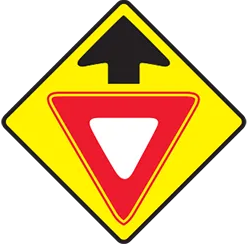
16. This sign means:
A. Yield sign ahead.
B. Side road entering from left.
C. Stop sign ahead.
17. If you experience a tire blowout:
A. Tap or pump the brakes.
B. Slow down gradually and use your brakes lightly.
C. Apply the brakes firmly and quickly.
18. If you are driving and you see animals standing near the roadway:
A. Speed up to scare them away.
B. Slow down and proceed with caution.
C. Quickly swerve into the next lane.
19. When can you drive in a bike lane?
A. During rush hour traffic if there are no bicyclists in the bike lane.
B. When you are within 200 feet of a cross street where you plan to turn right.
C. When you want to pass a driver ahead of you who is turning right.
20. If you are riding in a vehicle equipped with a lap belt and a separate shoulder belt, you are:
A. Only required to use the lap belt.
B. Required to use both the lap and shoulder belts.
C. Only required to use the shoulder belt.
21. When can you drive in a bike lane?
A. 30 minutes after sunset or 30 minutes before sunrise
B. On foggy days when visibility is low
C. 200 feet before making a turn
22. What should you do when you see this sign?
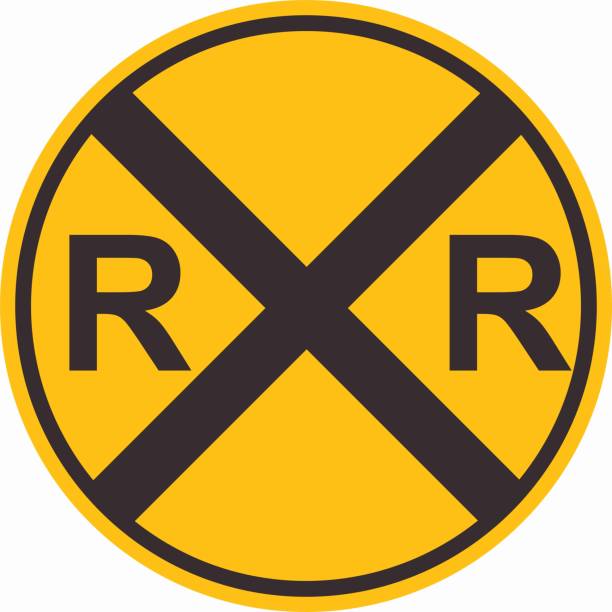
A. Look for a train station ahead.
B. Signal before going any further.
C. Slow down and yield to trains.
23. When turning left at an intersection:
A. You should always yield to oncoming traffic and pedestrians.
B. Oncoming traffic and pedestrians should yield to you.
C. You should never yield to oncoming traffic and pedestrians.
24. This sign means:
A. Railroad ahead.
B. No passing zone.
C. School zone.
25. To pass on a two-lane road, you should:
A. Sound your horn as you pass.
B. Flash your headlights as you pass.
C. Judge the distance to any oncoming vehicles.
26. A steady green traffic light at an intersection means:
A. Increase your speed.
B. Adjust your mirrors.
C. You may continue through the intersection at a safe and reasonable speed, if it is clear to do so.
27. If you come to a railroad crossing with lowered gates and flashing warning lights, you should:
A. Drive around the crossing gates if you can't see a train.
B. Come to a complete stop well behind the gates, wait for the tracks to clear, and proceed once the gates are lifted.
C. Slow down and drive around the gates.
28. What is the only effective way to remove alcohol from the body?
A. Drink strong coffee.
B. Wait.
C. Take a cold shower.
29. All of the following are dangerous to do while driving. Which is also illegal?
A. Wearing a headset that covers both ears.
B. Having one or more interior lights on.
C. Using cruise control on residential streets.
30. Which of the following is not a safe driving practice when driving on the interstate?
A. Slower traffic must keep to the right.
B. Change lanes without signaling.
C. If you miss your exit, you must go to the next exit.
31. Construction zone signs are generally:
A. Square or rectangular with white and red coloring.
B. Round or octagonal with black and yellow coloring.
C. Diamond-shaped or rectangular with orange and black coloring.
32. To help others see you when daylight begins to fade, you should use your:
A. Parking lights.
B. Low beam headlights.
C. Emergency flashers.
33. If you drive more slowly than the flow of traffic, you will most likely:
A. Interfere with traffic and receive a ticket.
B. Improve traffic flow.
C. Demonstrate defensive driving techniques.
34. If there is no crosswalk and you see a pedestrian crossing your lane, you should:
A. Make sure the pedestrian can see you before proceeding.
B. Cautiously drive around the pedestrian.
C. Stop and let the pedestrian finish crossing.
35. If your vehicle begins to skid, you should:
A. Ease up on the gas pedal.
B. Brake as hard as possible.
C. Turn off the ignition.
36. When driving in work zones, you should:
A. Increase your speed to get through the zone as quickly as possible.
B. Reduce your speed and be prepared to stop suddenly.
C. Maintain your normal speed the whole way through the zone.