Dmv Permit Test 97

By Teacher David Global  •  Free

1. If your cell phone rings while you are driving and you do not have a hands-free device, you should:
A. Answer the call because it may be an emergency.
B. Let the call go to voicemail.
C. Check the incoming number before answering the call.
2. There is a vehicle stopped on the right shoulder of the road with its hazard lights on. You should:
A. Change lanes to the left and speed up.
B. Slow down and pass very carefully.
C. Stop your vehicle until you can see what has happened.
3. Drivers must use their seat belt:
A. Unless they are driving a vehicle built before 1978.
B. Unless they are driving a limousine.
C. And failure to do so will result in a traffic ticket.
4. A curb painted red means:
A. Loading zone.
B. The area is reserved for picking up or dropping off passengers.
C. No parking, standing, or stopping.
5. Backing your vehicle is:
A. Always dangerous.
B. Dangerous if you have a helper.
C. Only dangerous in large vehicles.
6. Collisions are more likely to happen when:
A. All vehicles are traveling at about the same speed.
B. One lane of traffic is traveling faster than the other lanes.
C. One vehicle is traveling faster or slower than the flow of traffic.
7. What is the purpose of rumble strips?
A. They alert drivers to potential tire problems.
B. They test a vehicle's shock absorbers.
C. Through vibration and sound, they alert inattentive drivers to the fact that their vehicles have left the travel lane.
8. A solid yellow arrow on a traffic signal means:
A. You should speed up so you can make the turn before the light changes.
B. You do not need to signal to turn from the indicated lane.
C. You should prepare to stop and yield the right-of-way to oncoming traffic.
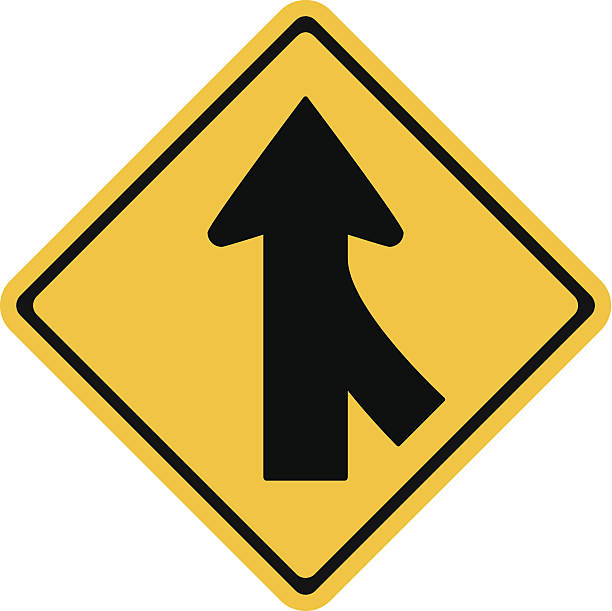
9. This sign means:
A. Merge.
B. Winding road ahead.
C. Reserved parking for persons with disabilities.
10. Which of the following statements is true?
A. Driving too slowly is not an unsafe practice.
B. Driving too slowly on certain highways can be dangerous.
C. The speed at which you drive a vehicle does not affect safety.
11. Reaction time is slower after:
A. Drinking alcohol.
B. Sleeping.
C. Working hard.
12. Excessive speed:
A. Saves time so you can get to your destination more quickly.
B. Helps you maneuver around obstacles.
C. Increases the likelihood of serious bodily injury and death.
13. When driving in fog, you should use your:
A. Fog lights only.
B. High beams.
C. Low beams.
14. A curb painted blue means parking is:
A. Allowed for no longer than 15 minutes.
B. Only allowed when picking up or dropping off passengers.
C. For disabled persons with a special placard or plate.
15. Which of the following driving skills is/are affected by the use of alcohol and/or drugs?
A. Alertness.
B. Coordination.
C. Both of the above.
16. When approaching an intersection controlled by a flashing yellow light, you must:
A. Come to a complete stop at the intersection.
B. Maintain your normal speed.
C. Slow down and proceed with caution.
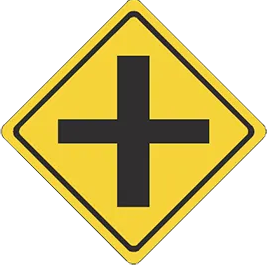
17. This sign shows one type of:
A. Intersection.
B. Road curve.
C. Right turn.
18. When should drivers yield the right-of-way to pedestrians in a crosswalk?
A. Only if the pedestrians first wave to the driver.
B. Only if the pedestrians are not texting while walking.
C. At all times.
19. What should you do at an intersection with a flashing yellow signal light?
A. Maintain your speed but watch for other vehicles.
B. Stop before crossing the intersection.
C. Slow down and cross the intersection carefully.
20. You must notify the DMV within five days if you:
A. Are cited for a traffic violation.
B. Sell or transfer your vehicle.
C. Paint your vehicle a different color.
21. It is unlawful to:
A. Pass another vehicle in any marked no passing zone.
B. Pass another vehicle over a railroad crossing.
C. Both of the above.
22. Before changing lanes or attempting to pass another vehicle, you should:
A. Check your blind spots and mirrors.
B. Signal your intention before changing lanes.
C. All of the above.
23. Work zone barriers, drums, cones, and signs are used to:
A. Make drivers angry about slow traffic.
B. Inconvenience drivers.
C. Keep traffic out of hazardous work zones.
24. If it is necessary to make an emergency stop while driving on an interstate, you should:
A. Sound your horn at passing cars to get their attention.
B. Get out of your vehicle and flag down the first vehicle that passes.
C. Pull off the road, turn on your emergency flashers, and stay in your vehicle, if you can.
25. What usually causes a locked wheel skid?
A. Braking too hard at a slow speed
B. Braking lightly at a slow speed
C. Braking too hard at a fast speed
26. You just sold your vehicle. You must notify the DMV within ____ days.
A. Five
B. 10
C. 15
27. When double solid yellow lines separate lanes of traffic:
A. Passing is permitted from the left.
B. Passing is permitted from the right.
C. Passing is not permitted from either direction.
28. Always carefully look for motorcycles before you change lanes because:
A. Their small size can make them hard to see.
B. They usually have the right-of-way at intersections.
C. It is illegal for motorcycles to share traffic lanes.
29. Which of the following blocks the smooth flow of traffic?
A. Slowing down to look at collision scene.
B. Avoiding unnecessary lane changes.
C. Using public transportation instead of your vehicle.
30. If you have a green light but traffic is blocking the intersection, you should:
A. Stay out of the intersection until traffic clears.
B. Enter the intersection and wait until traffic clears.
C. Merge into another lane and try to go around the traffic.
31. When a school bus is stopped on the road ahead to load or unload children, you must:
A. Come to a complete stop until all the children have left the bus.
B. Come to a complete stop until the red lights stop flashing and the stop arm is withdrawn.
C. Change lanes, drive slowly, and pass the bus cautiously.
32. When changing lanes:
A. Check your side mirror and look over your shoulder to make sure the lane is clear.
B. Check the inside rearview mirror.
C. Slow down.
33. You should turn on your headlights:
A. One half hour after sunset.
B. When stopped at a railroad crossing.
C. When parked at a school.
34. If you encounter an aggressive driver, you should:
A. Challenge them.
B. Get out of their way.
C. Speed up.
35. To improve visibility lowered by rain or fog, drivers should use their:
A. Low beam headlights.
B. High beam headlights.
C. Parking lights.
36. If you are involved in a traffic accident in California, you must file a report of the accident with the DMV when:
A. The collision causes $1,000 in damage.
B. You plan on being out of the state for more than 30 days.
C. You refinance the remaining balance of your vehicle loan.