Dmv Permit Test 109

By Teacher David Global  •  Free

1. To help others see you when daylight begins to fade, you should use your:
A. Parking lights.
B. Low beam headlights.
C. Emergency flashers.
2. Before switching on the ignition, you should:
A. Buckle your safety belt.
B. Be sure all passengers have buckled their safety belts.
C. Both of the above.
3. You are involved in a minor collision at an intersection. There are no injuries and there is very little vehicle damage. You should:
A. Leave your vehicle in the traffic lane until law enforcement arrives.
B. Move your vehicle out of the traffic lane, if possible.
C. Not move your vehicle for any reason.
4. Broken yellow lines are used on streets and highways to:
A. Indicate no passing zones.
B. Separate lanes of traffic moving in the same direction.
C. Separate lanes of traffic moving in opposite directions.
5. You are getting ready to make a right turn. You should:
A. Signal and turn immediately.
B. Stop before entering the right lane and let all other traffic go first.
C. Slow down or stop, if necessary, and then make the turn.
6. You should signal continuously while turning because it:
A. Is illegal to turn off your signal before completing a turn.
B. Lets other drivers know what your intentions are.
C. Is always unsafe to turn off a signal before completing a turn.
7. If you pass a school bus that is stopped with its red lights flashing, you will:
A. Be fined up to $1,000.
B. Be fined up to $100.
C. Face no legal consequences.
8. When approaching an intersection controlled by a flashing yellow light, you must:
A. Come to a complete stop at the intersection.
B. Maintain your normal speed.
C. Slow down and proceed with caution.
9. A flashing yellow light at an intersection means you should:
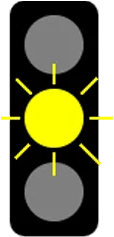
A. Slow down and proceed with caution.
B. Come to a complete stop as quickly as possible.
C. Stop and proceed only when the intersection is clear.
10. Which child would require a child passenger restraint system?
A. A 9-year-old who is 4 feet 10 inches tall
B. A 10-year-old who is 5 feet 3 inches tall
C. A 7-year-old who is 4 feet 8 inches tall
11. Abandoning an animal on the highway may result in:
A. Jail time.
B. A point against your license.
C. No legal consequences.
12. You are driving on a city street and see an emergency vehicle with flashing lights behind you. What should you do?
A. Drive to the right edge of the road and slow down.
B. Drive to the right edge of the road and stop.
C. Stay in your lane, slow down, and let it pass.
13. A broken yellow line between two lanes of traffic means:
A. Both lanes of traffic are going in the same direction.
B. Passing is permitted when it's safe.
C. Passing is not permitted.
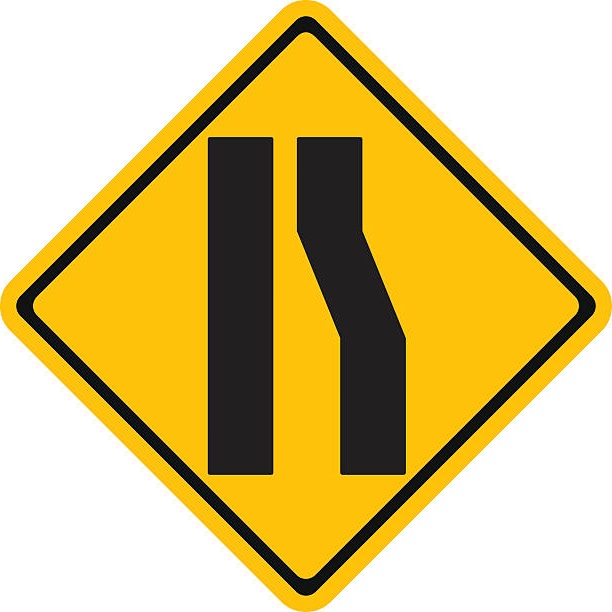
14. This road sign means:
A. Road widens ahead.
B. Lane reduction. The right lane ends soon and traffic should merge left.
C. Highway entrance ramp ahead.
15. When you drive through a construction zone, you should:
A. Stop to watch the workers.
B. Decrease your following distance.
C. Pass the construction zone carefully and not “rubberneck."
16. Before you enter an intersection, you should look to your:
A. Left, your right, then your left again.
B. Right.
C. Left.
17. When driving in work zones, you should:
A. Increase your speed to get through the zone as quickly as possible.
B. Reduce your speed and be prepared to stop suddenly.
C. Maintain your normal speed the whole way through the zone.
18. You drive defensively when you:
A. Put one car length between you and the car ahead.
B. Look only at the car in front of you while driving.
C. Keep your eyes moving to look for possible hazards.
19. You exit the freeway on a ramp that curves downhill. You should:
A. Slow to a safe speed before the curve.
B. Slow to the posted speed limit for the freeway.
C. Wait until you have entered the curve to begin braking.
20. You must look for bicyclists in the same lanes used by motor vehicles because they:
A. Must ride facing oncoming traffic.
B. Illegally share lanes with motor vehicles.
C. Are entitled to share the road with motor vehicles.
21. When may you legally drive around or under a railroad crossing gate?
A. Never.
B. When you can see clearly in both directions.
C. When the warning lights are not flashing.
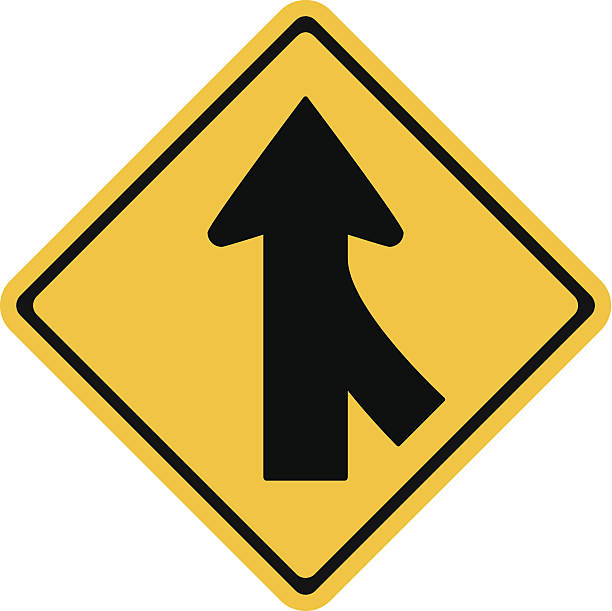
22. This sign means:
A. Merge.
B. Winding road ahead.
C. Reserved parking for persons with disabilities.
23. A flashing yellow traffic signal at an intersection means:
A. You should treat the signal like a stop sign.
B. Stop. Yield to all cross traffic before crossing in the intersection.
C. Slow down and be alert at the upcoming intersection.
24. If a traffic signal light is green and a police officer signals for you to stop, you should:
A. Obey the officer.
B. Obey the traffic signal.
C. Do what the vehicle in front of you does.
25. Double solid yellow lane markings mean that:
A. Neither lane may pass.
B. Both lanes may pass.
C. The lane to the right may pass.
26. Where is it safe to pass another vehicle?
A. Within an intersection where there are no oncoming vehicles
B. Wherever signs and/or pavement markings permit passing
C. Within a curve where there are no oncoming vehicles
27. How many alcoholic drinks does it take to affect your driving ability?
A. Three
B. Two
C. One
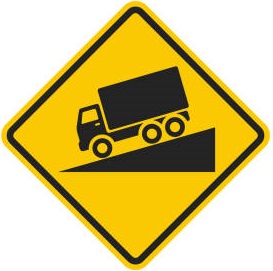
28. This sign means:
A. Trucks entering.
B. Truck exit only.
C. Steep downgrade ahead.
29. As your speed increases, it is important to:
A. Turn on your headlights.
B. Look well ahead of your vehicle.
C. Change lanes frequently.
30. Use your headlights on rainy, snowy, or foggy days:
A. To keep your engine warm.
B. So others can see your vehicle.
C. To warn others of bad weather conditions.
31. When you tailgate other drivers (drive closely to their rear bumper):
A. You can frustrate the other drivers and make them angry.
B. Your actions cannot result in a traffic citation.
C. You help reduce traffic congestion.
32. When passing another car, you have enough space to return to the driving lane:
A. If the other driver signals for you to re-enter the lane.
B. If you look over your shoulder and see the passed car behind you.
C. If you can see both of the passed vehicle's headlights in your rearview mirror.
33. If your vehicle has a mechanical problem:
A. Signal and pull into the slow lane.
B. Stop in your lane and put on your hazard lights.
C. Put on your hazard lights and pull off the road.
34. To pass on a two-lane road, you should:
A. Sound your horn as you pass.
B. Flash your headlights as you pass.
C. Judge the distance to any oncoming vehicles.
35. If your vehicle starts to lose traction because of water on the road, you should:
A. Drive at a constant speed to gain better traction.
B. Apply the brakes firmly to prevent your vehicle from sliding.
C. Slow down gradually and not apply the brakes.
36. When driving at night on a dimly lit street, you should:
A. Drive slowly enough that you can stop within the area illuminated by your headlights.
B. Turn on your high beam headlights to better see the vehicles ahead of you.
C. Keep the instrument panel lights bright to be more visible to other drivers.