Dmv Permit Test 108

By Teacher David Global  •  Free

1. From top to bottom, the following is the proper order for traffic lights:
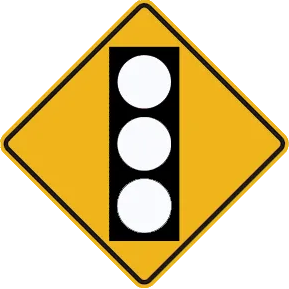
A. Red, yellow, green.
B. Red, green, yellow.
C. Green, red, yellow.
2. If your car becomes disabled while on the highway, you should:
A. Stop in the right lane.
B. Park with all four wheels off the traveled highway, if possible.
C. Stop where you are.
3. To improve visibility lowered by rain or fog, drivers should use their:
A. Low beam headlights.
B. High beam headlights.
C. Parking lights.
4. When approaching a roundabout, you should always:
A. Increase your speed.
B. Decrease your speed.
C. Maintain your speed.
5. To turn left from a one-way street with multiple lanes onto a two-way street, start the turn in:
A. The far left lane.
B. Any available lane.
C. The lane closest to the middle of the street.
6. Trucks' blind spots are:
A. Directly behind the body.
B. On the immediate left of the cab.
C. Both on the immediate left of the cab and directly behind the body.
7. On a green arrow, you must:
A. Yield to any vehicle, bicycle, or pedestrian in the intersection.
B. Yield to pedestrians only in the intersection.
C. Wait four seconds before proceeding.
8. If you are driving on a highway next to a single broken white line marking:
A. You cannot cross the line to pass.
B. You may cross the line to pass and change lanes.
C. You may only cross the line to change lanes if you are in the left lane.
9. "No zones" are areas around trucks where cars:
A. Disappear into blind spots or are so close that they restrict the truck driver's ability to stop and maneuver safely.
B. Have sufficient space to travel behind the truck.
C. Have several car lengths between their vehicle and the truck.
10. Which of these statements is true about driving and taking medications?
A. Most cold medications can make a person drowsy.
B. Over-the-counter medications cannot impair driving ability if taken in the recommended dosages.
C. Medications are safe to take at any time, if prescribed by a doctor.
11. You were parked and have been waiting a long time with your turn signal on to re-enter traffic. However, traffic is heavy. You should:
A. Continue waiting and yielding to traffic in the lane.
B. Slowly inch your vehicle into the traffic lane.
C. Drive on the shoulder until a gap in traffic appears.
12. You are driving behind a motorcycle and want to pass. You must:
A. Stay in the right lane as much as possible because the motorcycle is small and doesn't use all of the lane.
B. Blow your horn to make the motorcycle move onto the shoulder so that you can pass.
C. Have your vehicle entirely in the left lane before and during the pass.
13. On freezing, wet days, which of the following roadways is most likely to hide spots of ice?
A. Roadways near the tops of hills
B. Roadways on bridges and overpasses
C. Roadways paved with asphalt
14. You consent to take a chemical test for the alcohol content of your blood, breath, or urine:
A. Only if you have been drinking alcohol.
B. Whenever you drive in California.
C. Only if you have a collision.
15. You are approaching an intersection at the posted speed limit when the signal turns yellow. You should:
A. Slow down and proceed through the intersection without caution.
B. Speed up to cross the intersection before the light turns red.
C. Stop before entering the intersection, if you can do so safely.
16. When entering traffic after being parked at a curb, you:
A. Should drive more slowly than other traffic for 200 feet.
B. Should wait for a large enough gap to get up to the speed of traffic.
C. Should wait for the first two vehicles to pass, then drive into the lane.
17. If you come to an intersection controlled by a flashing yellow light, you must:
A. Wait for the green light before proceeding.
B. Slow down and cross the intersection carefully.
C. Stop before crossing the intersection.
18. When a school bus is stopped ahead on your side of the road with its red lights flashing, you must:
A. Slow to a speed no faster than 10 mph.
B. Stop until the lights stop flashing.
C. Change lanes and pass cautiously.
19. A solid yellow arrow on a traffic signal means:
A. You should speed up so you can make the turn before the light changes.
B. You do not need to signal to turn from the indicated lane.
C. You should prepare to stop and yield the right-of-way to oncoming traffic.
20. A steady yellow traffic signal light is a warning that the light is about to change to red. If you are already within the intersection when a green light changes to yellow, you should:
A. Stop.
B. Continue moving and clear the intersection safely.
C. Increase your speed so as not to cause an accident.
21. Fatigue increases the risk of:
A. Missing an exit.
B. Being late for an appointment.
C. Falling asleep behind the wheel and crashing.
22. When merging onto the freeway, you should be driving:
A. At or near the speed of the freeway traffic.
B. At the legal speed limit.
C. More slowly than the freeway traffic.
23. If you drive 55 mph in a 55 mph zone, you can be given a speeding ticket:
A. Under no circumstances because it is always legal.
B. If the road or weather conditions require a slower speed.
C. Only if you are approaching a sharp curve in the road.
24. You are coming to an intersection with a flashing red light. You should:
A. Slow down and yield the right-of-way.
B. Slow down and drive carefully through the intersection.
C. Come to a complete stop, check the traffic, and go when it is safe to do so.
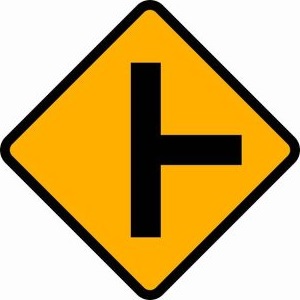
25. This road sign means:
A. All traffic must turn right.
B. All traffic must go straight.
C. A side road intersects ahead.
26. When passing another vehicle, it is safe to return to your lane if you:
A. Cannot see the vehicle directly to your right.
B. See the vehicle’s headlights in your rearview mirror.
C. Have passed the other vehicle’s front bumper.
27. It is very foggy. You should slow down and:
A. Turn on your emergency flashers.
B. Turn your lights to their high beam setting.
C. Turn your lights to their low beam setting.
28. Which of these vehicles must always stop before crossing railroad tracks?
A. Tank trucks marked with hazardous materials placards.
B. Motor homes or pickup trucks towing a boat trailer.
C. Any vehicle with three or more axles and weighing more than 4,000 pounds.
29. What usually causes a locked wheel skid?
A. Braking too hard at a slow speed
B. Braking lightly at a slow speed
C. Braking too hard at a fast speed
30. When a pedestrian guided by a dog or carrying a white cane is crossing the street:
A. You must always yield the right-of-way.
B. You must tell them where to cross the street.
C. You only have to yield the right-of-way if you are at a corner.
31. You are driving on the freeway behind a large truck. You should drive:
A. Closer behind the truck than you would if following a passenger vehicle.
B. Farther behind the truck than you would if following a passenger vehicle.
C. To the right side of the truck and wait to pass.
32. While driving at night, a vehicle coming toward you has its high beams on, making it hard for you to see the road ahead. You should:
A. Look ahead toward the left edge of your lane.
B. Look ahead toward the right edge of your lane.
C. Look straight ahead in your lane.
33. If you plan to pass another vehicle, you should:
A. Not assume the other driver will make space for you to return to your lane.
B. Assume the other driver will let you pass if you use your turn signal.
C. Assume the other driver will maintain a constant speed.
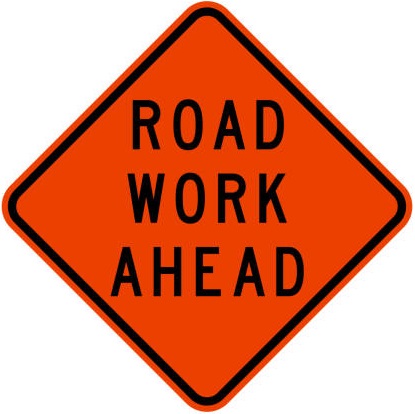
34. This road sign means:
A. Watch for people crossing your path.
B. No passing zone.
C. Work zone ahead.
35. After you have passed a vehicle moving in the same direction, it is safe to move back into the right lane:
A. After about three seconds.
B. When you can no longer see the passed vehicle over your right shoulder.
C. When you can see the entire front of the passed vehicle in your rearview mirror.
36. You may pass a vehicle when:
A. You are on a hill or curve.
B. You are on a road with a solid line next to your lane.
C. You are on a road with a broken line next to your lane.