Dmv Permit Test 107

By Teacher David Global  •  Free

1. A safety zone is a specially marked area for passengers to get on or off of buses or trolleys. You may not drive through a safety zone:
A. When a bus or trolley is present.
B. When a bus or trolley is unloading passengers.
C. At any time for any reason.
2. Dim your headlights for oncoming vehicles or when you are within 300 feet of a vehicle:
A. That you are approaching from behind.
B. Approaching you from behind.
C. That you have already passed.
3. If bad weather makes it difficult for you to see clearly, you should:
A. Speed up to get off the road quickly.
B. Drive in the lane closest to oncoming traffic.
C. Increase your following distance.
4. When entering traffic after being parked at a curb, you:
A. Should drive more slowly than other traffic for 200 feet.
B. Should wait for a large enough gap to get up to the speed of traffic.
C. Should wait for the first two vehicles to pass, then drive into the lane.
5. A broken yellow line beside a solid yellow line indicates that passing is:
A. Permitted from the side next to the solid yellow line.
B. Not permitted from either direction.
C. Permitted from the side next to the broken yellow line.
6. When parking your vehicle on any hill:
A. One of your rear wheels should touch the curb.
B. Use your parking brake and leave the vehicle in "park."
C. Your front wheels should be parallel to the road, if there is no curb.
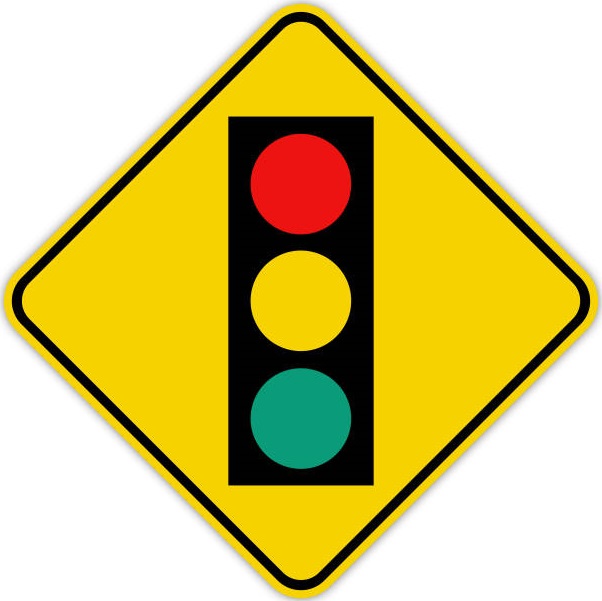
7. This sign means:
A. Traffic signal ahead.
B. Stop.
C. Yield the right-of-way.
8. To see objects in their blind spot when changing lanes, drivers should check:
A. Only the left outside mirror.
B. Over their left or right shoulder.
C. Only the inside rearview mirror.
9. The center of the roadway is marked with one solid yellow line and one broken yellow line. If the broken yellow line is directly next to your traffic lane, it means:
A. You are not allowed to pass in this area.
B. You are in a passing zone and it is safe for you to pass other vehicles on the left if no oncoming traffic is present.
C. You are only allowed to make right turns in this area.
10. When changing lanes on a freeway, you should:
A. Signal for at least five seconds.
B. Slow down before you start to change lanes.
C. Assume there is enough space in the next lane for your vehicle, if you signal first.
11. As you approach an intersection with a flashing yellow light:
A. Stop before crossing the intersection.
B. Slow down and proceed with caution.
C. Wait for a green light before proceeding.
12. When approaching a roundabout, you should always:
A. Increase your speed.
B. Decrease your speed.
C. Maintain your speed.
13. If you are driving and a tire suddenly goes flat, you should:
A. Rapidly pump the brake pedal several times.
B. Slow down gradually and not brake.
C. Press down on the brake pedal as hard as you can.
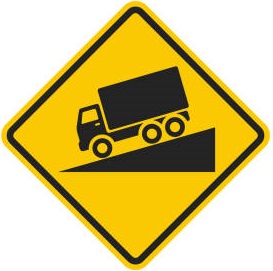
14. What does this road sign mean?
A. Falling rocks
B. Trucks use second gear
C. Steep hill
15. When planning to pass another vehicle, you should:
A. Not count on other drivers to make room for you.
B. Assume the driver will let you pass if you use your turn signal.
C. Assume the driver will maintain a constant speed.
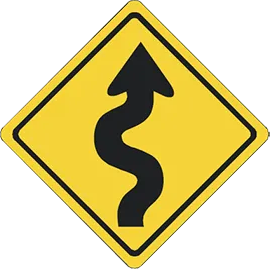
16. This sign tells you that:
A. No turns are allowed on the road.
B. The road narrows ahead.
C. There is a series of curves ahead.
17. You are driving in the far right lane of a four-lane freeway and notice thick broken white lines on the left side of your lane. You are driving in:
A. The carpool lane and must merge into the next lane.
B. A special lane for slow-moving vehicles.
C. An exit lane.
18. When passing a row of parked vehicles, you should:
A. Be prepared for a person or vehicle to unexpectedly enter your lane.
B. Expect all other drivers and pedestrians to respect your right-of-way.
C. Drive closely to the parked vehicles to allow more room for moving traffic.
19. When driving in work zones, you should:
A. Follow the driver in front of you closely.
B. Pass the driver in front of you as soon as you can.
C. Avoid tailgating and keep a safe following distance.
20. When stopped at a red traffic light with a green arrow, you may proceed in the direction of the arrow if you:
A. First come to a complete stop.
B. Wait until the light changes.
C. Are in the proper lane and the intersection is clear.
21. When passing on the left of a vehicle, it is safe to move back into the right lane:
A. After about three seconds.
B. When you can no longer see the vehicle over your right shoulder.
C. When you can see the front of the vehicle in your rearview mirror.
22. California's "Basic Speed Law" says you must:
A. Keep your speed close to that of other traffic.
B. Never drive faster than is safe for current conditions.
C. Always drive at the posted speed limit.
23. You are coming to an intersection with a flashing red light. You should:
A. Slow down and yield the right-of-way.
B. Slow down and drive carefully through the intersection.
C. Come to a complete stop, check the traffic, and go when it is safe to do so.
24. Prior to entering a curve:
A. Activate your turn signal.
B. Reduce your speed.
C. Brake hard.
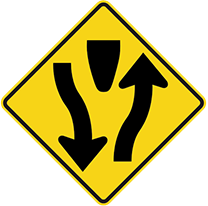
25. This sign means:
A. Divided highway.
B. Railroad warning.
C. No passing zone.
26. Which of the following is true about roadways on bridges and overpasses in cold, wet weather?
A. They tend to freeze before the rest of the road does.
B. They do not freeze because they are made of concrete.
C. They tend to freeze after the rest of the road does.
27. When you see an emergency vehicle approaching while using its flashing lights, you must:
A. Maintain your speed and stay in your lane until the vehicle has passed.
B. Move into the right lane and drive slowly until the vehicle has passed.
C. Pull over to the curb or edge of the road and stop until the vehicle has passed.
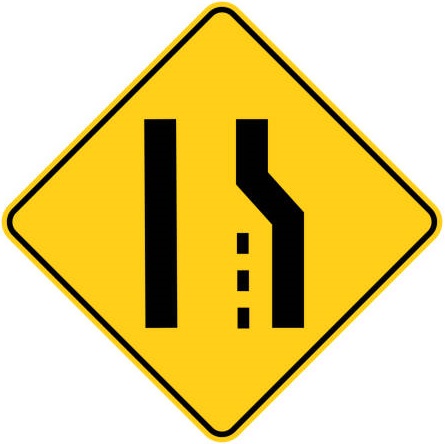
28. This road sign means:
A. Highway entrance ramp.
B. Road widens.
C. Right lane ends.
29. When a car with bright headlights drives toward you at night, you should:
A. Stop until the other driver passes.
B. Look below their headlights.
C. Glance toward the right edge of your lane.
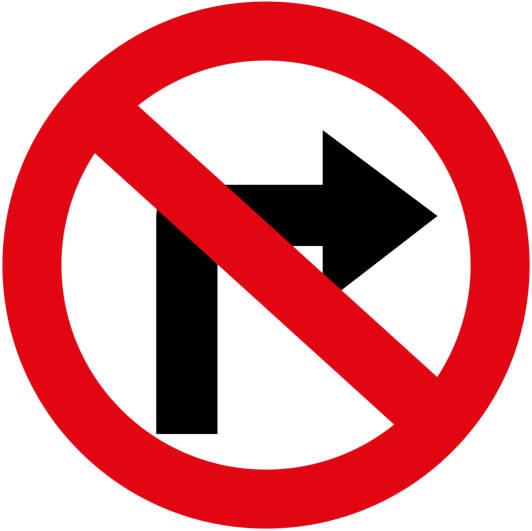
30. What does this road sign mean?
A. You must turn right.
B. No right turns permitted.
C. Right turns permitted on a red light.
31. Reaction time is slower after:
A. Drinking alcohol.
B. Sleeping.
C. Working hard.
32. You should drive on the shoulder to pass a car:
A. If the vehicle ahead of you is turning left.
B. Under no circumstances.
C. If the shoulder is wide enough.
33. A person may legally ride in the back of a pickup truck when:
A. The sides of the pickup bed are at least 24 inches high.
B. The back of the pickup is covered with a camper shell.
C. In a secured seat and while using an approved safety belt.
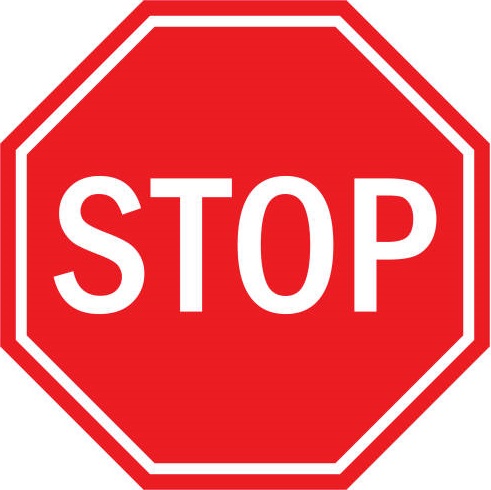
34. This road sign means:
A. Slow down or stop.
B. Stop if necessary.
C. You must come to a complete stop.
35. You are approaching an intersection at the posted speed limit when the signal turns yellow. You should:
A. Slow down and proceed through the intersection without caution.
B. Speed up to cross the intersection before the light turns red.
C. Stop before entering the intersection, if you can do so safely.
36. You should turn on your headlights:
A. One half hour after sunset.
B. When stopped at a railroad crossing.
C. When parked at a school.