Dmv Permit Test 106

By Teacher David Global  •  Free

1. If you are driving and you see animals standing near the roadway:
A. Speed up to scare them away.
B. Slow down and proceed with caution.
C. Quickly swerve into the next lane.
2. To see vehicles in your blind spots, you should check:
A. The inside rearview mirror.
B. The outside rearview mirror.
C. Over your shoulders.
3. When passing another vehicle:
A. Pass the vehicle as slowly as possible.
B. Drive at the same speed as the vehicle you are passing.
C. Pass the vehicle as safely and as quickly as possible.
4. If your vehicle has a two-part safety belt system, you should:
A. Use only the lap belt.
B. Use both the lap and shoulder belts.
C. Use only the shoulder belt.
5. California's Move Over law requires:
A. All vehicles to stay in the right lane at all times.
B. Trucks to use the left lane.
C. All vehicles to vacate the lane closest to an emergency vehicle that is stopped with its lights flashing.
6. Which of these is a safe driving technique?
A. Using your high beam lights in the fog.
B. Staring at the road ahead of your vehicle.
C. Checking your rearview mirrors frequently.
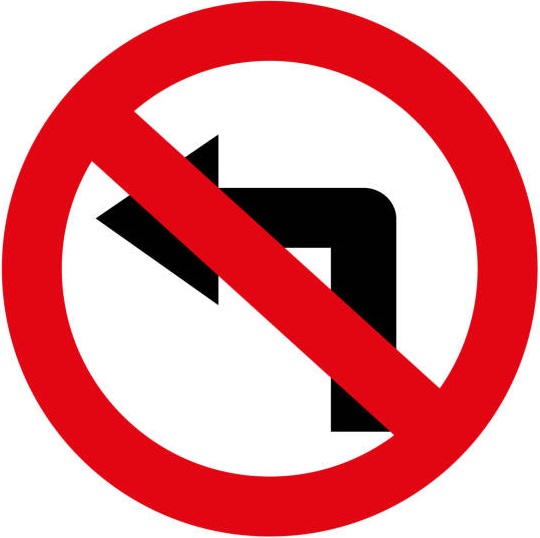
7. This sign means:
A. All traffic must turn left.
B. No left turn.
C. No U-turn.
8. If you drive faster than other vehicles on a road with one lane moving in each direction and continually pass the other cars, you will:
A. Get you to your destination much more quickly and safely.
B. Increase your chances of an collision.
C. Help prevent traffic congestion.
9. To avoid last-minute moves, you should be looking down the road to where your vehicle will be in about:
A. 5 to 10 seconds.
B. 10 to 15 seconds.
C. 15 to 20 seconds.
10. Water on the road can cause a vehicle to hydroplane. Your car may hydroplane at speeds as low as:
A. 45 miles per hour.
B. 35 miles per hour.
C. 40 miles per hour.
11. A flashing yellow light at an intersection means you should:
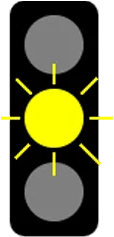
A. Slow down and proceed with caution.
B. Come to a complete stop as quickly as possible.
C. Stop and proceed only when the intersection is clear.
12. You exit the freeway on a ramp that curves downhill. You should:
A. Slow to a safe speed before the curve.
B. Slow to the posted speed limit for the freeway.
C. Wait until you have entered the curve to begin braking.
13. If a traffic signal light is not working, you must:
A. Stop, then proceed when safe.
B. Stop before entering the intersection and let all other traffic go first.
C. Slow down or stop, only if necessary.
14. What is the benefit of a space cushion around your vehicle?
A. Other drivers can cut in front of you, improving the flow of traffic.
B. If another driver makes a mistake, you have time to react.
C. It inflates to protect you from injury in the case of a collision.
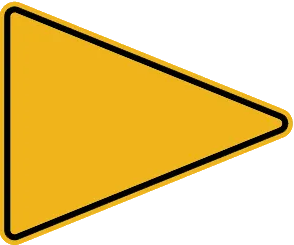
15. This sign means:
A. No passing zone.
B. Slow-moving vehicle.
C. Two-way traffic.
16. Continuous hard braking on ice and snow often:
A. Helps you stop faster.
B. Locks the front wheels of a vehicle, causing a loss of steering.
C. Keeps the brakes from freezing.
17. You want to pass a bicyclist in a narrow traffic lane when an oncoming vehicle is approaching. You should:
A. Honk your horn then pass the bicyclist.
B. Slow down and let the vehicle pass you before you pass the bicyclist.
C. Wait until the bicyclist rides off the roadway.
18. You are getting ready to make a right turn. You should:
A. Signal and turn immediately.
B. Stop before entering the right lane and let all other traffic go first.
C. Slow down or stop, if necessary, and then make the turn.
19. If a truck or bus is making a right turn where you also need to make a right turn, you should:
A. Quickly turn before the truck or bus is able to.
B. Wait until the truck or bus turns before you turn.
C. Squeeze between the truck or bus and the curb.
20. If a child is riding a bicycle near your vehicle:
A. Beep your horn.
B. Expect the child to be in total control of the bicycle.
C. Expect the unexpected.
21. While all of the following actions are dangerous to do while driving, which is also illegal?
A. Listening to music through a set of dual headphones.
B. Adjusting your outside mirrors.
C. Reading a road map.
22. You can drive off the road to pass another vehicle:
A. If the vehicle ahead is turning left.
B. If there are two or more lanes traveling in your direction.
C. Under no circumstances.
23. You want to park uphill on a two-way road and there is no curb. Which direction do you turn your front wheels?
A. Straight ahead
B. Right, toward the side of the road
C. Left, toward the center of the road
24. California's "Basic Speed Law" says you must:
A. Keep your speed close to that of other traffic.
B. Never drive faster than is safe for current conditions.
C. Always drive at the posted speed limit.
25. Drivers turning left must yield to:
A. Overtaking cars.
B. Oncoming cars.
C. No one.
26. Which of the following roadways freeze first when wet?
A. Bridges and overpasses
B. Intersections
C. Tunnels
27. To turn left from a one-way street onto a one-way street, start from:
A. The lane closest to the left curb.
B. The center lane.
C. Any lane, as long as it seems safe to do so.
28. If you hit an animal with your vehicle while driving on a California highway, you should:
A. Move the injured animal off the road.
B. Call the humane society.
C. Continue driving.
29. Unless otherwise posted, the speed limit in a residential area is:
A. 20 mph.
B. 25 mph.
C. 30 mph.
30. What usually causes a locked wheel skid?
A. Braking too hard at a slow speed
B. Braking lightly at a slow speed
C. Braking too hard at a fast speed
31. What should you do when you see this sign?
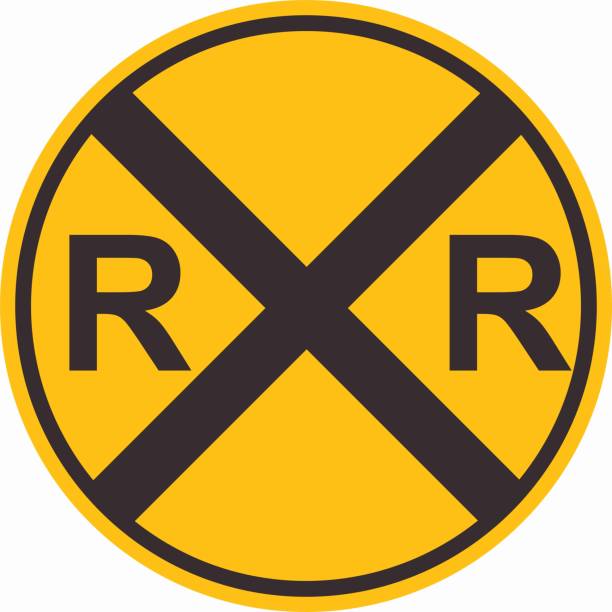
A. Look for a train station ahead.
B. Signal before going any further.
C. Slow down and yield to trains.
32. It is necessary to use your low beams any time you are:
A. On a lighted street.
B. On a freeway.
C. In fog.
33. Placard abuse will result in:
A. Placard revocation only.
B. Only a fine.
C. Placard revocation, a fine, and/or jail time.
34. If a motorist sees pedestrians in an upcoming crosswalk, what should the motorist do?
A. Continue ahead. The motorist has the right-of-way.
B. Wait for the pedestrians to cross the street.
C. Pull to the right and go around the pedestrians.
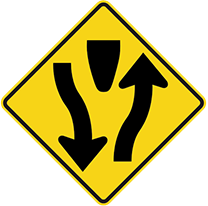
35. This sign means:
A. Curves ahead.
B. Divided highway starts.
C. Divided highway ends.
36. A person may legally ride in the back of a pickup truck when:
A. The sides of the pickup bed are at least 24 inches high.
B. The back of the pickup is covered with a camper shell.
C. In a secured seat and while using an approved safety belt.