Dmv Permit Test 80

By Teacher David Global  •  Free

1. How many alcoholic drinks does it take to affect your driving ability?
A. Three
B. Two
C. One
2. How can you effectively practice defensive driving?
A. Scan the road ahead.
B. Rubberneck.
C. Stare straight ahead.
3. What message will be found on a red octagon-shaped sign?

A. Do not enter.
B. One-way.
C. Stop.
4. What should a driver do when approaching a traffic control signal that is not in operation?
A. Come to a full stop and yield the right-of-way before entering the intersection.
B. If the intersection is clear, the driver does not need to stop.
C. Drive quickly through the intersection to get out of the way of other vehicles.
5. Which of the following factors affect an individual's absorption of alcohol?
A. Weight
B. Height
C. Intelligence
6. You are driving on a one-way street. You may only turn left onto another one-way street if:
A. You increase your speed before the turn.
B. Traffic on the street moves to the right.
C. Traffic on the street moves to the left.
7. If you are being followed too closely on a multilane highway, you should:
A. Speed up to match the speed of the car behind you.
B. Move into the lane to your right and let the other car pass.
C. Slow down to antagonize the driver.
8. Construction zone signs are generally:
A. Square or rectangular with white and red coloring.
B. Round or octagonal with black and yellow coloring.
C. Diamond-shaped or rectangular with orange and black coloring.
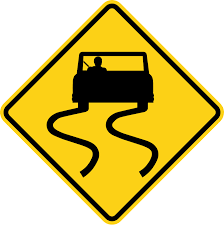
9. This road sign means:
A. Steep grade ahead.
B. The road ahead winds with a series of turns or curves.
C. Slippery when wet.
10. Which of the following is a dangerous habit when driving in work zones?
A. Tailgating another vehicle
B. Failing to carefully watch for workers and moving equipment
C. Both of the above
11. A driver should:
A. Assume all drivers automatically obey the right-of-way rules.
B. Assume most drivers obey the right-of-way rules.
C. Always be prepared to yield the right-of-way.
12. Stopping distances and severity of crashes:
A. Decrease as vehicle speed increases.
B. Are not affected by vehicle speed.
C. Increase as vehicle speed increases.
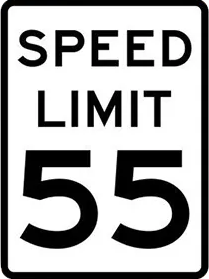
13. This road sign means:
A. You must travel through the intersection at the posted speed limit.
B. The maximum speed limit under ideal conditions is 55 mph.
C. You must not travel below the speed indicated.
14. If you see a pedestrian using a guide dog or carrying a white cane:
A. The pedestrian must yield the right-of-way.
B. You must yield the right-of-way.
C. Honk your horn to let them know you are there.
15. Sudden wind gusts on highways:
A. Generally affect only the movement of large vehicles.
B. Only cause visibility problems.
C. Can cause problems for all vehicles.
16. Any amount of alcohol in the blood may affect a driver's:
A. Right-of-way privileges.
B. Judgment and physical coordination.
C. Knowledge.
17. Interstate driving requires drivers to:
A. Have the ability to safely drive at increased speeds.
B. Be constantly alert.
C. Both of the above.
18. If you text while you’re behind the wheel, you’re ____ times more likely to be involved in a crash than a non-distracted driver.
A. Five
B. 10
C. 20
19. Which of the following statements about blind spots is true?
A. They are eliminated if you have one outside mirror on each side of the vehicle.
B. Large trucks have bigger blind spots than most passenger vehicles.
C. Blind spots can be checked by looking in your rearview mirrors.
20. Which of the following statements about blind spots is true?
A. Blind spots are eliminated if you have one outside mirror.
B. Large trucks have bigger blind spots than most passenger vehicles.
C. Blind spots can be checked by looking in your rearview mirror.
21. If you are driving on a highway next to a single broken white line marking:
A. You cannot cross the line to pass.
B. You may cross the line to pass and change lanes.
C. You may only cross the line to change lanes if you are in the left lane.
22. When may you legally drive around or under a railroad crossing gate?
A. Never.
B. When you can see clearly in both directions.
C. When the warning lights are not flashing.
23. Excessive speed:
A. Does not increase the chance of a crash.
B. Increases your ability to react to a hazard.
C. Often leads to high-risk decision-making.
24. To enter a gap in highway traffic:
A. Watch only the vehicles behind the gap.
B. Check behind you, then watch the vehicle ahead.
C. Speed up and let the other vehicles make way.
25. You enter a designated turn lane to make a left turn at an upcoming intersection. There is oncoming traffic. You should:
A. Move to the left of the center lane.
B. Signal before you arrive at the intersection.
C. Turn your front wheels to the left to be prepared to turn.