Dmv Permit Test 79

By Teacher David Global  •  Free

1. The proper way to make a right turn is to:
A. Signal, slow down, and get into the lane closest to the centerline before turning.
B. Signal, slow down, and get into the lane closest to the right curb before turning.
C. Approach the corner in the lane nearest the right curb, but move over toward the middle of the street before turning.
2. A flashing yellow light at an intersection means you should:
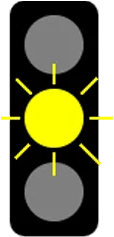
A. Slow down and proceed with caution.
B. Come to a complete stop as quickly as possible.
C. Stop and proceed only when the intersection is clear.
3. When being passed by another vehicle:
A. Brake hard.
B. Maintain a constant speed.
C. Speed up.
4. If a tire blows out, you should:
A. Apply the brake and hold it.
B. Hold the steering wheel tightly and use the brakes lightly.
C. Pull over quickly.
5. When driving in a construction zone:
A. Slightly increase your speed.
B. Expect the unexpected.
C. Expect construction workers to yield to motorists.
6. Which of the following road surfaces freezes first?
A. A tunnel
B. An intersection
C. A bridge
7. Roads with double solid yellow line markings down the center indicate that passing is:
A. Allowed from both directions.
B. Allowed only from your direction of travel.
C. Not allowed from either direction.
8. If your car becomes disabled while on the highway, you should:
A. Stop in the right lane.
B. Park with all four wheels off the traveled highway, if possible.
C. Stop where you are.
9. To help others see you when daylight begins to fade, you should use your:
A. Parking lights.
B. Low beam headlights.
C. Emergency flashers.
10. When double solid yellow lines separate lanes of traffic:
A. Passing is permitted from the left.
B. Passing is permitted from the right.
C. Passing is not permitted from either direction.
11. Which lane must you be in before making a left turn from a one-way street?
A. The lane nearest the left curb.
B. The lane nearest the center of the street.
C. The lane nearest the right curb.
12. This sign is used to warn drivers about:
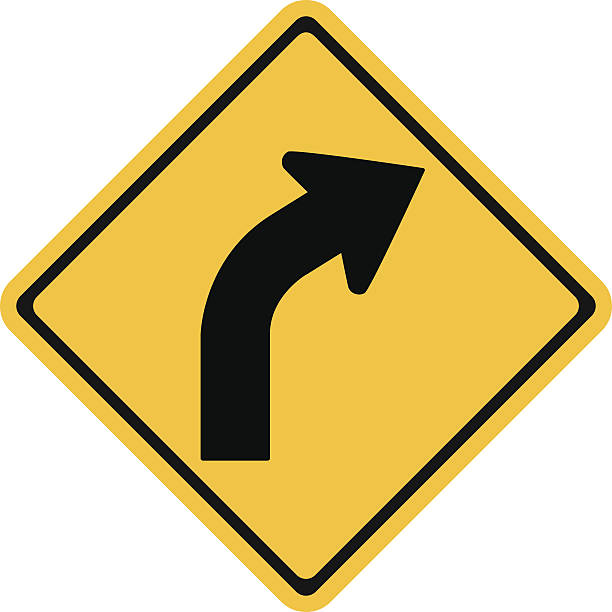
A. Upcoming intersections.
B. Road construction.
C. Road curves ahead.
13. Water on the road can cause a vehicle to hydroplane. Your car may hydroplane at speeds as low as:
A. 45 miles per hour.
B. 35 miles per hour.
C. 40 miles per hour.
14. At an intersection with a yield sign, you:
A. Must yield the right-of-way to cross traffic that is close enough to cause conflict.
B. Must yield to vehicles only on your right.
C. Should slow down but never stop.
15. You must yield to a pedestrian using a white cane or guide dog:
A. Only when the guide dog is leading the person across the street.
B. At all times.
C. Only if a crossing guard is present.
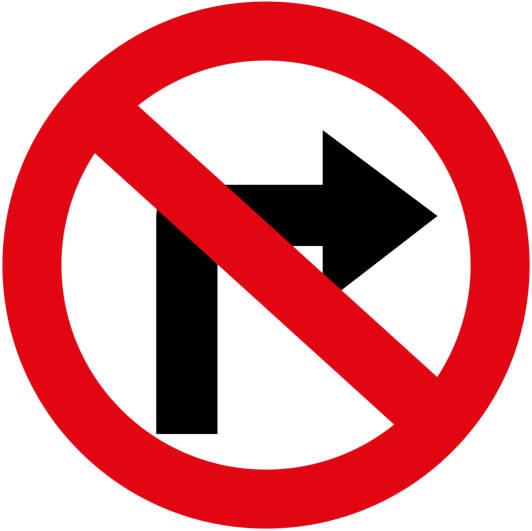
16. What does this road sign mean?
A. You must turn right.
B. No right turns permitted.
C. Right turns permitted on a red light.
17. Work zone barriers, drums, cones, and signs are used to:
A. Make drivers angry about slow traffic.
B. Inconvenience drivers.
C. Keep traffic out of hazardous work zones.
18. If you are getting tired while driving, you should:
A. Stop and either get rest or change drivers.
B. Drink something with caffeine.
C. Open a window.
19. Which of these statements is true about large trucks?
A. They take longer to stop than passenger vehicles.
B. They all have air brakes that allow them to stop quickly.
C. They are more maneuverable than passenger vehicles.
20. When entering the interstate on a short entrance ramp where there is no acceleration lane, you should:
A. Immediately enter the far-right traffic lane on the interstate and speed up to match the flow of traffic.
B. Use the shoulder of the main road to get up to the speed of traffic.
C. Speed up and enter the interstate only after you have identified a gap in traffic.
21. The first thing that alcohol effects is:
A. Vision.
B. Judgment.
C. Balance.
22. Drivers turning left must yield to:
A. Oncoming vehicles traveling straight or turning right.
B. Passing cars.
C. No one in particular.
23. The maximum posted speed limit should be driven only:
A. During the night.
B. During the day.
C. Under ideal conditions.
24. At a railroad crossing, you must:
A. Watch for vehicles that must stop at all railroad crossings (school buses, trucks carrying hazardous materials, etc.).
B. Watch for multiple trains.
C. Both of the above.
25. Alcohol in any concentration is:
A. A stimulant.
B. A depressant.
C. Neither of the above.