Dmv Permit Test 78

By Teacher David Global  •  Free

1. Which of the following describes the thinking of defensive drivers?
A. They know other drivers will do the right thing.
B. They consider what other drivers might do and are prepared to react.
C. They expect no breaks and give none.
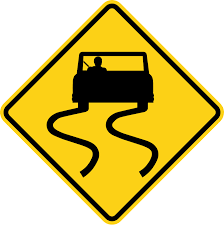
2. This sign means:
A. Slow down; curving road ahead.
B. Slow down and do not use your brakes.
C. Slow down; slippery when wet.
3. Drivers are required to obey instructions from:
A. Security guards patrolling parking lots.
B. Other drivers whose vehicles are broken down on the roadway.
C. Flaggers (signal persons) at construction sites.
4. While driving on a roadway with a single broken white centerline:
A. You must stay within your lane.
B. You may cross the centerline to change lanes.
C. You may change lanes only from the left lane.
5. If you are driving and a tire suddenly goes flat, you should:
A. Rapidly pump the brake pedal several times.
B. Slow down gradually and not brake.
C. Press down on the brake pedal as hard as you can.
6. You should signal continuously while turning because it:
A. Is illegal to turn off your signal before completing a turn.
B. Lets other drivers know what your intentions are.
C. Is always unsafe to turn off a signal before completing a turn.
7. Yellow lines separate:
A. Traffic lanes on one-way streets.
B. Traffic moving in opposite directions on two-way roads.
C. All carpool lanes from regular traffic lanes.
8. Hydroplaning occurs when tires ride on a thin film of water instead of on the road. To prevent hydroplaning in wet weather, you should:
A. Put on your cruise control to maintain a constant speed.
B. Slow down.
C. Move to the shoulder of the road as soon as it starts to rain.
9. Prior to entering a curve:
A. Activate your turn signal.
B. Reduce your speed.
C. Brake hard.
10. When driving on gravel or dirt roads:
A. Your tires grip the road better than when you are driving on pavement.
B. Your tires do not have as much traction as they do on pavement, so you must slow down.
C. Visibility is better than on pavement.
11. If bad weather makes it difficult for you to see clearly, you should:
A. Speed up to get off the road quickly.
B. Drive in the lane closest to oncoming traffic.
C. Increase your following distance.
12. When changing lanes, you should never:
A. Look over your shoulder to check your blind spot.
B. Change lanes abruptly or spontaneously.
C. Check for other vehicles moving into the same lane.
13. When entering traffic after being parked at a curb, you:
A. Should drive more slowly than other traffic for 200 feet.
B. Should wait for a large enough gap to get up to the speed of traffic.
C. Should wait for the first two vehicles to pass, then drive into the lane.
14. When merging onto the freeway, you should be driving:
A. At or near the speed of the freeway traffic.
B. At the legal speed limit.
C. More slowly than the freeway traffic.
15. Drivers turning left must yield to:
A. Overtaking cars.
B. Oncoming cars.
C. No one.
16. If you must park your vehicle in an area not usually used for parking:
A. Park with your reverse lights on.
B. Make sure your vehicle is visible to drivers approaching from any direction.
C. Park five feet from the curb.
17. It is very foggy. You should slow down and:
A. Turn on your emergency flashers.
B. Turn your lights to their high beam setting.
C. Turn your lights to their low beam setting.
18. You are driving behind a motorcycle and want to pass. You must:
A. Stay in the right lane as much as possible because the motorcycle is small and doesn't use all of the lane.
B. Blow your horn to make the motorcycle move onto the shoulder so that you can pass.
C. Have your vehicle entirely in the left lane before and during the pass.
19. When you see this sign, you should:
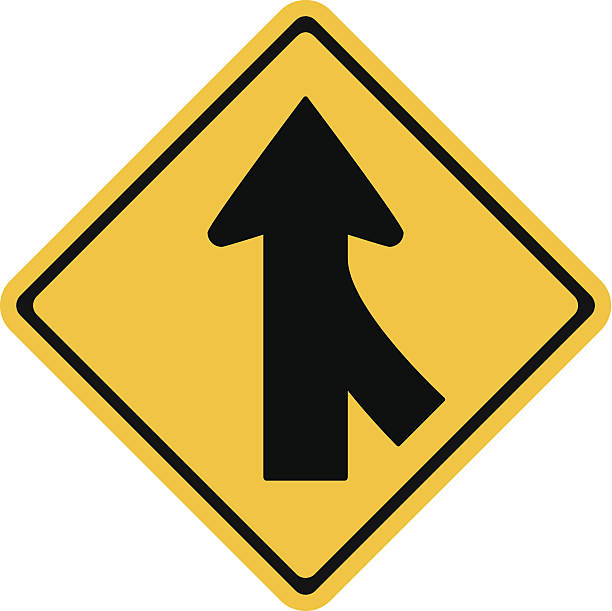
A. Watch for traffic merging from the right.
B. Merge right.
C. Turn left.
20. You should use your horn when:
A. Another vehicle is in your way.
B. It may help prevent a collision.
C. Another driver makes a mistake.
21. Which of these statements is true about drugs and driving?
A. Any prescription drug is safe to use if you don't feel drowsy.
B. Even over-the-counter drugs can impair your driving.
C. Only illegal drugs can impair your driving.
22. To improve visibility lowered by rain or fog, drivers should use their:
A. Low beam headlights.
B. High beam headlights.
C. Parking lights.
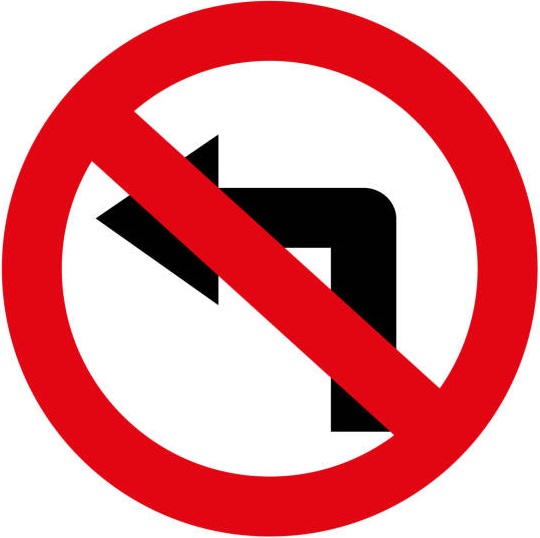
23. This sign means:
A. No left turn can be made here.
B. A left turn can be made only after stopping.
C. All traffic must turn right at the next intersection.
24. On a multilane road, a dashed yellow line next to a solid yellow line means:
A. Passing is prohibited from both directions.
B. Passing is permitted from both directions.
C. Passing is permitted only from the direction next to the dashed line.
25. How should drivers apply the gas pedal?
A. Slowly and smoothly
B. As quickly as possible
C. By lightly tapping