Dmv Permit Test 76

By Teacher David Global  •  Free

1. Excessive speed:
A. Saves time so you can get to your destination more quickly.
B. Helps you maneuver around obstacles.
C. Increases the likelihood of serious bodily injury and death.
2. What is an important step in turning?
A. Check traffic in all directions.
B. Increase your speed.
C. Always move to the left lane.
3. Only ____ can reduce blood alcohol content (BAC) and alcohol's effects on the body.
A. Drinking caffeine
B. Eating foods high in fat
C. Time
4. Various traffic control devices in construction and maintenance work areas are the color:
A. Red.
B. Orange.
C. Yellow.
5. You may pass a vehicle when:
A. You are on a hill or curve.
B. You are on a road with a solid line next to your lane.
C. You are on a road with a broken line next to your lane.
6. Children on bicycles should be given extra space by motor vehicle operators because:
A. They do not have the same physical reflexes as adults.
B. They are smaller and more difficult to see than adults.
C. Both of the above.
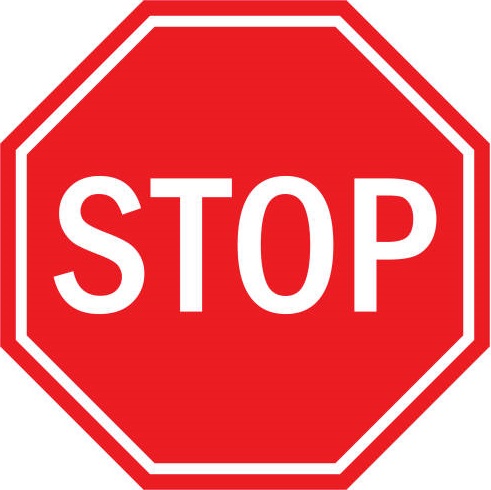
7. What does this road sign mean?
A. Slow down and prepare to stop if cars are approaching you.
B. Come to a full stop then proceed when it is safe to do so.
C. Proceed carefully through the intersection, not always stopping.
8. A distraction when driving is:
A. Anything that causes evasive action while driving.
B. Anything that takes your attention away from driving.
C. Anything that causes you to pay more attention to driving.
9. Blind spots are:
A. Spots in your vision when you become fatigued.
B. Areas of the road that cannot be seen in a vehicle's mirrors.
C. Traffic control devices.
10. If your vehicle has a two-part safety belt system, you should:
A. Use only the lap belt.
B. Use both the lap and shoulder belts.
C. Use only the shoulder belt.
11. If you drive faster than other vehicles on a road with one lane moving in each direction and continually pass the other cars, you will:
A. Get you to your destination much more quickly and safely.
B. Increase your chances of an collision.
C. Help prevent traffic congestion.
12. Which of the following substances can affect the ability to drive?
A. Tranquilizers, marijuana, and sedatives.
B. Cough syrups and cold tablets containing codeine or antihistamines.
C. All of the above.
13. When turning left at an intersection:
A. You should always yield to oncoming traffic and pedestrians.
B. Oncoming traffic and pedestrians should yield to you.
C. You should never yield to oncoming traffic and pedestrians.
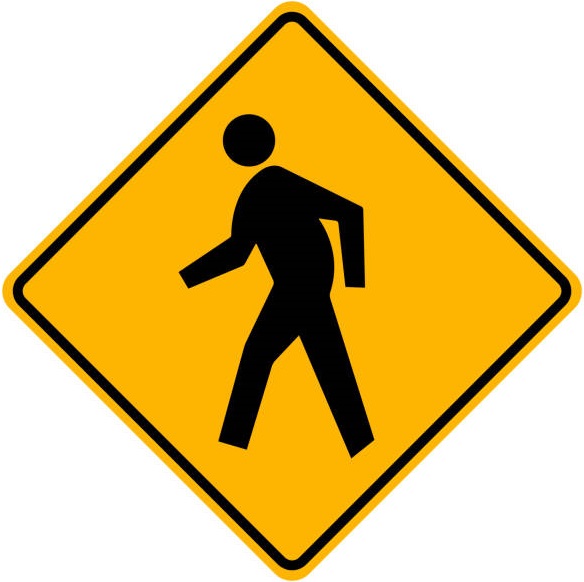
14. This road sign means:
A. Pedestrian crossing.
B. School crossing.
C. Jogging trail.
15. Before returning to your original lane after passing another vehicle, you should:
A. Beep your horn.
B. See both headlights of the passed vehicle in your rearview mirror.
C. Flash your headlights.
16. When a school bus is stopped ahead on your side of the road with its red lights flashing, you must:
A. Slow to a speed no faster than 10 mph.
B. Stop until the lights stop flashing.
C. Change lanes and pass cautiously.
17. When turning left at an intersection:
A. You should always yield to oncoming traffic and pedestrians.
B. Oncoming traffic and pedestrians should yield to you.
C. You should never yield to oncoming traffic and pedestrians.
18. If a road is slippery, maintain a following distance that is:
A. No different than normal.
B. Farther from the car ahead than normal.
C. Closer to the car ahead than normal.
19. When should drivers yield the right-of-way to pedestrians in a crosswalk?
A. Only if the pedestrians first wave to the driver.
B. Only if the pedestrians are not texting while walking.
C. At all times.
20. At a crosswalk:
A. You must yield to pedestrians.
B. Pedestrians must yield to you.
C. Construction workers must yield to you.
21. Using a cell phone while operating a motor vehicle is considered a distraction because:
A. It causes the driver to be concerned about the cost of the call.
B. It occupies the driver's hands, eyes, and mind.
C. It is an activity that draws the attention of other drivers.
22. Fatigue increases the risk of:
A. Missing an exit.
B. Being late for an appointment.
C. Falling asleep behind the wheel and crashing.
23. Which statement is true?
A. You should put on your cruise control near a railroad crossing to maintain a constant speed.
B. You must stop at a railroad crossing when directed to do so by a flagger or stop sign.
C. You have the right-of-way at a railroad crossing and do not need to stop.
24. If you come to a railroad crossing with lowered gates and flashing warning lights, you should:
A. Drive around the crossing gates if you can't see a train.
B. Come to a complete stop well behind the gates, wait for the tracks to clear, and proceed once the gates are lifted.
C. Slow down and drive around the gates.
25. It is unlawful to:
A. Pass another vehicle in any marked no passing zone.
B. Pass another vehicle over a railroad crossing.
C. Both of the above.