Dmv Permit Test 75

By Teacher David Global  •  Free

1. The best thing to do if you become tired while driving is to:
A. Stop to rest or change drivers.
B. Drink coffee.
C. Open a window.
2. When driving in work zones, you should:
A. Follow the driver in front of you closely.
B. Pass the driver in front of you as soon as you can.
C. Avoid tailgating and keep a safe following distance.
3. If you approach a stopped school bus that has its lights flashing and signal arm extended, you should:
A. Stop.
B. Proceed at 15 mph if no children are present.
C. Proceed at normal speed, but watch for children.
4. Night driving presents unique problems because:
A. The speed limit is increased at night.
B. There are fewer cars on the roads at night.
C. Distance and vehicle speed are difficult to judge in the dark.
5. A pedestrian starts to cross the street after the "Don't Walk" signal begins to flash. The pedestrian is in the middle of the street when your signal light changes to green. You should:
A. Proceed if you have the right-of-way.
B. Proceed if the pedestrian is not in your lane.
C. Wait until the pedestrian crosses the street before proceeding.
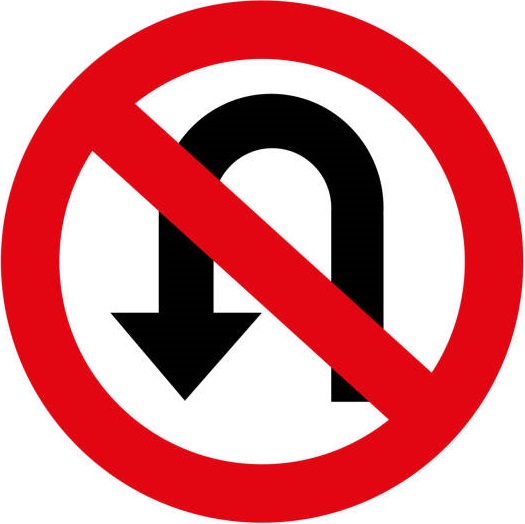
6. This road sign means:
A. Do not enter.
B. Roundabout ahead.
C. No U-turns.
7. When a pedestrian guided by a dog or carrying a white cane is crossing the street:
A. You must always yield the right-of-way.
B. You must tell them where to cross the street.
C. You only have to yield the right-of-way if you are at a corner.
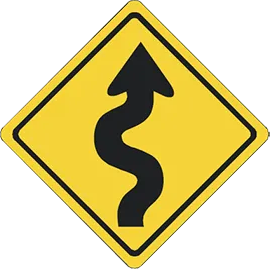
8. This sign means:
A. Winding road ahead.
B. Do not enter.
C. Pedestrian crossing.
9. There is no crosswalk and you see a pedestrian crossing your lane ahead. You should:
A. Make eye contact with and then pass the pedestrian.
B. Slow down as you pass the pedestrian.
C. Stop and let the pedestrian finish crossing the street.
10. You should yield to a pedestrian:
A. Only if they are in a crosswalk.
B. At all times, even if the pedestrian is not obeying traffic laws.
C. Only if the traffic lights are in the pedestrian's favor.
11. When approaching a railroad crossing warning sign:
A. Be ready to drive faster than the train.
B. Be prepared to stop if a train is nearby.
C. Look for a way around any lowered gates.
12. Curbs painted yellow or red indicate:
A. Free parking areas.
B. Paid parking areas.
C. No parking zones.
13. What is the only medically proven method of removing alcohol or other drug combinations from your system?
A. Breathe in some fresh air.
B. Give your body time.
C. Drink coffee.
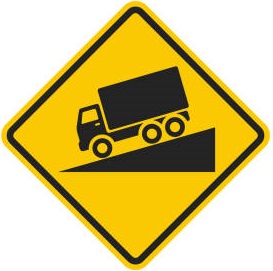
14. This road sign means:
A. Intersection ahead.
B. Merging traffic.
C. Steep hill ahead.
15. In a vehicle equipped with airbags, the safest place for children age 12 and under to ride is in:
A. The front seat.
B. The back seat.
C. The bed of a pick-up truck.
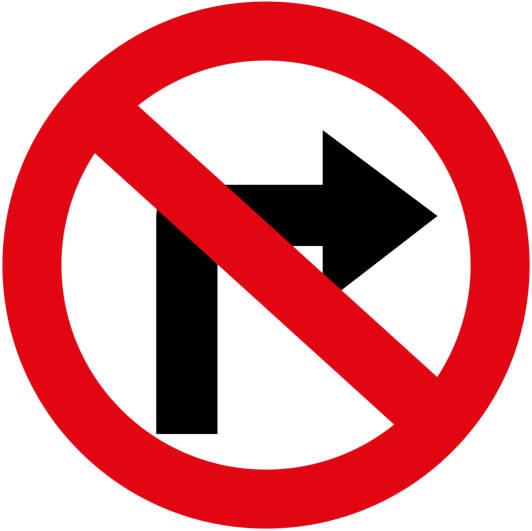
16. What does this road sign mean?
A. You must turn right.
B. No right turns permitted.
C. Right turns permitted on a red light.
17. To prevent yourself from becoming an aggressive driver:
A. Relax and concentrate on driving.
B. Drive above the posted speed limit.
C. Tailgate the driver in front of you.
18. If your vehicle has a mechanical problem:
A. Signal and pull into the slow lane.
B. Stop in your lane and put on your hazard lights.
C. Put on your hazard lights and pull off the road.
19. If you encounter an aggressive driver, you should:
A. Challenge them.
B. Get out of their way.
C. Speed up.
20. If you refuse to submit to an alcohol test, you:
A. May lose your license.
B. Are exercising your right as a motorist.
C. Will face no negative consequences.
21. You see pedestrians near the road. You should:
A. Sound your horn and maintain your speed.
B. Speed up to clear the area quickly.
C. Slow down and pass with caution.
22. Before switching on the ignition, you should:
A. Buckle your safety belt.
B. Be sure all passengers have buckled their safety belts.
C. Both of the above.
23. In Arkansas, wearing a seat belt in the front passenger seat of a vehicle is:
A. Optional.
B. Suggested.
C. Required by law.
24. "No passing zone" signs tell drivers:
A. To speed up slightly.
B. That it is not safe to pass.
C. To maintain a steady speed.
25. Driving under the influence of any medication which impairs your driving is permitted:
A. Under no circumstances.
B. If you don't feel drowsy.
C. If it is prescribed by a physician.