Dmv Permit Test 88

By Teacher David Global  •  Free

1. When driving under low-visibility conditions due to fog, you should:
A. Turn on your high beam headlights.
B. Slow down and use your low beam headlights.
C. Increase your speed so you do not cause an accident.
2. It is necessary to use your low beams any time you are:
A. On a lighted street.
B. On a freeway.
C. In fog.
3. Excessive speed:
A. Does not increase the chance of a crash.
B. Increases your ability to react to a hazard.
C. Often leads to high-risk decision-making.
4. When you see this black and yellow sign, it means:
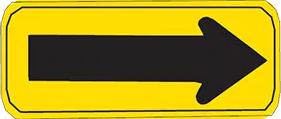
A. The road to the right is for one-way traffic only.
B. There is a detour to the right due to road construction.
C. The road ahead changes direction at an extreme angle.
5. Double solid yellow line markings down the center of a road indicate that passing is:
A. Allowed from both directions.
B. Allowed only from your direction of travel.
C. Not allowed from either direction.
6. A driver should:
A. Assume all drivers automatically obey the right-of-way rules.
B. Assume most drivers obey the right-of-way rules.
C. Always be prepared to yield the right-of-way.
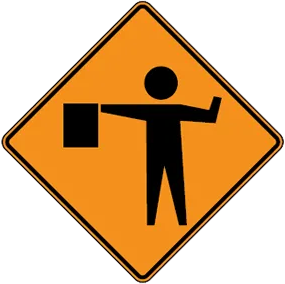
7. This sign tells a driver that:
A. A construction flagger is ahead.
B. A police officer is ahead.
C. A parking attendant is ahead.
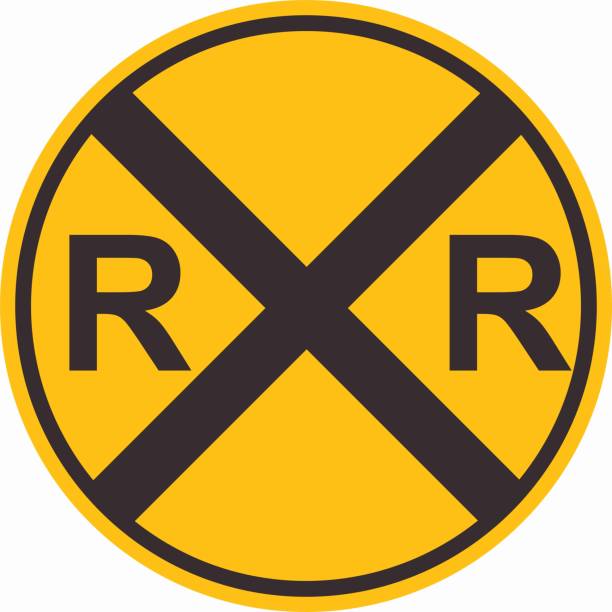
8. This sign indicates a:
A. Railroad crossing.
B. Pedestrian crossing.
C. No passing zone.
9. When driving in a construction zone:
A. Slightly increase your speed.
B. Expect the unexpected.
C. Expect construction workers to yield to motorists.
10. How should drivers apply the gas pedal?
A. Slowly and smoothly
B. As quickly as possible
C. By lightly tapping
11. When approaching an intersection controlled by a flashing yellow light, you must:
A. Come to a complete stop at the intersection.
B. Maintain your normal speed.
C. Slow down and proceed with caution.
12. When approaching an intersection that is controlled by a flashing red traffic signal, you must:
A. Come to a complete stop, yield to oncoming traffic or pedestrians, then proceed.
B. Reduce your speed and proceed with caution.
C. Come to a complete stop and remain stopped as long as the light is red.
13. You should drive on the shoulder to pass a car:
A. If the vehicle ahead of you is turning left.
B. Under no circumstances.
C. If the shoulder is wide enough.
14. Hydroplaning occurs when tires ride on a thin film of water instead of on the road. To prevent hydroplaning in wet weather, you should:
A. Put on your cruise control to maintain a constant speed.
B. Slow down.
C. Move to the shoulder of the road as soon as it starts to rain.
15. At a railroad crossing, you must:
A. Watch for vehicles that must stop at all railroad crossings (school buses, trucks carrying hazardous materials, etc.).
B. Watch for multiple trains.
C. Both of the above.
16. What does a traffic signal with a yellow left arrow indicate?
A. Drivers should prepare to yield to oncoming traffic.
B. The protected left turn is about to end.
C. Both of the above.
17. Where is it safe to pass another vehicle?
A. Within an intersection where there are no oncoming vehicles
B. Wherever signs and/or pavement markings permit passing
C. Within a curve where there are no oncoming vehicles
18. Which of the following factors affect an individual's absorption of alcohol?
A. Weight
B. Height
C. Intelligence
19. Which of the following blocks the smooth flow of traffic?
A. Slowing down to look at collision scene.
B. Avoiding unnecessary lane changes.
C. Using public transportation instead of your vehicle.
20. If weather or light conditions require you to have your lights on while driving:
A. Use your parking lights.
B. Use your high beams.
C. Use your low beams.
21. You want to park downhill on a two-way road and there is no curb. Which way do you turn your front wheels?
A. Straight ahead
B. Right, toward the side of the road
C. Left, toward the center of the road
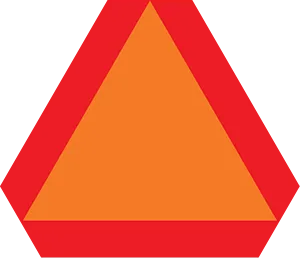
22. This symbol is used for:
A. Dangerous intersections.
B. Slow-moving vehicles.
C. Yield signs.
23. What is the only effective way to remove alcohol from the body?
A. Drink strong coffee.
B. Wait.
C. Take a cold shower.
24. If a motorist sees pedestrians in an upcoming crosswalk, what should the motorist do?
A. Continue ahead. The motorist has the right-of-way.
B. Wait for the pedestrians to cross the street.
C. Pull to the right and go around the pedestrians.
25. Which of these statements is true about drugs and driving?
A. Any prescription drug is safe to use if you don't feel drowsy.
B. Even over-the-counter drugs can impair your driving.
C. Only illegal drugs can impair your driving.