Dmv Permit Test 87

By Teacher David Global  •  Free

1. You are approaching a green traffic light and traffic is blocking the intersection. What is the best thing to do?
A. Partially enter the intersection to establish your right-of-way.
B. Don't enter the intersection until you can get completely across.
C. Continue into the intersection and wait for traffic to clear.
2. You are coming to an intersection with a flashing red light. You should:
A. Slow down and yield the right-of-way.
B. Slow down and drive carefully through the intersection.
C. Come to a complete stop, check the traffic, and go when it is safe to do so.
3. When you see an emergency vehicle approaching while using its flashing lights, you must:
A. Maintain your speed and stay in your lane until the vehicle has passed.
B. Move into the right lane and drive slowly until the vehicle has passed.
C. Pull over to the curb or edge of the road and stop until the vehicle has passed.
4. If your car's suspension is bad, it can cause:
A. Vehicle control problems.
B. Squealing brakes.
C. Slack in the steering.
5. Motorcycles, scooters, and mopeds are not easy to see; therefore, you should:
A. Slow down when driving.
B. Make constant visual checks.
C. Share a lane with a motorcycle.
6. If you come to an intersection controlled by a flashing yellow light, you must:
A. Wait for the green light before proceeding.
B. Slow down and cross the intersection carefully.
C. Stop before crossing the intersection.
7. If your vehicle begins to skid, you should:
A. Ease up on the gas pedal.
B. Brake as hard as possible.
C. Turn off the ignition.
8. When merging onto the freeway, you should be driving:
A. At or near the speed of the freeway traffic.
B. At the legal speed limit.
C. More slowly than the freeway traffic.
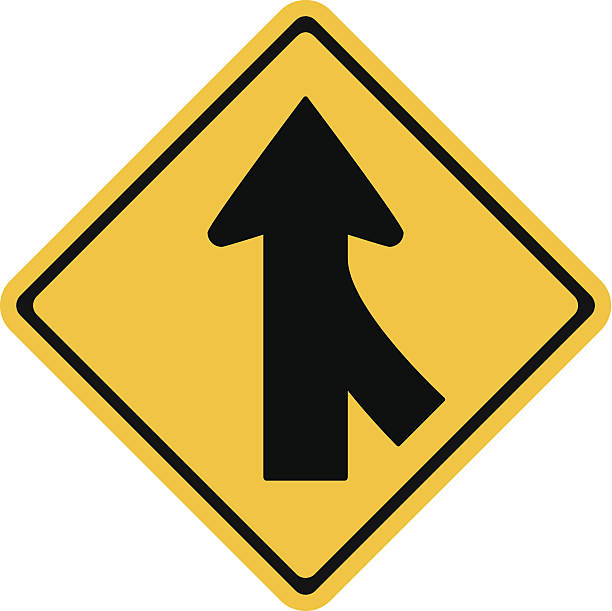
9. This sign means:
A. You should stop for other traffic.
B. Traffic is entering from another road and you should allow additional space for drivers to merge safely into the flow of traffic.
C. Traffic is entering from another road and you should keep right.
10. A flashing red traffic light at an intersection means:
A. The same thing as a yield sign.
B. The light is about to turn green.
C. The same thing as a stop sign.
11. Allow extra space in front of your vehicle when following a:
A. Station wagon.
B. Passenger vehicle.
C. Motorcycle.
12. It is more dangerous to drive at night than during the day because:
A. You cannot see as far ahead at night.
B. The road is always more slippery at night.
C. Your reaction time is slower at night.
13. Double solid yellow lane markings mean that:
A. Neither lane may pass.
B. Both lanes may pass.
C. The lane to the right may pass.
14. When you are behind a motorcycle, you should:
A. Be ready to use your horn.
B. Drive more slowly.
C. Allow a larger following distance.
15. When passing a row of parked vehicles, you should:
A. Be prepared for a person or vehicle to unexpectedly enter your lane.
B. Expect all other drivers and pedestrians to respect your right-of-way.
C. Drive closely to the parked vehicles to allow more room for moving traffic.
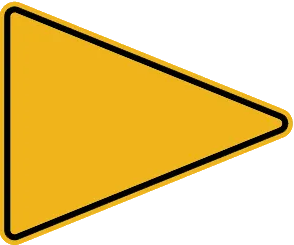
16. A sign with this shape means:
A. No passing zone.
B. Right turn permitted on red.
C. Yield right-of-way.
17. When driving in fog, you should:
A. Use your high beam headlights.
B. Use your parking lights.
C. Use your low beam headlights.
18. If you experience a tire blowout:
A. Tap or pump the brakes.
B. Slow down gradually and use your brakes lightly.
C. Apply the brakes firmly and quickly.
19. If you are driving on a highway next to a single broken white line marking:
A. You cannot cross the line to pass.
B. You may cross the line to pass and change lanes.
C. You may only cross the line to change lanes if you are in the left lane.
20. You want to park downhill on a two-way road and there is no curb. Which way do you turn your front wheels?
A. Straight ahead
B. Right, toward the side of the road
C. Left, toward the center of the road
21. Which of the following blocks the smooth flow of traffic?
A. Slowing down to look at collision scene.
B. Avoiding unnecessary lane changes.
C. Using public transportation instead of your vehicle.
22. You can help keep the driver behind you a safe distance away from your vehicle by:
A. Driving 10 mph faster than the car behind you.
B. Driving 10 mph slower than the car behind you.
C. Maintaining a steady speed.
23. You exit the freeway on a ramp that curves downhill. You should:
A. Slow to a safe speed before the curve.
B. Slow to the posted speed limit for the freeway.
C. Wait until you have entered the curve to begin braking.
24. If there is a deep puddle on the road ahead, you should:
A. Maintain the posted speed to make it through the water.
B. Avoid the puddle if possible.
C. Shift into neutral as you drive through the water.
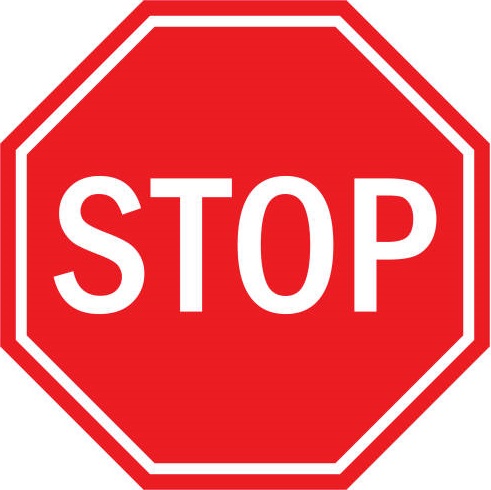
25. What does this road sign mean?
A. Slow down and prepare to stop if cars are approaching you.
B. Come to a full stop then proceed when it is safe to do so.
C. Proceed carefully through the intersection, not always stopping.