Dmv Permit Test 86

By Teacher David Global  •  Free

1. When changing lanes:
A. Check your side mirror and look over your shoulder to make sure the lane is clear.
B. Check the inside rearview mirror.
C. Slow down.
2. To help avoid skidding on slippery surfaces, you should:
A. Shift to a lower gear after starting down a steep hill.
B. Speed up to enter curves and slow down to exit them.
C. Slow down before entering curves and intersections.
3. To see objects in their blind spot when changing lanes, drivers should check:
A. Only the left outside mirror.
B. Over their left or right shoulder.
C. Only the inside rearview mirror.
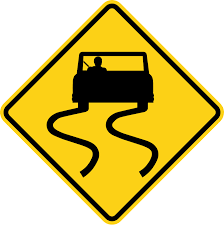
4. This sign means:
A. Slippery when wet.
B. Stop sign ahead.
C. No U-turn.
5. When approaching a flashing red traffic light, drivers should:
A. Treat the light like a stop sign.
B. Wait until the light turns green to proceed.
C. Continue through the intersection without stopping.
6. When driving at night, you should:
A. Always use your high beams.
B. Look directly at the headlights of an oncoming vehicle.
C. Increase your following distance.
7. When approaching a flashing yellow traffic light, drivers should:
A. Treat the light like a stop sign.
B. Wait until the light turns green to proceed.
C. Slow down and proceed with caution through the intersection.
8. Fines for moving traffic violations in work zones are:
A. Lessened.
B. Doubled.
C. Non-existent.
9. The driver ahead of you stops at a crosswalk. What should you do?
A. Cautiously pass the vehicle at 10 mph or slower.
B. Stop, proceeding only when all the pedestrians have crossed.
C. Change lanes, look carefully, and pass the stopped vehicle.
10. A U-turn is not permitted:
A. In a parking lot.
B. On or near any curve or hill.
C. On a straight roadway with a clear view for 500 feet in both directions.
11. When driving under snowy or icy conditions:
A. It is safe to use your cruise control.
B. Make speed and directional changes more gradually than you would otherwise.
C. Drive as you would under normal conditions.
12. Before you enter an intersection, you should look to your:
A. Left, your right, then your left again.
B. Right.
C. Left.
13. Before you change lanes, you should check your mirrors and:
A. Never look over your right shoulder.
B. Always slow down in your traffic lane.
C. Glance over your shoulder.
14. If oncoming headlights are blinding you while you are driving at night, you should:
A. Look toward the right edge of the road.
B. Switch your lights to high beams.
C. Turn your lights on and off.
15. Slowing down just to look at collisions or anything else out-of-the-ordinary:
A. Causes traffic congestion.
B. Prevents rear-end collisions.
C. Improves traffic flow by preventing collisions.
16. If you want to pass a pedestrian who is walking along the roadway and an oncoming vehicle is approaching, you should:
A. Slow down and let the oncoming vehicle pass before you pass the pedestrian.
B. Keep driving at a steady speed. The oncoming vehicle must stop for you.
C. Honk your horn to get the pedestrian to move over.
17. You must yield the right-of-way to an emergency vehicle that is using its siren and flashing lights by:
A. Driving as closely to the right edge of the road as possible and stopping.
B. Moving into the right lane and driving slowly until it has passed.
C. Stopping immediately, even if you are within an intersection.
18. Where is it safe to pass another vehicle?
A. Within an intersection where there are no oncoming vehicles
B. Wherever signs and/or pavement markings permit passing
C. Within a curve where there are no oncoming vehicles
19. It is dangerous to follow a motorcycle too closely because:
A. They do not follow the same rules as motor vehicles.
B. A motorcycle can stop much faster than a standard vehicle.
C. They brake more slowly than motor vehicles.
20. Should you always drive more slowly than other traffic?
A. No, you can block traffic when you drive too slowly.
B. Yes, it is a good defensive driving technique.
C. Yes, it is always safer than driving faster than other traffic.
21. If you come to an intersection controlled by a flashing yellow light, you must:
A. Wait for the green light before proceeding.
B. Slow down and cross the intersection carefully.
C. Stop before crossing the intersection.
22. This sign means you are approaching a railroad crossing that does not have a signal. You should:
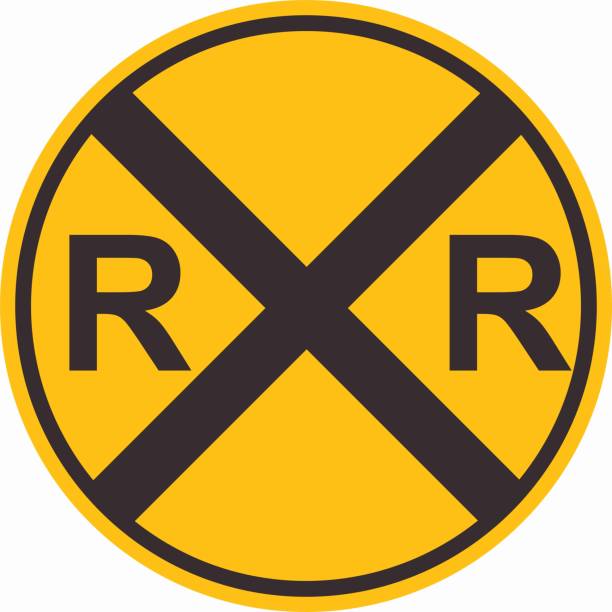
A. Come to a complete stop.
B. Proceed at a consistent speed while looking and listening for approaching trains.
C. Slow down, look both ways, listen for any trains, and be prepared to stop if any trains are nearby.
23. Driving more slowly than surrounding traffic is:
A. A good idea if the weather is bad.
B. Appropriate if you don’t know the speed limit.
C. Often a hazard because other drivers may become frustrated and try to pass you.
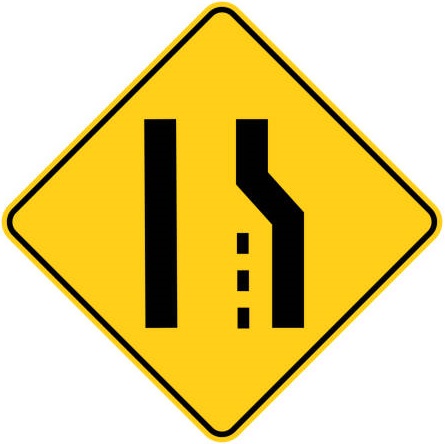
24. This road sign means:
A. Road widens ahead.
B. Lane reduction. The right lane ends soon and traffic should merge left.
C. Highway entrance ramp ahead.
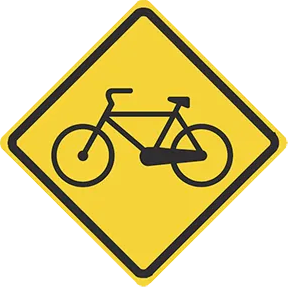
25. This road sign means:
A. Bicycle crossing.
B. Stop only if other cars are approaching.
C. Yield the right-of-way to pedestrians.