Dmv Permit Test 73

By Teacher David Global  •  Free

1. When should drivers obey posted speed limits?
A. At all times
B. Only when police officers are present
C. Only in heavy traffic
2. Safety belts should be fastened:
A. Whenever you feel unsafe.
B. Before the engine is started.
C. After reaching speeds of 45 mph.
3. You want to make a right turn at the corner. A pedestrian with a guide dog is at the corner ready to cross the street in front of you. Before making your right turn, you should:
A. Turn off your engine until the person crosses the street.
B. Tell the pedestrian when to cross the street.
C. Wait until the person crosses the street.
4. Before changing lanes or attempting to pass another vehicle, you should:
A. Check your blind spots and mirrors.
B. Signal your intention before changing lanes.
C. All of the above.
5. You are required to stop your vehicle:
A. At any intersection where a police officer orders you to stop.
B. Where there is a red traffic light.
C. Both of the above.
6. When approaching a person who is crossing the street while using a white cane or guide dog, you should:
A. Stop until the person is well away from your path of travel.
B. Honk your horn as you proceed past them.
C. Carefully drive around them.
7. At intersections with stop signs on all corners:
A. The vehicle to arrive first has the right-of-way.
B. The vehicle to arrive last has the right-of-way.
C. Drivers should always offer to let other cars proceed first.
8. If you are driving and you see animals standing near the roadway:
A. Speed up to scare them away.
B. Slow down and proceed with caution.
C. Quickly swerve into the next lane.
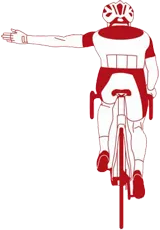
9. This bicyclist is signaling:
A. A left turn.
B. An upcoming stop.
C. A right turn.
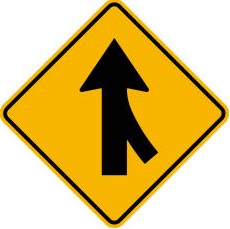
10. This sign means:
A. You should stop for other traffic.
B. Traffic is entering from another road and you should allow additional space for drivers to merge safely into the flow of traffic.
C. Traffic is entering from another road and you should keep right.
11. Adjust your rearview and side mirrors:
A. Before you start driving.
B. Whenever you need to use them.
C. Before you get into the car.
12. Which of the following driving skills is/are affected by the use of alcohol and/or drugs?
A. Alertness.
B. Coordination.
C. Both of the above.
13. When driving in fog, it is best to drive with:
A. High beam headlights.
B. Low beam headlights.
C. Four-way flashers.
14. When you see this sign, you should stop and:
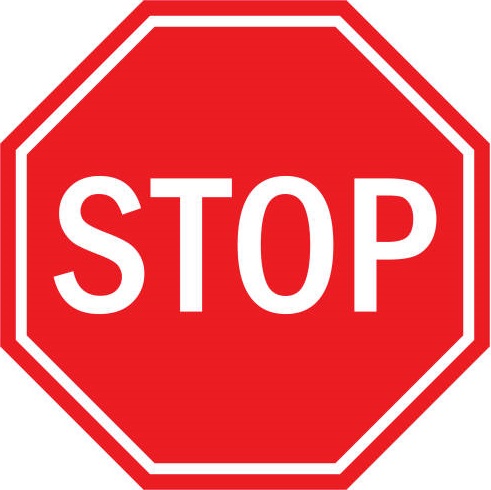
A. Check for vehicles only in the direction that you plan on going, then proceed.
B. Let all vehicles that arrive before or after you go first.
C. Check for traffic in all directions before proceeding.
15. Only ____ can lower blood alcohol concentration (BAC) and reduce alcohol's effects on a body.
A. Drinking caffeine
B. Eating foods high in fat
C. Time
16. Signs that are orange-colored are:
A. Work zone signs.
B. Regulatory signs.
C. School zone signs.
17. If the roadway is wet or icy, you should:
A. Reduce your speed.
B. Drive at the posted speed.
C. Speed up.
18. Which of the following driving skills are affected by the use of alcohol and/or drugs?
A. Alertness and concentration.
B. Reaction time and coordination.
C. All of the above.
19. If pedestrians are illegally crossing in the middle of the street instead of in a crosswalk, you:
A. Must stop for them.
B. Do not have to stop for them.
C. Should honk your horn at them.
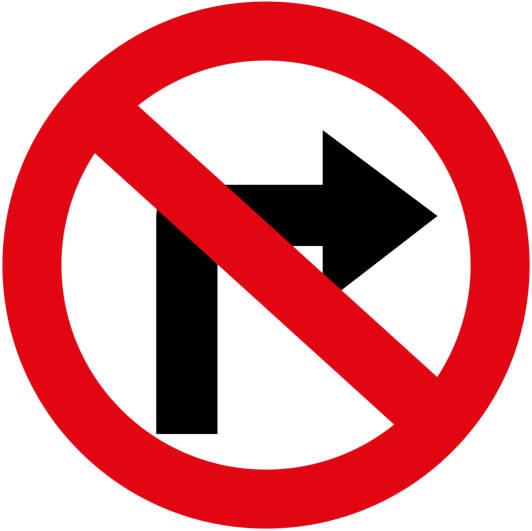
20. This sign means:
A. No right turn.
B. Stop sign ahead.
C. Divided highway.
21. This road sign means:
A. Slow down or stop.
B. Stop if necessary.
C. You must come to a complete stop.
22. When encountering a pedestrian who is using a white cane or guide dog:
A. Allow them the right-of-way.
B. Honk to alert them to your presence.
C. Quickly swerve around them.
23. If you are approaching a railroad crossing that has no safety barrier in place, you should:
A. Assume that trains usually don't cross there.
B. Cross the tracks only after looking both ways to check for an oncoming train.
C. Quickly cross the tracks if it looks like you can beat an oncoming train.
24. Tailgating other drivers (driving too closely to their rear bumper):
A. Can frustrate other drivers and make them angry.
B. Cannot result in a traffic citation.
C. Reduces collisions by preventing being "cut off."
25. If you have an argument with another person and you are angry, you should:
A. Loudly play the radio while driving so you won’t think about your argument.
B. Take a few minutes to cool off before driving.
C. Drive on the interstate to let off steam.