Dmv Permit Test 54

By Teacher David Global  •  Free

1. If you are driving and a tire suddenly goes flat, you should:
A. Rapidly pump the brake pedal several times.
B. Slow down gradually and not brake.
C. Press down on the brake pedal as hard as you can.
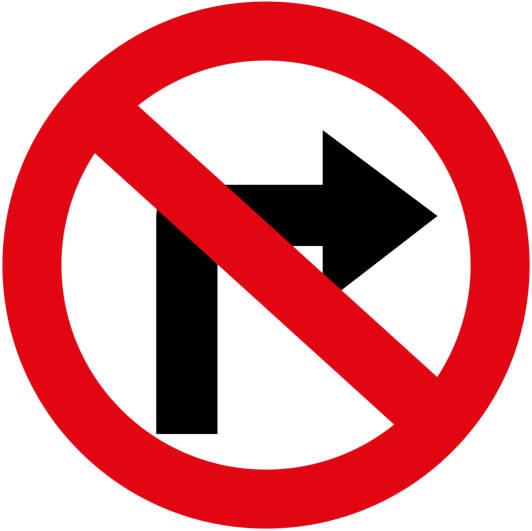
2. This sign means:
A. No right turn.
B. Right turn on red light permitted with caution.
C. All traffic must turn right at next intersection.
3. You are on the freeway and traffic is merging into your lane. You should:
A. Make room for the merging traffic, if possible.
B. Assert your right-of-way by driving faster.
C. Always maintain your position.
4. Which of the following road surfaces freezes first
A. A
B. An intersection
C. A bridge
5. Should you always drive more slowly than other traffic?
A. No, you can block traffic when you drive too slowly.
B. Yes, it is a good defensive driving technique.
C. Yes, it is always safer than driving faster than other traffic.
6. When driving on gravel or dirt roads:
A. Your tires grip the road better than when you are driving on pavement.
B. Your tires do not have as much traction as they do on pavement, so you must slow down.
C. Visibility is better than on pavement.
7. You should not make sudden stops in front of large trucks and buses because:
A. Small vehicle drivers cannot adequately see large trucks and buses in their rearview mirrors.
B. Large trucks and buses, due to their size and weight, require longer distances to stop than smaller passenger vehicles.
C. Large trucks and buses travel at a higher speeds than small vehicles.
8. Which of the following statements is true?
A. Driving too slowly is not an unsafe practice.
B. Driving too slowly on certain highways can be dangerous.
C. The speed at which you drive a vehicle does not affect safety.
9. When may you legally drive around or under a railroad crossing gate?
A. Never.
B. When you can see clearly in both directions.
C. When the warning lights are not flashing.
10. Slowing down just to look at collisions or anything else out-of-the-ordinary:
A. Causes traffic congestion.
B. Prevents rear-end collisions.
C. Improves traffic flow by preventing collisions.
11. Sudden wind gusts on highways:
A. Generally affect only the movement of large vehicles.
B. Only cause visibility problems.
C. Can cause problems for all vehicles.
12. When may you pass on the right shoulder of the road?
A. When the car in front of you is turning.
B. When the car in front of you is driving too slowly.
C. Never.
13. Alcohol in any concentration is:
A. A stimulant.
B. A depressant.
C. Neither of the above.
14. When entering traffic after being parked at a curb, you:
A. Should drive more slowly than other traffic for 200 feet.
B. Should wait for a large enough gap to get up to the speed of traffic.
C. Should wait for the first two vehicles to pass, then drive into the lane.
15. When entering a roadway from an alley:
A. Stop at the sidewalk.
B. Honk your horn.
C. The speed limit is 15 mph.
16. A curb painted red means:
A. Loading zone.
B. The area is reserved for picking up or dropping off passengers.
C. No parking, standing, or stopping.
17. If there is a deep puddle on the road ahead, you should:
A. Maintain the posted speed to make it through the water.
B. Avoid the puddle if possible.
C. Shift into neutral as you drive through the water.
18. If it is necessary to make an emergency stop while driving on an interstate, you should:
A. Sound your horn at passing cars to get their attention.
B. Get out of your vehicle and flag down the first vehicle that passes.
C. Pull off the road, turn on your emergency flashers, and stay in your vehicle, if you can.
19. Which of the following describes the thinking of defensive drivers?
A. They know other drivers will do the right thing.
B. They consider what other drivers might do and are prepared to react.
C. They expect no breaks and give none.
20. Hydroplaning occurs when tires ride on a thin film of water instead of on the surface of the road. To prevent hydroplaning in rainy weather, you should:
A. Put on your cruise control to maintain a constant speed.
B. Decrease your speed.
C. Move to the shoulder of the road as soon as it starts to rain.
21. When used on roadways, bicycles are considered:
A. Hazards.
B. Vehicles.
C. Dangerous.
22. This sign means:
A. Traffic signal ahead.
B. Stop.
C. Yield the right-of-way.
23. A broken yellow line beside a solid yellow line indicates that:
A. Passing is permitted from the lane next to the solid yellow line.
B. Passing is not permitted from either direction.
C. Passing is permitted from the lane next to the broken yellow line.
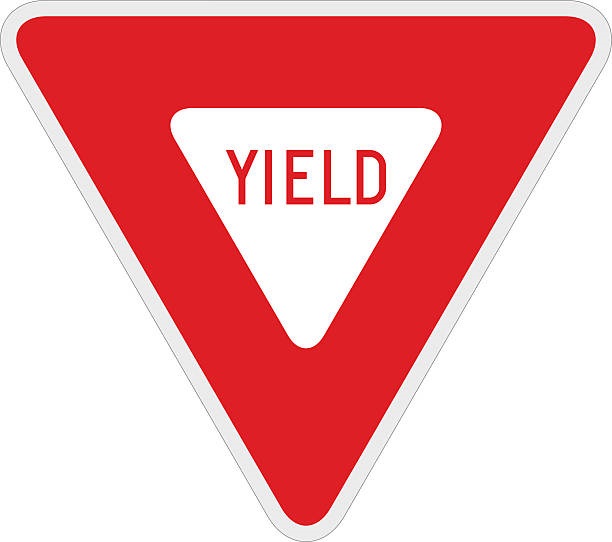
24. This sign is a:
A. Yield sign.
B. School crossing sign.
C. Stop sign.
25. A U-turn is not permitted:
A. In a parking lot.
B. On or near any curve or hill.
C. On a straight roadway with a clear view for 500 feet in both directions.
26. You can drive off the road to pass another vehicle:
A. If the vehicle ahead is turning left.
B. If there are two or more lanes traveling in your direction.
C. Under no circumstances.
27. Continuous hard braking on ice and snow often:
A. Helps you stop faster.
B. Locks the front wheels of a vehicle, causing a loss of steering.
C. Keeps the brakes from freezing.
28. Which of these statements is true about drinking alcohol and driving?
A. If you can walk in a straight line after drinking, it is safe to drive.
B. If you are under the legal blood alcohol concentration limit, your driving isn't impaired.
C. Alcohol affects judgement, which is needed to drive safely.
29. When you see a flashing yellow light at an intersection, you should:
A. Yield to all traffic before crossing the intersection.
B. Stop, then enter the intersection when it is safe to do so.
C. Slow down and cross the intersection carefully.
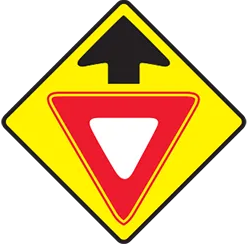
30. This sign means:
A. Yield sign ahead.
B. Side road entering from left.
C. Stop sign ahead.