Dmv Permit Test 53

By Teacher David Global  •  Free

1. When should drivers yield the right-of-way to pedestrians in a crosswalk?
A. Only if the pedestrians first wave to the driver.
B. Only if the pedestrians are not texting while walking.
C. At all times.
2. If a tire blows out, you should:
A. Apply the brake and hold it.
B. Hold the steering wheel tightly and use the brakes lightly.
C. Pull over quickly.
3. The center of the roadway is marked with one solid yellow line and one broken yellow line. If the broken yellow line is directly next to your traffic lane, it means:
A. You are not allowed to pass in this area.
B. You are in a passing zone and it is safe for you to pass other vehicles on the left if no oncoming traffic is present.
C. You are only allowed to make right turns in this area.
4. If a motorist sees pedestrians in an upcoming crosswalk, what should the motorist do?
A. Continue ahead. The motorist has the right-of-way.
B. Wait for the pedestrians to cross the street.
C. Pull to the right and go around the pedestrians.
5. If weather or light conditions require you to have your lights on while driving:
A. Use your parking lights.
B. Use your high beams.
C. Use your low beams.
6. To improve visibility lowered by rain or fog, drivers should use their:
A. Low beam headlights.
B. High beam headlights.
C. Parking lights.
7. If your car's suspension is bad, it can cause:
A. Vehicle control problems.
B. Squealing brakes.
C. Slack in the steering.
8. On a multilane road, a dashed yellow line next to a solid yellow line means:
A. Passing is prohibited from both directions.
B. Passing is permitted from both directions.
C. Passing is permitted only from the direction next to the dashed line.
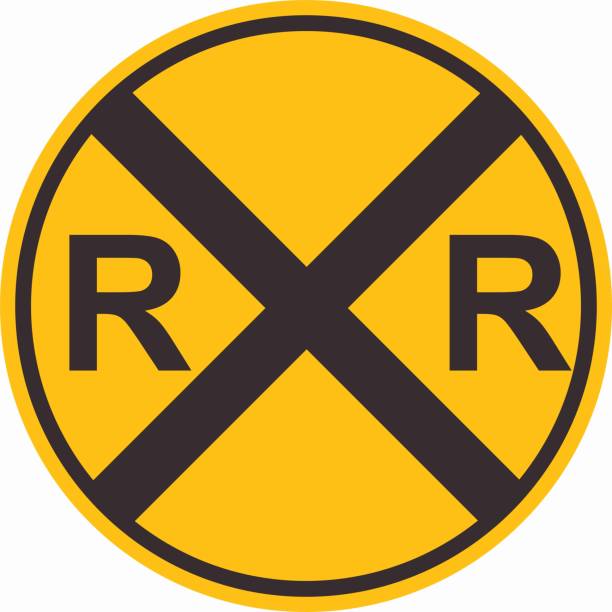
9. This sign indicates a:
A. Railroad crossing.
B. Pedestrian crossing.
C. No passing zone.
10. You hit a parked vehicle and can't find the owner. What must you do?
A. Call your insurance company when you get home.
B. Wait for the owner to return.
C. Leave a note with your name and address on the parked vehicle.
11. At a red traffic light with a green arrow, you may proceed in the direction of the arrow if:
A. You first come to a complete stop.
B. You wait until the light changes.
C. You are in the proper lane and the roadway is clear.
12. Which of the following statements is correct?
A. Use your left foot to brake.
B. Use your right foot for both braking and accelerating your vehicle.
C. You should always brake abruptly to ensure stopping.
13. You are involved in a minor collision at an intersection. There are no injuries and there is very little vehicle damage. You should:
A. Leave your vehicle in the traffic lane until law enforcement arrives.
B. Move your vehicle out of the traffic lane, if possible.
C. Not move your vehicle for any reason.
14. If a child is riding a bicycle near your vehicle:
A. Beep your horn.
B. Expect the child to be in total control of the bicycle.
C. Expect the unexpected.
15. If your car becomes disabled while on the highway, you should:
A. Stop in the right lane.
B. Park with all four wheels off the traveled highway, if possible.
C. Stop where you are.
16. When driving in fog, you should:
A. Slow down and use your low beam headlights.
B. Slow down and use your high beam headlights.
C. Turn your lights on and off to warn other drivers.
17. When double solid yellow lines separate lanes of traffic:
A. Passing is permitted from the left.
B. Passing is permitted from the right.
C. Passing is not permitted from either direction.
18. This sign means:
A. Road construction/maintenance area.
B. Side road.
C. Railroad ahead.
19. You are coming to an intersection with a flashing red light. You should:
A. Slow down and yield the right-of-way.
B. Slow down and drive carefully through the intersection.
C. Come to a complete stop, check the traffic, and go when it is safe to do so.
20. When driving in fog, rain, or snow, use:
A. Low beams.
B. High beams.
C. Fog lights only.
21. A driver should:
A. Assume all drivers automatically obey the right-of-way rules.
B. Assume most drivers obey the right-of-way rules.
C. Always be prepared to yield the right-of-way.
22. Blue traffic signs offer information on:

A. Motorist services.
B. Construction and maintenance.
C. Mileage information, such as distances to specific locations.
23. You should signal continuously while turning because it:
A. Is illegal to turn off your signal before completing a turn.
B. Lets other drivers know what your intentions are.
C. Is always unsafe to turn off a signal before completing a turn.
24. A driver entering freeway traffic from an entrance or acceleration ramp:
A. Has the right-of-way.
B. Should yield to drivers already on the interstate.
C. May force their way into traffic.
25. You may drive in an HOV lane if:
A. You are driving more quickly than the flow of traffic.
B. You are driving more slowly than the flow of traffic.
C. Your vehicle has multiple occupants.
26. If you come to an intersection and your view to the side is blocked, you should:
A. Slow down and look both ways.
B. Maintain your speed and look both ways.
C. Stop, then inch forward until you can see clearly in both directions.
27. When driving at night, you should:
A. Always use your high beams.
B. Look directly at the headlights of an oncoming vehicle.
C. Increase your following distance.
28. The first thing that alcohol effects is:
A. Vision.
B. Judgment.
C. Balance.
29. A solid yellow line next to a broken yellow line means that vehicles:
A. Driving in both directions may pass.
B. Next to the broken line may pass.
C. Next to the solid line may pass.
30. The driver ahead of you stops at a crosswalk. What should you do?
A. Cautiously pass the vehicle at 10 mph or slower.
B. Stop, proceeding only when all the pedestrians have crossed.
C. Change lanes, look carefully, and pass the stopped vehicle.