Dmv Permit Test 71

By Teacher David Global  •  Free

1. If you miss your exit on the freeway, you should not:
A. Continue on the freeway and find an alternate route to your destination.
B. Proceed to the next exit, leave the freeway, and return to your proper exit.
C. Back up on the road or shoulder.
2. Which of the following is most likely to be slippery in cold weather after snow or rain?
A. A hilly, open road
B. A residential road
C. A road in a shaded area
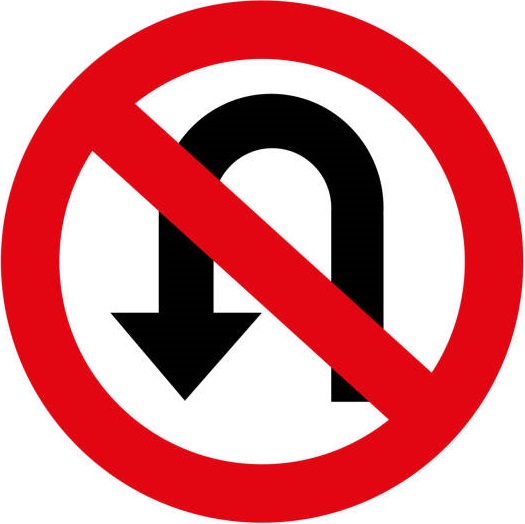
3. This road sign means:
A. Do not enter.
B. No parking.
C. No U-turn.
4. If you park facing uphill where there is no curb, set the parking brake and:
A. Turn your wheels toward the edge of the road.
B. Turn your wheels away from the edge of the road.
C. Keep your wheels facing straight.
5. If the driver of an oncoming vehicle fails to dim their headlights:
A. Look toward the center of the roadway.
B. Look toward the right side of the road.
C. Look straight ahead.
6. When passing, you should move back into the right lane when:
A. You are one vehicle length ahead of the passed vehicle.
B. You can see both headlights of the passed vehicle in your rearview mirror.
C. You are 50 feet ahead of the passed vehicle.
7. At intersections, crosswalks, and railroad crossings, you should always:
A. Stop, listen, and proceed cautiously.
B. Look to the sides of your vehicle to see what is coming.
C. Slowly pass vehicles that seem to be stopped for no reason.
8. When you want to change lanes, you should never:
A. Move into another lane while within an intersection.
B. Check your blind spot by looking over your shoulder.
C. Check for other drivers moving into the same lane.
9. This sign means:
A. No U-turn.
B. Traffic signal ahead.
C. Railroad ahead.
10. A vehicle suddenly cuts in front of you, creating a hazard. What should you do first?
A. Honk and step on the brake firmly.
B. Take your foot off the gas pedal.
C. Swerve into the lane next to you.
11. When parking your vehicle on any hill:
A. One of your rear wheels should touch the curb.
B. Use your parking brake and leave the vehicle in "park."
C. Your front wheels should be parallel to the road, if there is no curb.
12. You may not park within ____ of a fire hydrant.
A. 25 feet
B. 15 feet
C. 30 feet
13. When you are merging onto the freeway, you should be driving:
A. At or near the speed of traffic on the freeway.
B. Five to 10 mph slower than the speed of traffic on the freeway.
C. The posted speed limit for freeway traffic.
14. To avoid hydroplaning while driving in rainy conditions, you should:
A. Drive at a speed appropriate for ideal conditions.
B. Apply your brakes as soon as your car starts to skid.
C. Slow down.
15. If you plan to pass another vehicle, you should:
A. Not assume the other driver will make space for you to return to your lane.
B. Assume the other driver will let you pass if you use your turn signal.
C. Assume the other driver will maintain a constant speed.
16. You should allow an extra cushion of space:
A. When following a station wagon.
B. When following a driver who cannot see the rear of their vehicle.
C. When following a small passenger car.
17. It is illegal for a person 21 years of age or older to drive with a minimum blood alcohol concentration (BAC) of:
A. 0.05 percent.
B. 0.08 percent.
C. 0.02 percent.
18. If you encounter a dust storm while driving, you should:
A. Be cautious and drive through it, since dust storms usually don’t last very long.
B. Slow down, carefully pull completely off the road, turn off your lights, take your foot off the brake, and wait until the storm passes.
C. Slow down, carefully pull completely off the road, turn on your lights, and wait until the storm passes.
19. You should always travel:
A. At the speed of vehicles surrounding you.
B. At the speed limit.
C. At a speed appropriate for road and weather conditions.
20. When entering the interstate, check for a gap in traffic in the nearest lane, adjust your speed to match traffic, signal, and:
A. Expect traffic to allow you to proceed into the lane, since you have the right-of-way.
B. Merge carefully into the gap.
C. Wait for the lane to clear before merging.
21. When a bicyclist is making a left turn:
A. They may use the left lane.
B. They may cut through all lanes.
C. They may wait on the side of the road.
22. You are approaching an intersection where a traffic signal is displaying a steady yellow light. If you have not already entered the intersection, you should:
A. Speed up to beat the red light.
B. Reduce you speed and proceed carefully through the intersection.
C. Come to a safe stop.
23. You are driving on a one-way street. You may only turn left onto another one-way street if:
A. You increase your speed before the turn.
B. Traffic on the street moves to the right.
C. Traffic on the street moves to the left.
24. You should signal to turn ____ before beginning the turn.
A. 20 feet
B. 50 feet
C. 100 feet
25. When driving at night, you should:
A. Always use your high beams.
B. Look directly at the headlights of an oncoming vehicle.
C. Increase your following distance.
26. Streets and highways are most slippery:
A. When it has been raining hard for several hours.
B. When they are clean and dry.
C. Just after it starts to rain.
27. An orange and red triangular sign on a vehicle always means:
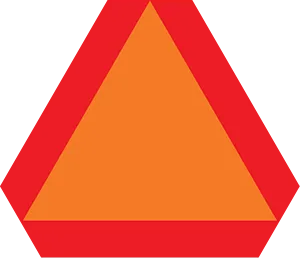
A. The vehicle has the right-of-way.
B. Slow-moving vehicle.
C. Shoulder work ahead.
28. Turning right on a red light is permitted:
A. Only where indicated by a sign.
B. Except where prohibited by a sign.
C. Only on a divided road.
29. In inclement weather, you should:
A. Steer off the road.
B. Drive in a low gear.
C. Steer and brake smoothly.
30. While driving on a roadway with a single broken white centerline:
A. You must stay within your lane.
B. You may cross the centerline to change lanes.
C. You may change lanes only from the left lane.