Dmv Permit Test 69

By Teacher David Global  •  Free

1. You want to park uphill on a two-way road and there is no curb. Which direction do you turn your front wheels?
A. Straight ahead
B. Right, toward the side of the road
C. Left, toward the center of the road
2. When approaching an intersection that is controlled by a flashing red traffic signal, you must:
A. Come to a complete stop, yield to oncoming traffic or pedestrians, then proceed.
B. Reduce your speed and proceed with caution.
C. Come to a complete stop and remain stopped as long as the light is red.
3. If it feels like your tires have lost contact with the surface of the road, you should:
A. Slow down by shifting into a lower gear.
B. Ease your foot off the gas pedal.
C. Slow down by pumping the brakes quickly and firmly.
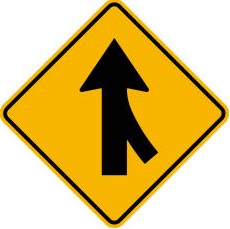
4. What does this road sign mean?
A. Be ready to merge with traffic entering your lane.
B. Always stop.
C. Divided highway ahead.
5. If you have trouble seeing other vehicles because of dust or smoke blowing across the roadway, you should drive more slowly and turn on your:
A. Emergency flashers.
B. Parking lights.
C. Headlights.
6. If you park facing uphill on a street with a curb, set the parking brake and:
A. Turn the front wheels toward the curb.
B. Turn the front wheels away from the curb.
C. Leave the front wheels straight.
7. What message will be found on this yellow pennant-shaped sign?
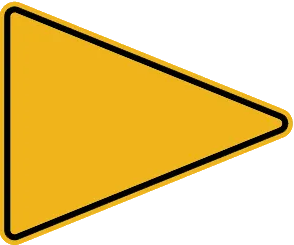
A. Right turns only.
B. Right turns permitted.
C. No passing zone.
8. You reach an intersection with stop signs on all four corners at the same time as the driver on your left. Who has the right-of-way?
A. The driver on your left has the right-of-way.
B. You have the right-of-way.
C. Whoever is signaling to make a turn has the right-of-way.
9. Regulatory signs are:
A. Green.
B. Yellow.
C. White.
10. You are approaching an intersection with a steady yellow traffic light. If you have not already entered the intersection, you should:
A. Speed up to beat the red light.
B. Reduce you speed and proceed carefully through the intersection.
C. Come to a safe stop.
11. When stopping on snow or ice, drivers who are operating vehicles equipped with an Anti-Lock Braking System (ABS) should:
A. Pump the brakes.
B. Press and hold the brake pedal firmly.
C. Stay off the brakes and wait for the car to drift to a stop.
12. Broken yellow lines are used on streets and highways to:
A. Indicate no passing zones.
B. Separate lanes of traffic moving in the same direction.
C. Separate lanes of traffic moving in opposite directions.
13. Drivers should look ahead of their vehicle:
A. One city block.
B. Three city blocks.
C. Five feet.
14. Roads are slippery after it first starts to rain. When the road is slippery, you should:
A. Avoid making turns and stops while driving at high speeds.
B. Test your tires' traction while going uphill.
C. Decrease the distance you look ahead of your vehicle.
15. Having a driver license is a:
A. Requirement.
B. Privilege.
C. Right.
16. You are entering a freeway. Check traffic on the freeway by:
A. Using your rearview and side mirrors.
B. Using your rearview mirror.
C. Using your side mirror and looking over your shoulder.
17. Large trucks are likely to lose speed when:
A. Driving up long or steep hills.
B. Driving in long, gradual curves.
C. Driving down long, gradual hills.
18. There are oncoming vehicles to your left and a row of parked vehicles to your right. You should steer:
A. Closer to the oncoming vehicles than the parked vehicles.
B. Closer to the parked vehicles than the oncoming vehicles.
C. A middle course between the oncoming and parked vehicles.
19. You are crossing an intersection and an emergency vehicle is approaching while using its siren and flashing lights. You should:
A. Stop immediately in the intersection until it passes.
B. Pull to the right of the intersection and stop.
C. Continue through the intersection, pull to the right, and stop.
20. If you are driving and the rear end of your car starts skidding to the left, you should:
A. Steer to the right.
B. Steer to the left.
C. Tap your brakes lightly and shift into neutral.
21. Give the right-of-way to any pedestrian who is:
A. In a marked crosswalk.
B. In any crosswalk or intersection.
C. Crossing any street.
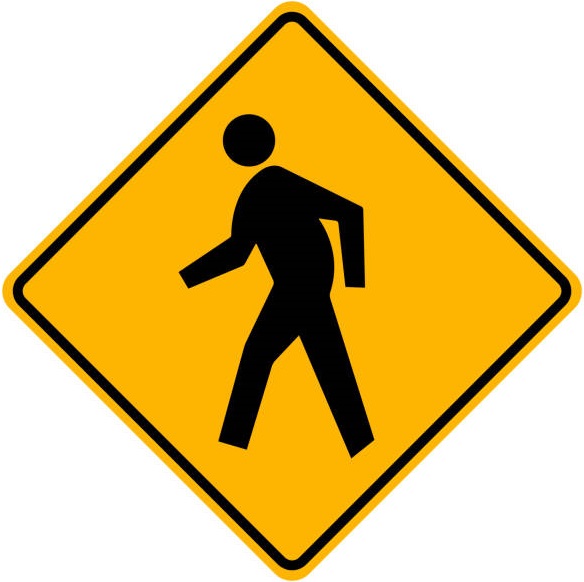
22. This sign means:
A. Pedestrian crossing.
B. Side road.
C. Railroad ahead.
23. When driving at night on a dimly lit street, you should:
A. Drive slowly enough that you can stop within the area illuminated by your headlights.
B. Turn on your high beam headlights to better see the vehicles ahead of you.
C. Keep the instrument panel lights bright to be more visible to other drivers.
24. As you approach the top of a hill, you should:
A. Speed up slightly.
B. Prepare to stop, if needed.
C. Maintain a steady speed.
25. If a child is about to run into the street, you should:
A. Start to prepare to slow down.
B. Flash your headlights.
C. Sound a sharp blast of your horn.
26. Defensive driving is:
A. Driving aggressively.
B. Using safe driving strategies to prevent crashes.
C. More dangerous than not driving defensively.
27. If you approach a flashing red traffic light, you:

A. Are traveling in the wrong direction.
B. Must treat the intersection as if it is controlled by a stop sign.
C. May not proceed until it changes to green.
28. On a green arrow, you must:
A. Yield to any vehicle, bicycle, or pedestrian in the intersection.
B. Yield to pedestrians only in the intersection.
C. Wait four seconds before proceeding.
29. Check your rearview mirrors:
A. Often to see how traffic is moving behind you.
B. To see if a vehicle is in your blind spot.
C. Only when you are slowing down.
30. If your car begins to skid out of control, you should:
A. Pump the brakes.
B. Apply the brakes lightly.
C. Stay off the brakes.