Dmv Permit Test 68

By Teacher David Global  •  Free

1. When used on roadways, bicycles are considered:
A. Hazards.
B. Vehicles.
C. Dangerous.
2. Extra space in front of a large truck is needed for:
A. Other drivers to merge onto the freeway.
B. The truck driver to stop the vehicle.
C. Other drivers when they want to slow down.
3. When driving in fog, you should:
A. Slow down and use your low beam headlights.
B. Slow down and use your high beam headlights.
C. Turn your lights on and off to warn other drivers.
4. When driving under snowy or icy conditions:
A. It is safe to use your cruise control.
B. Make speed and directional changes more gradually than you would otherwise.
C. Drive as you would under normal conditions.
5. It is more dangerous to drive at night than during the day because:
A. You cannot see as far ahead at night.
B. The road is always more slippery at night.
C. Your reaction time is slower at night.
6. This white sign means you should not pass other vehicles:
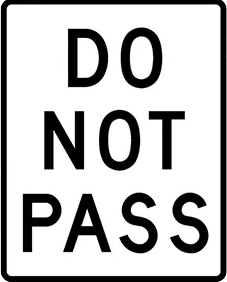
Until after you pass the sign.
Unless it seems safe to do so.
For any reason.
7. Allow extra space in front of your vehicle when following a:
A. Station wagon.
B. Passenger vehicle.
C. Motorcycle.
8. You are involved in a minor collision at an intersection. There are no injuries and there is very little vehicle damage. You should:
A. Leave your vehicle in the traffic lane until law enforcement arrives.
B. Move your vehicle out of the traffic lane, if possible.
C. Not move your vehicle for any reason.
9. When merging onto the freeway, you should be driving:
A. At or near the speed of the freeway traffic.
B. At the legal speed limit.
C. More slowly than the freeway traffic.
10. Where is it safe to pass another vehicle?
A. Within an intersection where there are no oncoming vehicles
B. Wherever signs and/or pavement markings permit passing
C. Within a curve where there are no oncoming vehicles
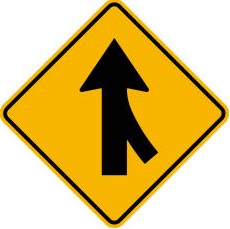
11. This sign means:
A. You should stop for other traffic.
B. Traffic is entering from another road and you should allow additional space for drivers to merge safely into the flow of traffic.
C. Traffic is entering from another road and you should keep right.
12. Alcohol in any concentration is:
A. A stimulant.
B. A depressant.
C. Neither of the above.
13. At intersections with a "Yield" sign, you must:
A. Yield the right-of-way to cross traffic that is near enough to cause conflict.
B. Yield the right-of-way only to vehicles on your right.
C. Always slow down and proceed without stopping.
14. If your car becomes disabled while on the highway, you should:
A. Stop in the right lane.
B. Park with all four wheels off the traveled highway, if possible.
C. Stop where you are.
15. When backing up:
A. Look through the rear window.
B. Press hard on the gas pedal.
C. Rely only on your rearview mirror.
16. A broken yellow line beside a solid yellow line indicates that:
A. Passing is permitted from the lane next to the solid yellow line.
B. Passing is not permitted from either direction.
C. Passing is permitted from the lane next to the broken yellow line.
17. To see vehicles in your blind spots, you should check:
A. The inside rearview mirror.
B. The outside rearview mirror.
C. Over your shoulders.
18. When you see an emergency vehicle approaching while using its flashing lights, you must:
A. Maintain your speed and stay in your lane until the vehicle has passed.
B. Move into the right lane and drive slowly until the vehicle has passed.
C. Pull over to the curb or edge of the road and stop until the vehicle has passed.
19. Which of these statements is true about drugs and driving?
A. Any prescription drug is safe to use if you don't feel drowsy.
B. Even over-the-counter drugs can impair your driving.
C. Only illegal drugs can impair your driving.
20. When may you pass on the right shoulder of the road?
A. When the car in front of you is turning.
B. When the car in front of you is driving too slowly.
C. Never.
21. You hit a parked vehicle and can't find the owner. What must you do?
A. Call your insurance company when you get home.
B. Wait for the owner to return.
C. Leave a note with your name and address on the parked vehicle.
22. Yellow lines separate:
A. Traffic lanes on one-way streets.
B. Traffic moving in opposite directions on two-way roads.
C. All carpool lanes from regular traffic lanes.
23. If you come upon a severe dust storm, you should:
A. Slow and pull off the road.
B. Turn on your high beams.
C. Maintain your speed and stay in your lane.
24. You may cross double yellow lines to pass another vehicle if the:
A. Vehicle in front of you moves to the right to let you pass.
B. Yellow line next to your side of the road is broken.
C. Yellow line next to the opposite side of the road is broken.
25. You are coming to an intersection with a flashing red light. You should:
A. Slow down and yield the right-of-way.
B. Slow down and drive carefully through the intersection.
C. Come to a complete stop, check the traffic, and go when it is safe to do so.
26. Which of the following describes the thinking of defensive drivers?
A. They know other drivers will do the right thing.
B. They consider what other drivers might do and are prepared to react.
C. They expect no breaks and give none.
27. Driving more slowly than surrounding traffic is:
A. A good idea if the weather is bad.
B. Appropriate if you don’t know the speed limit.
C. Often a hazard because other drivers may become frustrated and try to pass you.
28. Stopping distances and severity of crashes:
A. Decrease as vehicle speed increases.
B. Are not affected by vehicle speed.
C. Increase as vehicle speed increases.
29. To avoid traction loss on wet roads, you should:
A. Make abrupt turns.
B. Apply the brakes firmly.
C. Slow down.
30. When a car with bright headlights drives toward you at night, you should:
A. Stop until the other driver passes.
B. Look below their headlights.
C. Glance toward the right edge of your lane.