Dmv Permit Test 50

By Teacher David Global  •  Free

1. Adjust your rearview and side mirrors:
A. Before you start driving.
B. Whenever you need to use them.
C. Before you get into the car.
2. If a vehicle is equipped with airbags:
A. Seat belts should still be worn.
B. Seat belts do not need to be worn.
C. Seat belts should be worn behind the back.
3. If a traffic signal light is green and a police officer signals for you to stop, you should:
A. Obey the officer.
B. Obey the traffic signal.
C. Do what the vehicle in front of you does.
4. You may pass a vehicle when:
A. You are on a hill or curve.
B. You are on a road with a solid line next to your lane.
C. You are on a road with a broken line next to your lane.
5. Handicap parking spaces are available:
A. Only to drivers with the appropriate license plate or hanging tag.
B. To anyone, but only if all other spaces are occupied.
C. To people who are not feeling well.
6. Only ____ can reduce blood alcohol content (BAC) and alcohol's effects on the body.
A. Drinking caffeine
B. Eating foods high in fat
C. Time
7. Before switching on the ignition, you should:
A. Buckle your safety belt.
B. Be sure all passengers have buckled their safety belts.
C. Both of the above.
8. You want to make a right turn at the corner. A pedestrian with a guide dog is at the corner ready to cross the street in front of you. Before making your right turn, you should:
A. Turn off your engine until the person crosses the street.
B. Tell the pedestrian when to cross the street.
C. Wait until the person crosses the street.
9. Driving under the influence of any medication which impairs your driving is permitted:
A. Under no circumstances.
B. If you don't feel drowsy.
C. If it is prescribed by a physician.
10. You must obey instructions from school crossing guards:
A. At all times.
B. Only during school hours.
C. Unless you do not see any children present.
11. What is the only medically proven method of removing alcohol or other drug combinations from your system?
A. Breathe in some fresh air.
B. Give your body time.
C. Drink coffee.
12. What is the only effective way to remove alcohol from the body?
A. Drink strong coffee.
B. Wait.
C. Take a cold shower.
13. When entering a main roadway from a private road, drivers:
A. Have the right-of-way.
B. Should yield to traffic already on the road.
C. Should honk at other drivers to get them to move more quickly.
14. Children on bicycles should be given extra space by motor vehicle operators because:
A. They do not have the same physical reflexes as adults.
B. They are smaller and more difficult to see than adults.
C. Both of the above.
15. To enter a gap in highway traffic:
A. Watch only the vehicles behind the gap.
B. Check behind you, then watch the vehicle ahead.
C. Speed up and let the other vehicles make way.
16. If the roadway is wet or icy, you should:
A. Reduce your speed.
B. Drive at the posted speed.
C. Speed up.
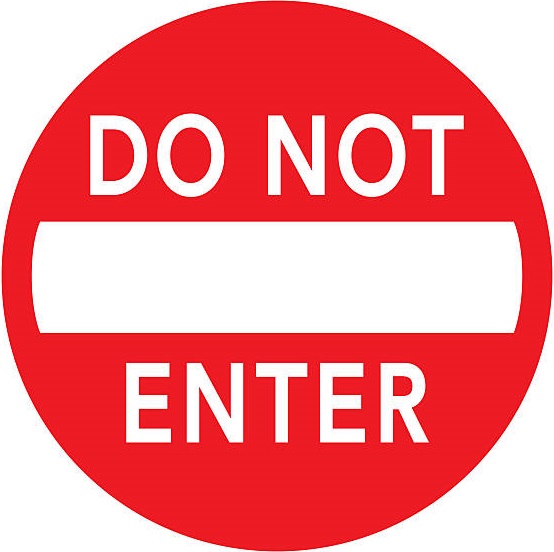
17. This road sign means:
A. You are about to enter a one-way street from the wrong direction.
B. U-turns are prohibited.
C. You may proceed if the way is clear.
18. Using a cell phone while operating a motor vehicle is considered a distraction because:
A. It causes the driver to be concerned about the cost of the call.
B. It occupies the driver's hands, eyes, and mind.
C. It is an activity that draws the attention of other drivers.
19. "No passing zone" signs tell drivers:
A. To speed up slightly.
B. That it is not safe to pass.
C. To maintain a steady speed.
20. When a school bus is stopped ahead on your side of the road with its red lights flashing, you must:
A. Slow to a speed no faster than 10 mph.
B. Stop until the lights stop flashing.
C. Change lanes and pass cautiously.
21. The best thing to do if you become tired while driving is to:
A. Stop to rest or change drivers.
B. Drink coffee.
C. Open a window.
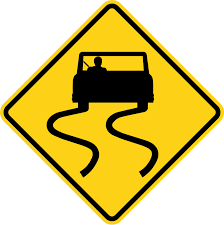
22. This sign means:
A. Slippery when wet.
B. Stop sign ahead.
C. No U-turn.
23. A driver should:
A. Stare directly in front of their car.
B. Only focus on the middle of the road.
C. Watch beside, ahead, and to the rear of their car.
24. When driving in work zones, you should:
A. Increase your speed to get through the zone as quickly as possible.
B. Reduce your speed and be prepared to stop suddenly.
C. Maintain your normal speed the whole way through the zone.
25. Any amount of alcohol in the blood may affect a driver's:
A. Right-of-way privileges.
B. Judgment and physical coordination.
C. Knowledge.
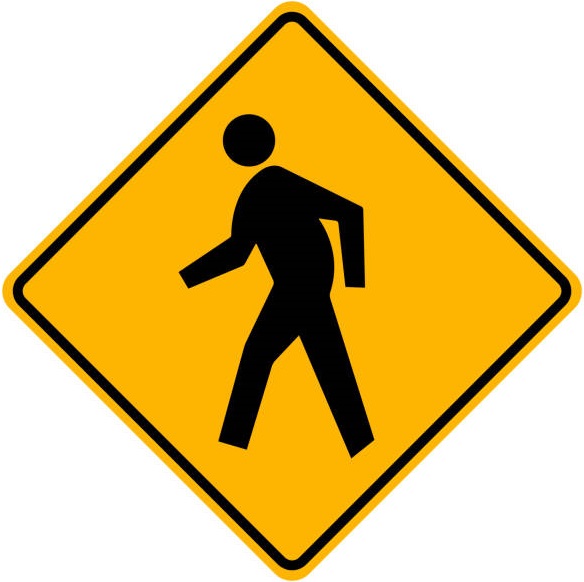
26. This road sign means:
A. School crossing.
B. Pedestrian crossing.
C. Jogging trail.
27. Tailgating other drivers (driving too closely to their rear bumper):
A. Can frustrate other drivers and make them angry.
B. Cannot result in a traffic citation.
C. Reduces collisions by preventing being "cut off."
28. What is a potential effect of taking a prescription drug while drinking alcohol?
A. There will likely be no effect.
B. It will make you more alert.
C. It can make you unfit to drive.
29. Before returning to your original lane after passing another vehicle, you should:
A. Beep your horn.
B. See both headlights of the passed vehicle in your rearview mirror.
C. Flash your headlights.
30. At a crosswalk:
A. You must yield to pedestrians.
B. Pedestrians must yield to you.
C. Construction workers must yield to you.