Dmv Permit Test 49

By Teacher David Global  •  Free

1. If a road is slippery, maintain a following distance that is:
A. No different than normal.
B. Farther from the car ahead than normal.
C. Closer to the car ahead than normal.
3. If you experience a tire blowout:
A. Tap or pump the brakes.
B. Slow down gradually and use your brakes lightly.
C. Apply the brakes firmly and quickly.
4. A solid yellow arrow on a traffic signal means:
A. You should speed up so you can make the turn before the light changes.
B. You do not need to signal to turn from the indicated lane.
C. You should prepare to stop and yield the right-of-way to oncoming traffic.
5. If you come to a railroad crossing with lowered gates and flashing warning lights, you should:
A. Drive around the crossing gates if you can't see a train.
B. Come to a complete stop well behind the gates, wait for the tracks to clear, and proceed once the gates are lifted.
C. Slow down and drive around the gates.
6. Work zone barriers, drums, cones, and signs are used to:
A. Make drivers angry about slow traffic.
B. Inconvenience drivers.
C. Keep traffic out of hazardous work zones.
7. If you have had several beers, the effects of alcohol will be reduced only by:
A. Taking a cold shower.
B. Waiting several hours.
C. Drinking several cups of coffee.
8. If a truck or bus is making a right turn where you also need to make a right turn, you should:
A. Quickly turn before the truck or bus is able to.
B. Wait until the truck or bus turns before you turn.
C. Squeeze between the truck or bus and the curb.
9. Only ____ can lower blood alcohol concentration (BAC) and reduce alcohol's effects on a body.
A. Drinking caffeine
B. Eating foods high in fat
C. Time
10. Which of the following substances can affect the ability to drive?
A. Tranquilizers, marijuana, and sedatives.
B. Cough syrups and cold tablets containing codeine or antihistamines.
C. All of the above.
11. You may be able to identify an aggressive driver by:
A. Their erratic and improper lane changes.
B. The number of passengers in their car.
C. Their tendency to drive slowly.
12. If you encounter an aggressive driver, you should:
A. Challenge them.
B. Get out of their way.
C. Speed up.
13. The amount of alcohol in the blood is referred to as:
A. Implied consent (IC).
B. Blood alcohol concentration (BAC).
C. Rate of alcohol consumption (RAC).
14. If you drive faster than other vehicles on a road with one lane moving in each direction and continually pass the other cars, you will:
A. Get you to your destination much more quickly and safely.
B. Increase your chances of an collision.
C. Help prevent traffic congestion.
15. If you become drowsy while driving, you should:
A. Try to fight it.
B. Take a break.
C. Take some caffeine pills.
16. Which of the following is a dangerous habit when driving in work zones?
A. Tailgating another vehicle
B. Failing to carefully watch for workers and moving equipment
C. Both of the above
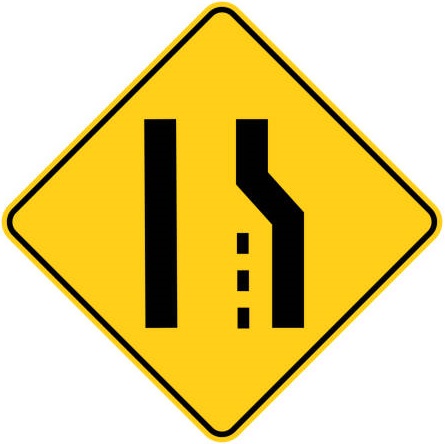
18. This road sign means:
A. Highway entrance ramp.
B. Road widens.
C. Right lane ends.
19. You must yield to a pedestrian using a white cane or guide dog:
A. Only when the guide dog is leading the person across the street.
B. At all times.
C. Only if a crossing guard is present.
20. A solid yellow line on your side of the centerline means:
A. Reduce your speed.
B. Traffic light ahead.
C. Do not pass.
21. You are driving on the freeway behind a large truck. You should drive:
A. Closer behind the truck than you would if following a passenger vehicle.
B. Farther behind the truck than you would if following a passenger vehicle.
C. To the right side of the truck and wait to pass.
22. Which of the following driving skills are affected by the use of alcohol and/or drugs?
A. Alertness and concentration.
B. Reaction time and coordination.
C. All of the above.
23. If a tire suddenly blows out while you are driving, you should:
A. Grip the steering wheel firmly, slow down, and exit the traffic lane.
B. Pump the brakes rapidly.
C. Brake hard and steer toward the right edge of the roadway.
24. What is the purpose of rumble strips?
A. They alert drivers to potential tire problems.
B. They test a vehicle's shock absorbers.
C. Through vibration and sound, they alert inattentive drivers to the fact that their vehicles have left the travel lane.
25. Which of the following are factors commonly contributing to traffic crashes?
A. Exceeding the posted speed limit and driving too fast for conditions or circumstances.
B. Getting adequate rest and staying alert.
C. Scanning the environment and staying focused on the driving task.
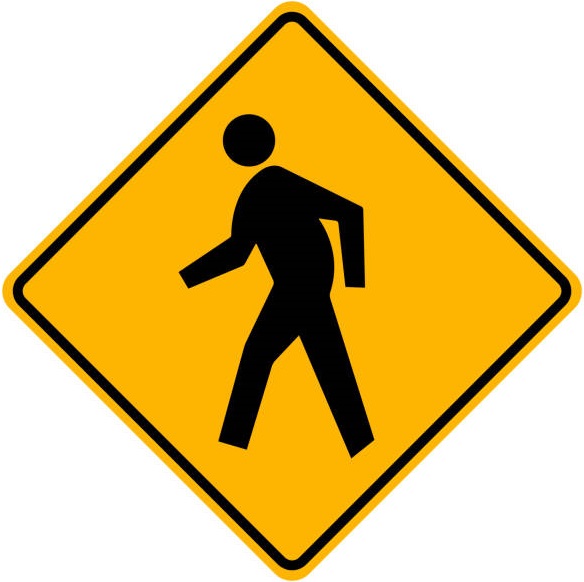
26. This sign means:
A. Pedestrian crossing.
B. Side road.
C. Railroad ahead.
27. You see pedestrians near the road. You should:
A. Sound your horn and maintain your speed.
B. Speed up to clear the area quickly.
C. Slow down and pass with caution.
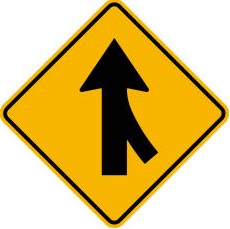
28. This sign means:
A. Merge.
B. Winding road ahead.
C. Reserved parking for persons with disabilities.
29. If you are getting tired while driving, you should:
A. Stop and either get rest or change drivers.
B. Drink something with caffeine.
C. Open a window.
30. When taking any medicine, you should:
A. Consult your doctor about the effects before driving.
B. Have someone follow you home.
C. Keep your window open and drive more slowly.