Dmv Permit Test 63

By Teacher David Global  •  Free

1. If your vehicle begins to skid, you should:
A. Ease up on the gas pedal.
B. Brake as hard as possible.
C. Turn off the ignition.
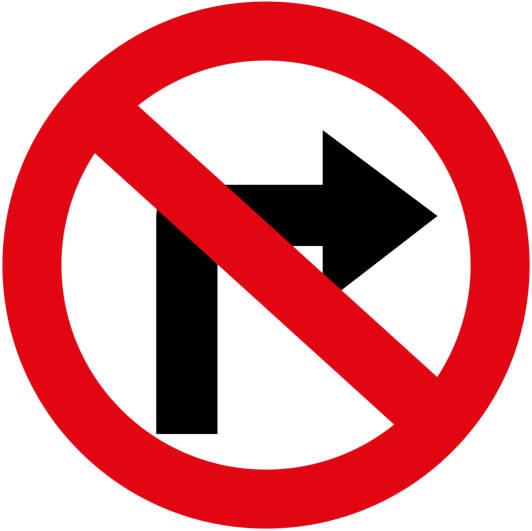
2. This sign means:
A. No right turn.
B. You must turn right.
C. Watch for traffic on your right.
3. You should not use your horn:
A. When visibility ahead is limited.
B. If you might hit another vehicle.
C. Near blind pedestrians.
4. After you have passed a vehicle moving in the same direction, it is safe to move back into the right lane:
A. After about three seconds.
B. When you can no longer see the passed vehicle over your right shoulder.
C. When you can see the entire front of the passed vehicle in your rearview mirror.
5. When passing a row of parked vehicles, you should:
A. Be prepared for a person or vehicle to unexpectedly enter your lane.
B. Expect all other drivers and pedestrians to respect your right-of-way.
C. Drive closely to the parked vehicles to allow more room for moving traffic.
6. Always stop before crossing railroad tracks when:
A. There isn't room on the other side for you to completely cross the tracks.
B. The railroad crossing is located in a city or town that has frequent train traffic.
C. You are transporting two or more young children in a passenger vehicle.
7. At intersections with a "Yield" sign, you must:
A. Yield the right-of-way to cross traffic that is near enough to cause conflict.
B. Yield the right-of-way only to vehicles on your right.
C. Always slow down and proceed without stopping.
8. If you see a pedestrian using a guide dog or carrying a white cane:
A. The pedestrian must yield the right-of-way.
B. You must yield the right-of-way.
C. Honk your horn to let them know you are there.
9. It is necessary to use your low beams any time you are:
A. On a lighted street.
B. On a freeway.
C. In fog.
10. This sign is used to warn drivers that:
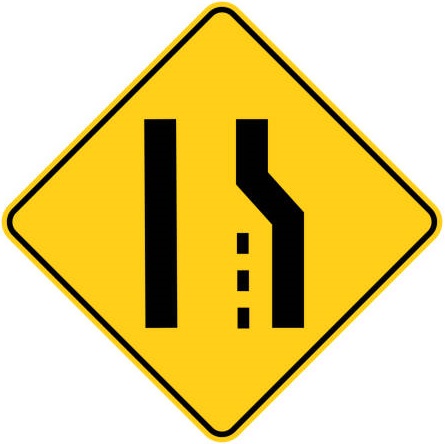
A. The right lane is ending and traffic should merge left.
B. The road curves ahead.
C. There are upcoming intersections.
11. Yellow lines separate:
A. Traffic lanes on one-way streets.
B. Traffic moving in opposite directions on two-way roads.
C. All carpool lanes from regular traffic lanes.
12. When driving under low-visibility conditions due to fog, you should:
A. Turn on your high beam headlights.
B. Slow down and use your low beam headlights.
C. Increase your speed so you do not cause an accident.
13. When used on roadways, bicycles are considered:
A. Hazards.
B. Vehicles.
C. Dangerous.
14. When you see this black and yellow sign, it means:
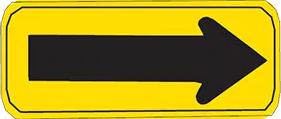
A. The road to the right is for one-way traffic only.
B. There is a detour to the right due to road construction.
C. The road ahead changes direction at an extreme angle.
15. Vehicles stopped behind a school bus with its red lights flashing must remain stopped until:
A. All students are off the bus.
B. The stop arm is retracted.
C. The stop arm is retracted and the bus resumes motion.
16. When stopped at a red traffic light with a green arrow, you may proceed in the direction of the arrow if you:
A. First come to a complete stop.
B. Wait until the light changes.
C. Are in the proper lane and the intersection is clear.
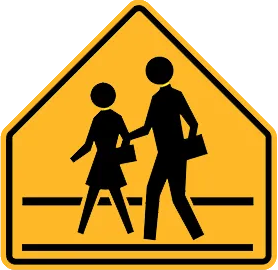
17. This yellow warning sign means:
A. You are approaching a school or school crosswalk.
B. Slow down, drive with caution, and watch for children.
C. Both of the above.
18. A U-turn is not permitted:
A. In a parking lot.
B. On or near any curve or hill.
C. On a straight roadway with a clear view for 500 feet in both directions.
19. Which of these statements is true about drinking alcohol and driving?
A. If you can walk in a straight line after drinking, it is safe to drive.
B. If you are under the legal blood alcohol concentration limit, your driving isn't impaired.
C. Alcohol affects judgement, which is needed to drive safely.
20. When changing lanes:
A. Rely on the rearview mirror.
B. Look over your shoulder in the direction you plan to move.
C. Rely on the left side mirror.
21. Double solid yellow lane markings mean that:
A. Neither lane may pass.
B. Both lanes may pass.
C. The lane to the right may pass.
22. You can drive off the road to pass another vehicle:
A. If the vehicle ahead is turning left.
B. If there are two or more lanes traveling in your direction.
C. Under no circumstances.
23. You are coming to an intersection with a flashing red light. You should:
A. Slow down and yield the right-of-way.
B. Slow down and drive carefully through the intersection.
C. Come to a complete stop, check the traffic, and go when it is safe to do so.
24. On a multilane road, a dashed yellow line next to a solid yellow line means:
A. Passing is prohibited from both directions.
B. Passing is permitted from both directions.
C. Passing is permitted only from the direction next to the dashed line.
25. When passing another car, you have enough space to return to the driving lane:
A. If the other driver signals for you to re-enter the lane.
B. If you look over your shoulder and see the passed car behind you.
C. If you can see both of the passed vehicle's headlights in your rearview mirror.
26. Which of the following blocks the smooth flow of traffic?
A. Slowing down to look at collision scene.
B. Avoiding unnecessary lane changes.
C. Using public transportation instead of your vehicle.
27. Backing your vehicle is:
A. Always dangerous.
B. Dangerous if you have a helper.
C. Only dangerous in large vehicles.
28. The driver ahead of you stops at a crosswalk. What should you do?
A. Cautiously pass the vehicle at 10 mph or slower.
B. Stop, proceeding only when all the pedestrians have crossed.
C. Change lanes, look carefully, and pass the stopped vehicle.
29. You are involved in a minor collision at an intersection. There are no injuries and there is very little vehicle damage. You should:
A. Leave your vehicle in the traffic lane until law enforcement arrives.
B. Move your vehicle out of the traffic lane, if possible.
C. Not move your vehicle for any reason.
30. At an intersection with stop signs on all corners, yield the right-of-way to any driver:
A. On your left.
B. Who arrived before you.
C. Across from your vehicle.