Dmv Permit Test 61

By Teacher David Global  •  Free

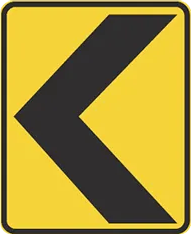
1. This sign is used to warn drivers about:
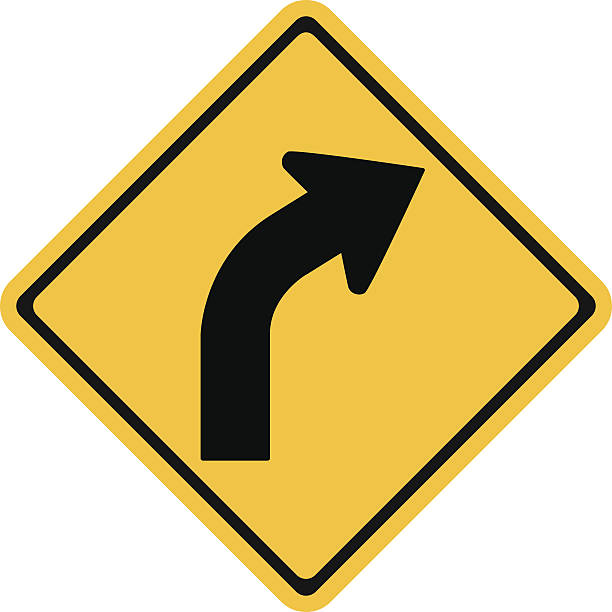
A. Upcoming intersections.
B. Road construction.
C. Road curves ahead.
2. Allow extra space in front of your vehicle when following a:
A. Station wagon.
B. Passenger vehicle.
C. Motorcycle.
3. You may legally block an intersection:
A. If you entered the intersection on the green light.
B. During rush hour traffic.
C. Under no circumstances.
4. Slowing down just to look at collisions or anything else out-of-the-ordinary:
A. Causes traffic congestion.
B. Prevents rear-end collisions.
C. Improves traffic flow by preventing collisions.
5. If bad weather makes it difficult for you to see clearly, you should:
A. Speed up to get off the road quickly.
B. Drive in the lane closest to oncoming traffic.
C. Increase your following distance.
6. This sign means:
A. Change in direction or narrowing of roadway.
B. No right turn.
C. No passing zone.
7. Which lane must you be in before making a left turn from a one-way street?
A. The lane nearest the left curb.
B. The lane nearest the center of the street.
C. The lane nearest the right curb.
8. A broken yellow line beside a solid yellow line indicates that:
A. Passing is permitted from the lane next to the solid yellow line.
B. Passing is not permitted from either direction.
C. Passing is permitted from the lane next to the broken yellow line.
9. When you drive through a construction zone, you should:
A. Stop to watch the workers.
B. Decrease your following distance.
C. Pass the construction zone carefully and not “rubberneck."
10. A steady yellow traffic signal light is a warning that the light is about to change to red. If you are already within the intersection when a green light changes to yellow, you should:
A. Stop.
B. Continue moving and clear the intersection safely.
C. Increase your speed so as not to cause an accident.
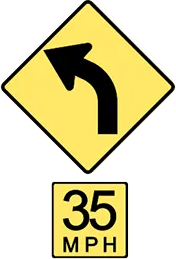
11. This sign means:
A. There is a 35 mph speed zone after the curve ahead.
B. Drive no slower than 35 mph around the upcoming curve.
C. Approach the upcoming curve at a speed of 35 mph or slower.
12. If you have a sudden tire blowout:
A. Use the brakes lightly.
B. Pump the brakes.
C. Apply the brakes firmly.
13. If you come upon a severe dust storm, you should:
A. Slow and pull off the road.
B. Turn on your high beams.
C. Maintain your speed and stay in your lane.
14. To help avoid skidding on slippery surfaces, you should:
A. Shift to a lower gear after starting down a steep hill.
B. Speed up to enter curves and slow down to exit them.
C. Slow down before entering curves and intersections.
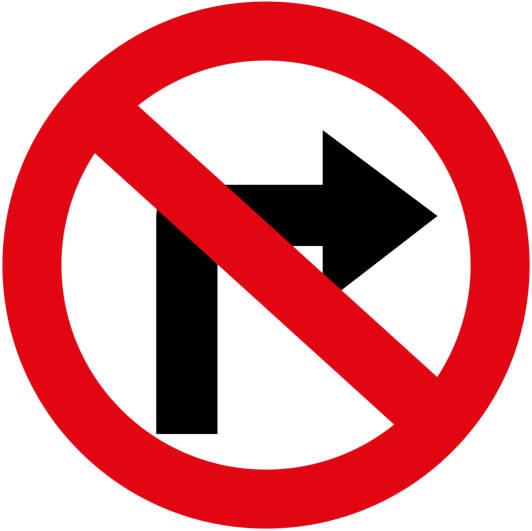
15. This sign means:
A. No right turn.
B. Stop sign ahead.
C. Divided highway.
16. If you see orange construction signs and cones on a freeway, you must:
A. Slow down because the lane ends ahead.
B. Be prepared for workers and equipment ahead.
C. Change lanes and maintain your current speed.
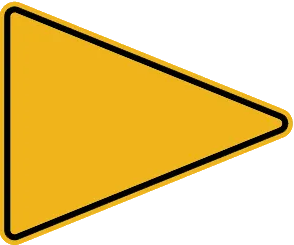
17. A sign with this shape means:
A. No passing zone.
B. Right turn permitted on red.
C. Yield right-of-way.
18. When driving in a construction zone:
A. Slightly increase your speed.
B. Expect the unexpected.
C. Expect construction workers to yield to motorists.
19. As you approach an intersection with a flashing yellow light:
A. Stop before crossing the intersection.
B. Slow down and proceed with caution.
C. Wait for a green light before proceeding.
20. A solid yellow line next to a broken yellow line means that vehicles:
A. Driving in both directions may pass.
B. Next to the broken line may pass.
C. Next to the solid line may pass.
21. What can you do to reduce road rage?
A. Always signal your intention when changing lanes.
B. Talk on your cell phone while driving.
C. Use your horn frequently.
22. In which of the following scenarios should your wheels not be pointed straight ahead?
A. When waiting to make a left turn at a traffic light.
B. When parked on a hill or sloping driveway.
C. When parked on the side of a level roadway where there is no curb.
23. A flashing yellow light at an intersection means you should:
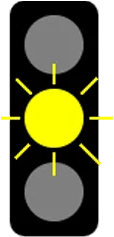
A. Slow down and proceed with caution.
B. Come to a complete stop as quickly as possible.
C. Stop and proceed only when the intersection is clear.
24. When entering a roadway from an alley:
A. Stop at the sidewalk.
B. Honk your horn.
C. The speed limit is 15 mph.
25. At an intersection with a yield sign, you:
A. Must yield the right-of-way to cross traffic that is close enough to cause conflict.
B. Must yield to vehicles only on your right.
C. Should slow down but never stop.
26. Before you change lanes, you should check your mirrors and:
A. Never look over your right shoulder.
B. Always slow down in your traffic lane.
C. Glance over your shoulder.
27. If you want to pass a pedestrian who is walking along the roadway and an oncoming vehicle is approaching, you should:
A. Slow down and let the oncoming vehicle pass before you pass the pedestrian.
B. Keep driving at a steady speed. The oncoming vehicle must stop for you.
C. Honk your horn to get the pedestrian to move over.
28. Where is it safe to pass another vehicle?
A. Within an intersection where there are no oncoming vehicles
B. Wherever signs and/or pavement markings permit passing
C. Within a curve where there are no oncoming vehicles
29. When approaching an intersection controlled by a flashing yellow light, you must:
A. Come to a complete stop at the intersection.
B. Maintain your normal speed.
C. Slow down and proceed with caution.
30. When entering an interstate highway, you should:
A. Stop, check for cars, and enter when safe.
B. Check for cars and reduce your speed to 25 mph before entering the traffic lane.
C. Check for cars, increase your speed to match the flow of traffic, and merge when the way is clear.