Dmv Permit Test 6

By Teacher David Global  •  Free

1. When driving in work zones, you should:
A. Increase your speed to get through the zone as quickly as possible.
B. Reduce your speed and be prepared to stop suddenly.
C. Maintain your normal speed the whole way through the zone.
2. Driving under the influence of any medication which impairs your driving is permitted:
A. Under no circumstances.
B. If you don't feel drowsy.
C. If it is prescribed by a physician.
3. "No zones" are areas around trucks where cars:
A. Disappear into blind spots or are so close that they restrict the truck driver's ability to stop and maneuver safely.
B. Have sufficient space to travel behind the truck.
C. Have several car lengths between their vehicle and the truck.
4. To see objects in their blind spot when changing lanes, drivers should check:
A. Only the left outside mirror.
B. Over their left or right shoulder.
C. Only the inside rearview mirror.
5. Extra space in front of a large truck is needed for:
A. Other drivers to merge onto the freeway.
B. The truck driver to stop the vehicle.
C. Other drivers when they want to slow down.
6. Before you enter an intersection, you should look to your:
A. Left, your right, then your left again.
B. Right.
C. Left.
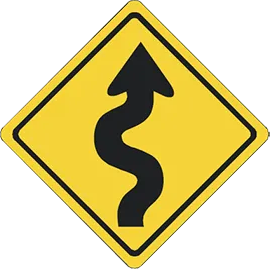
7. This sign means:
A. Winding road ahead.
B. Do not enter.
C. Pedestrian crossing.
8. It is very foggy. You should slow down and:
A. Turn on your emergency flashers.
B. Turn your lights to their high beam setting.
C. Turn your lights to their low beam setting.
9. Reaction time is slower after:
A. Drinking alcohol.
B. Sleeping.
C. Working hard.
10. You want to park downhill on a two-way road and there is no curb. Which way do you turn your front wheels?
A. Straight ahead
B. Right, toward the side of the road
C. Left, toward the center of the road
11. Only ____ can reduce blood alcohol content (BAC) and alcohol's effects on the body.
A. Drinking caffeine
B. Eating foods high in fat
C. Time
12. When stopped for a traffic violation or at an equipment check, a driver must produce:
A. Only their insurance and registration.
B. Only their license.
C. Their license, insurance, and registration.
13. If your car becomes disabled while on the highway, you should:
A. Stop in the right lane.
B. Park with all four wheels off the traveled highway, if possible.
C. Stop where you are.
14. Work zone barriers, drums, cones, and signs are used to:
A. Make drivers angry about slow traffic.
B. Inconvenience drivers.
C. Keep traffic out of hazardous work zones.
15. If you are driving and the rear end of your car starts skidding to the left, you should:
A. Steer to the right.
B. Steer to the left.
C. Tap your brakes lightly and shift into neutral.
16. On a green arrow, you must:
A. Yield to any vehicle, bicycle, or pedestrian in the intersection.
B. Yield to pedestrians only in the intersection.
C. Wait four seconds before proceeding.
17. You have stopped for a train at a railroad crossing. After the train passes, you should:
A. Wait for signal lights to stop flashing.
B. Look for a second train.
C. Both of the above.
18. This sign indicates that the road ahead:
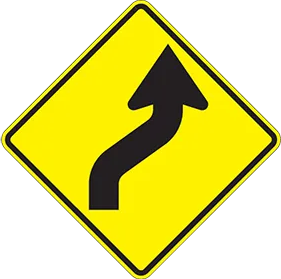
A. Turns sharply right, then left.
B. Curves right, then left.
C. Curves right.
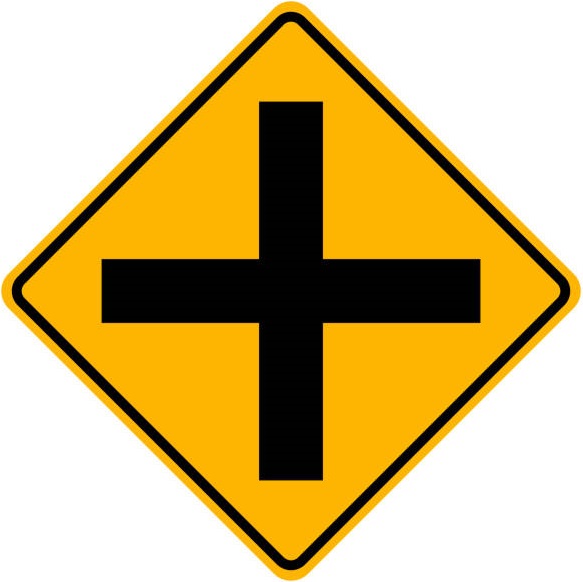
19. This sign shows one type of:
A. Intersection.
B. Road curve.
C. Right turn.
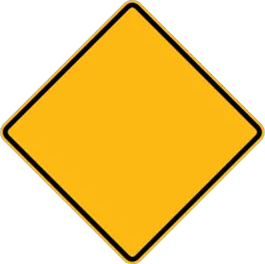
20. A sign with this shape means:
A. Railroad crossing.
B. Warning.
C. Signal ahead.
21. A large truck is ahead of you and is turning right onto a street with two lanes in each direction. The truck:
A. May complete its turn in either of the two lanes.
B. May have to swing wide to complete the right turn.
C. Must stay in the right lane at all times while turning.
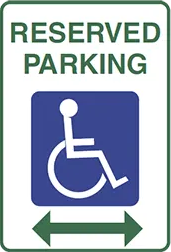
22. This sign means:
A. Reserved parking for persons with disabilities.
B. Slow-moving vehicle.
C. No U-turn.
23. What should you do when approaching a pedestrian who is being led by a guide dog or using a white cane?
A. Honk so they know to clear the way.
B. Yield the right-of-way.
C. Swerve quickly around them.
24. You should not start across an intersection if you know you will block the intersection when the light turns red:
A. Under any circumstances.
B. Unless you entered the intersection on a yellow light.
C. Unless you entered the intersection on a green light.
25. A broken yellow line beside a solid yellow line indicates that:
A. Passing is permitted from the lane next to the solid yellow line.
B. Passing is not permitted from either direction.
C. Passing is permitted from the lane next to the broken yellow line.
26. Which of these statements is true about driving and taking medications?
A. Most cold medications can make a person drowsy.
B. Over-the-counter medications cannot impair driving ability if taken in the recommended dosages.
C. Medications are safe to take at any time, if prescribed by a doctor.
27. You have allowed the wheels of your vehicle to run off the edge of the pavement. What should you do first?
A. Turn the front wheels slightly to the left to edge the car back onto the pavement.
B. Hold the steering wheel firmly, release the gas pedal, and gently apply the brakes.
C. Apply the brakes and turn the front wheels sharply to the left.
28. If there is a deep puddle on the road ahead, you should:
A. Maintain the posted speed to make it through the water.
B. Avoid the puddle if possible.
C. Shift into neutral as you drive through the water.
29. Which of these statements is true about drinking alcohol and driving?
A. If you can walk in a straight line after drinking, it is safe to drive.
B. If you are under the legal blood alcohol concentration limit, your driving isn't impaired.
C. Alcohol affects judgement, which is needed to drive safely.
30. You may pass a vehicle when:
A. You are on a hill or curve.
B. You are on a road with a solid line next to your lane.
C. You are on a road with a broken line next to your lane.
31. When driving on a slippery surface, such as snow or ice:
A. Shift to a low gear before going down steep hills.
B. Maintain traction by following other vehicles closely.
C. Pump your brakes to keep them from freezing.
32. If a traffic signal light is green and a police officer signals for you to stop, you should:
A. Obey the officer.
B. Obey the traffic signal.
C. Do what the vehicle in front of you does.
33. When you see an emergency vehicle approaching while using its flashing lights, you must:
A. Maintain your speed and stay in your lane until the vehicle has passed.
B. Move into the right lane and drive slowly until the vehicle has passed.
C. Pull over to the curb or edge of the road and stop until the vehicle has passed.
34. Where is it safe to pass another vehicle?
A. Within an intersection where there are no oncoming vehicles
B. Wherever signs and/or pavement markings permit passing
C. Within a curve where there are no oncoming vehicles
35. Which of these statements is true about drugs and driving?
A. Any prescription drug is safe to use if you don't feel drowsy.
B. Even over-the-counter drugs can impair your driving.
C. Only illegal drugs can impair your driving.
36. What is the purpose of rumble strips?
A. They alert drivers to potential tire problems.
B. They test a vehicle's shock absorbers.
C. Through vibration and sound, they alert inattentive drivers to the fact that their vehicles have left the travel lane.
37. When passing a row of parked vehicles, you should:
A. Be prepared for a person or vehicle to unexpectedly enter your lane.
B. Expect all other drivers and pedestrians to respect your right-of-way.
C. Drive closely to the parked vehicles to allow more room for moving traffic.
38. Various traffic control devices in construction and maintenance work areas are the color:
A. Red.
B. Orange.
C. Yellow.
39. To avoid carbon monoxide poisoning, a driver should:
A. Have their exhaust system checked regularly to be sure there are no leaks.
B. Keep their engine turned off when their vehicle is enclosed in a garage.
C. Both of the above.
40. Regulatory signs are usually ____ and should always be obeyed.
A. White
B. Blue
C. Green