Dmv Permit Test 16

By Teacher David Global  •  Free

1. When driving under low-visibility conditions due to fog, you should:
A. Turn on your high beam headlights.
B. Slow down and use your low beam headlights.
C. Increase your speed so you do not cause an accident.
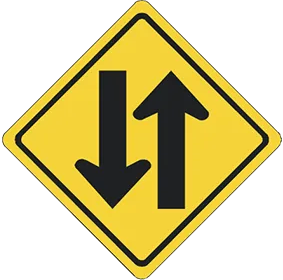
2. This sign means:
A. Two-way traffic.
B. Change in direction ahead.
C. School zone and crossing.
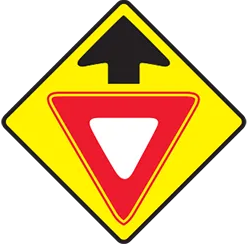
3. This sign means:
A. Stop Sign Ahead.
B. Side Road.
C. Railroad Warning.
4. When driving in fog, you should:
A. Use your high beam headlights.
B. Use your parking lights.
C. Use your low beam headlights.
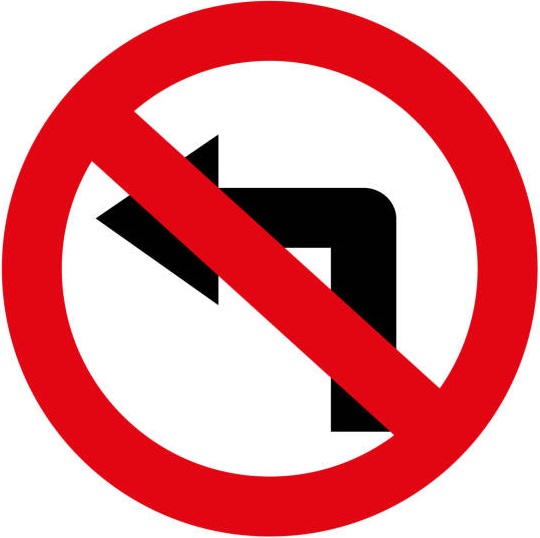
5. This sign means:
A. No left turn can be made here.
B. A left turn can be made only after stopping.
C. All traffic must turn right at the next intersection.
6. A steady green traffic light at an intersection means:
A. Increase your speed.
B. Adjust your mirrors.
C. You may continue through the intersection at a safe and reasonable speed, if it is clear to do so.
7. To help avoid skidding on slippery surfaces, you should:
A. Shift to a lower gear after starting down a steep hill.
B. Speed up to enter curves and slow down to exit them.
C. Slow down before entering curves and intersections.
8. If a child is riding a bicycle near your vehicle:
A. Beep your horn.
B. Expect the child to be in total control of the bicycle.
C. Expect the unexpected.
9. You may cross double yellow lines to pass another vehicle if the:
A. Vehicle in front of you moves to the right to let you pass.
B. Yellow line next to your side of the road is broken.
C. Yellow line next to the opposite side of the road is broken.
10. When entering an interstate highway, you should:
A. Stop, check for cars, and enter when safe.
B. Check for cars and reduce your speed to 25 mph before entering the traffic lane.
C. Check for cars, increase your speed to match the flow of traffic, and merge when the way is clear.
11. When crossing a sidewalk to enter traffic from an alley or driveway, drivers should:
A. Stop only if pedestrians are on the sidewalk.
B. Stop before driving onto the sidewalk or sidewalk area.
C. Expect pedestrians on the sidewalk to yield the right-of-way.
12. You are coming to an intersection with a flashing red light. You should:
A. Slow down and yield the right-of-way.
B. Slow down and drive carefully through the intersection.
C. Come to a complete stop, check the traffic, and go when it is safe to do so.
13. In traffic moving at 50 to 55 mph, you are least likely to have an accident if you:
A. Drive a few miles per hour faster than most other vehicles.
B. Stay within that speed range.
C. Drive a few miles per hour slower than most other vehicles.
14. If you approach a stopped school bus that has its lights flashing and signal arm extended, you should:
A. Stop.
B. Proceed at 15 mph if no children are present.
C. Proceed at normal speed, but watch for children.
15. This sign means:
A. School zone or crossing.
B. Pedestrian crossing.
C. Railroad ahead.
16. A vehicle suddenly cuts in front of you, creating a hazard. What should you do first?
A. Honk and step on the brake firmly.
B. Take your foot off the gas pedal.
C. Swerve into the lane next to you.
17. If your car's suspension is bad, it can cause:
A. Vehicle control problems.
B. Squealing brakes.
C. Slack in the steering.
18. Extra space in front of a large truck is needed for:
A. Other drivers to merge onto the freeway.
B. The truck driver to stop the vehicle.
C. Other drivers when they want to slow down.
19. If you see orange construction signs and cones on a freeway, you must:
A. Slow down because the lane ends ahead.
B. Be prepared for workers and equipment ahead.
C. Change lanes and maintain your current speed.
20. Various traffic control devices in construction and maintenance work areas are the color:
A. Red.
B. Orange.
C. Yellow.
21. When passing on the left of a vehicle, it is safe to move back into the right lane:
A. After about three seconds.
B. When you can no longer see the vehicle over your right shoulder.
C. When you can see the front of the vehicle in your rearview mirror.
22. A broken yellow line down the center of a road indicates that:
A. A construction zone is ahead.
B. Passing is not permitted from either direction.
C. Passing is permitted from either direction.
23. You are driving behind a motorcycle and want to pass. You must:
A. Stay in the right lane as much as possible because the motorcycle is small and doesn't use all of the lane.
B. Blow your horn to make the motorcycle move onto the shoulder so that you can pass.
C. Have your vehicle entirely in the left lane before and during the pass.
24. A large truck is ahead of you and is turning right onto a street with two lanes in each direction. The truck:
A. May complete its turn in either of the two lanes.
B. May have to swing wide to complete the right turn.
C. Must stay in the right lane at all times while turning.
25. There are two traffic lanes moving in your direction. You are driving in the left lane and many vehicles are passing you on the right. If the driver behind you wishes to drive faster, you should:
A. Stay in your lane so you don't impede the flow of traffic.
B. Drive onto the left shoulder to let the other vehicles pass.
C. Move into the right lane when it is safe.
26. You must show proof of insurance to law enforcement:
A. Only if you are involved in a collision.
B. If you are involved in a collision or stopped for a citation.
C. Only if you are stopped and cited.
27. A distraction when driving is:
A. Anything that causes evasive action while driving.
B. Anything that takes your attention away from driving.
C. Anything that causes you to pay more attention to driving.
28. When stopped for a traffic violation or at an equipment check, a driver must produce:
A. Only their insurance and registration.
B. Only their license.
C. Their license, insurance, and registration.
29. When a bicyclist is making a left turn:
A. They may use the left lane.
B. They may cut through all lanes.
C. They may wait on the side of the road.
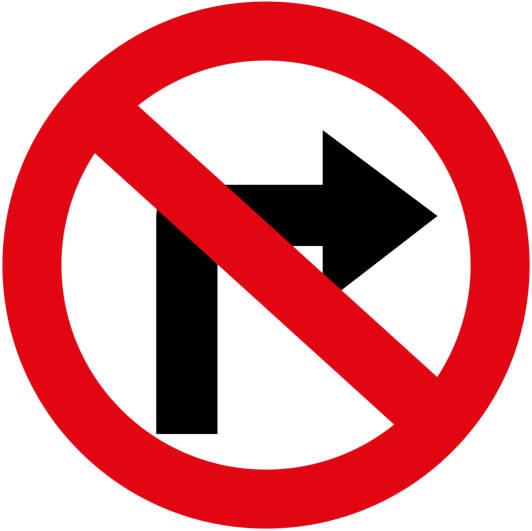
30. This road sign means:
A. No right turn.
B. No U-turns.
C. No left turn.
31. A school bus is stopped ahead of you in your lane with its red lights flashing. You should:
A. Stop and proceed when you think all of the children have exited the bus.
B. Slow to 25 mph and pass cautiously.
C. Stop for as long as the red lights are flashing.
32. When involved in a collision, you should:
A. Avoid moving the injured unless absolutely necessary.
B. Move the injured to their desired location.
C. Insist the injured are fine without immediate medical attention.
33. What should you do when an emergency vehicle is approaching you while using its flashing red or blue lights?
A. Pull over to the side of the road and come to a complete stop.
B. Continue driving, but try to stay out of its way.
C. See if you can reach your destination before the emergency vehicle catches up to you.
34. You have stopped for a train at a railroad crossing. After the train passes, you should:
A. Wait for signal lights to stop flashing.
B. Look for a second train.
C. Both of the above.
35. At a red traffic light with a green arrow, you may proceed in the direction of the arrow if:
A. You first come to a complete stop.
B. You wait until the light changes.
C. You are in the proper lane and the roadway is clear.
36. A broken yellow line beside a solid yellow line indicates that:
A. Passing is permitted from the lane next to the solid yellow line.
B. Passing is not permitted from either direction.
C. Passing is permitted from the lane next to the broken yellow line.
37. "No zones" are areas around trucks where cars:
A. Disappear into blind spots or are so close that they restrict the truck driver's ability to stop and maneuver safely.
B. Have sufficient space to travel behind the truck.
C. Have several car lengths between their vehicle and the truck.
38. Stopping distances and severity of crashes:
A. Decrease as vehicle speed increases.
B. Are not affected by vehicle speed.
C. Increase as vehicle speed increases.
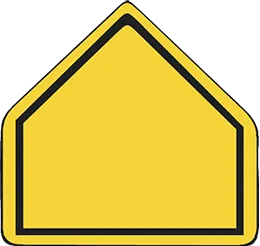
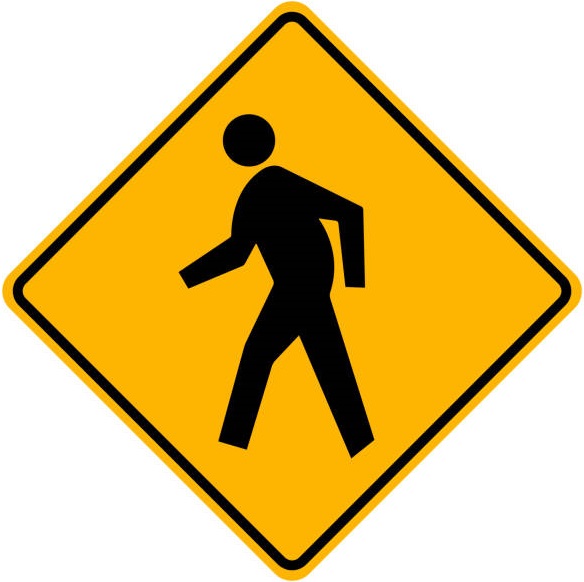
39. This sign means:
A. School crossing.
B. School zone.
C. Pedestrian crossing.
40. You are driving on a one-way street. You may only turn left onto another one-way street if:
A. You increase your speed before the turn.
B. Traffic on the street moves to the right.
C. Traffic on the street moves to the left.