Dmv Permit Test 15

By Teacher David Global  •  Free

1. What is the purpose of rumble strips?
A. They alert drivers to potential tire problems.
B. They test a vehicle's shock absorbers.
C. Through vibration and sound, they alert inattentive drivers to the fact that their vehicles have left the travel lane.
2. If worried, nervous, or angry, drivers:
A. Should let someone else drive.
B. Are more in touch with their senses and will be more precise drivers.
C. Will drive no differently than they would if they were thinking clearly.
3. To see objects in their blind spot when changing lanes, drivers should check:
A. Only the left outside mirror.
B. Over their left or right shoulder.
C. Only the inside rearview mirror.
4. Water on the road can cause a vehicle to hydroplane. Your car may hydroplane at speeds as low as:
A. 45 miles per hour.
B. 35 miles per hour.
C. 40 miles per hour
5. You should signal continuously while turning because it:
A. Is illegal to turn off your signal before completing a turn.
B. Lets other drivers know what your intentions are.
C. Is always unsafe to turn off a signal before completing a turn.
6. If you approach a traffic light with a red signal and a police officer directs you to go through the intersection without stopping, you should:
A. Stop until the light turns green.
B. Go through the intersection without stopping.
C. Come to a complete stop before proceeding.
7. Yellow lines separate:
A. Traffic lanes on one-way streets.
B. Traffic moving in opposite directions on two-way roads.
C. All carpool lanes from regular traffic lanes.
8. When driving on a slippery surface, such as snow or ice:
A. Shift to a low gear before going down steep hills.
B. Maintain traction by following other vehicles closely.
C. Pump your brakes to keep them from freezing.
9. Prior to entering a curve:
A. Activate your turn signal.
B. Reduce your speed.
C. Brake hard.
10. A green traffic signal indicates that approaching drivers should:
A. Come to a complete stop.
B. Increase their speed to quickly clear the intersection.
C. Continue driving straight through the intersection, turn left, or turn right.
11. When may you legally drive around or under a railroad crossing gate?
A. Never.
B. When you can see clearly in both directions.
C. When the warning lights are not flashing.
12. On a green arrow, you must:
A. Yield to any vehicle, bicycle, or pedestrian in the intersection.
B. Yield to pedestrians only in the intersection.
C. Wait four seconds before proceeding.
13. Winter driving is more dangerous than driving during other seasons because:
A. Road conditions can be affected by freezing temperatures, ice, snow, and fog.
B. There are increased hours of darkness.
C. Both of the above.
14. Vehicles are required to be covered by liability insurance:
A. Only when used on an interstate.
B. Only when operated by a minor.
C. At all times.
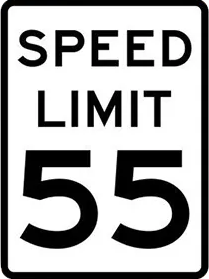
15. This road sign means:
A. You must travel through the intersection at the posted speed limit.
B. The maximum speed limit under ideal conditions is 55 mph.
C. You must not travel below the speed indicated
16. Motorcycles are entitled to:
A. The same full lane width as other motor vehicles.
B. The width of the sidewalk.
C. One-half of the width of a lane.
17. You are driving on the freeway. The vehicle in front of you is a large truck. You should drive:
A. Closely behind the truck in bad weather because the driver can see farther ahead than you can.
B. Farther behind the truck than you would when following a passenger vehicle.
C. No more than one car length behind the truck so the driver can see you.
18. You should increase the distance between your vehicle and the vehicle ahead when you:
A. Are following a small passenger vehicle.
B. Are being tailgated by another driver.
C. Are driving more slowly than the posted speed limit.
19. When you see this sign, you should stop and:
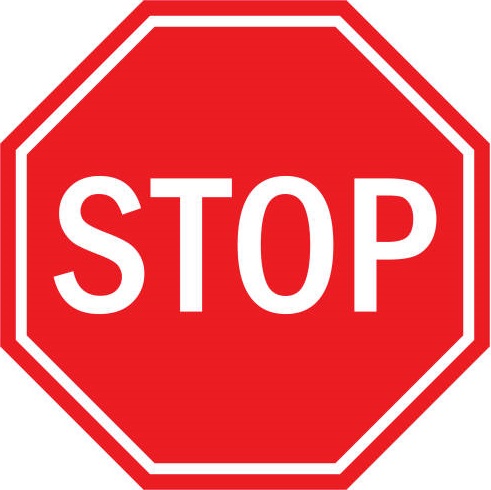
A. Check for vehicles only in the direction that you plan on going, then proceed.
B. Let all vehicles that arrive before or after you go first.
C. Check for traffic in all directions before proceeding.
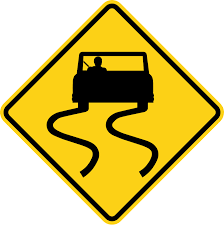
20. This road sign means:
A. Steep grade ahead.
B. The road ahead winds with a series of turns or curves.
C. Slippery when wet.
21. When a car with bright headlights drives toward you at night, you should:
A. Stop until the other driver passes.
B. Look below their headlights.
C. Glance toward the right edge of your lane.
22. When passing a row of parked vehicles, you should:
A. Be prepared for a person or vehicle to unexpectedly enter your lane.
B. Expect all other drivers and pedestrians to respect your right-of-way.
C. Drive closely to the parked vehicles to allow more room for moving traffic.
23. You hit a parked vehicle and can't find the owner. What must you do?
A. Call your insurance company when you get home.
B. Wait for the owner to return.
C. Leave a note with your name and address on the parked vehicle.
24. When you are behind a motorcycle, you should:
A. Be ready to use your horn.
B. Drive more slowly.
C. Allow a larger following distance.
25. You want to turn left at an upcoming corner. Yield the right-of-way to:
A. Oncoming vehicles also turning left.
B. All approaching vehicles.
C. Pedestrians on the sidewalk waiting for a "Walk" signal.
26. To improve visibility lowered by rain or fog, drivers should use their:
A. Low beam headlights.
B. High beam headlights.
C. Parking lights.
27. When changing lanes, you can check your blind spot by:
A. Using the inside rearview mirror.
B. Turning your head and looking over your shoulder.
C. Using your side mirror.
28. You may legally block an intersection:
A. If you entered the intersection on the green light.
B. During rush hour traffic.
C. Under no circumstances.
29. Streets and highways are most slippery:
A. When it has been raining hard for several hours.
B. When they are clean and dry.
C. Just after it starts to rain.
30. Allow extra space in front of your vehicle when following a:
A. Station wagon.
B. Passenger vehicle.
C. Motorcycle.
31. While driving at night, a vehicle coming toward you has its high beams on, making it hard for you to see the road ahead. You should:
A. Look ahead toward the left edge of your lane.
B. Look ahead toward the right edge of your lane.
C. Look straight ahead in your lane.
32. Remove all snow, frost, and ice from:
A. Just the windshield.
B. All windows.
C. Just the windshield and passenger window.
33. Give the right-of-way to any pedestrian who is:
A. In a marked crosswalk.
B. In any crosswalk or intersection.
C. Crossing any street.
34. Which of these is a safe driving technique?
A. Using your high beam lights in the fog.
B. Staring at the road ahead of your vehicle.
C. Checking your rearview mirrors frequently.
35. If your vehicle has a two-part safety belt system, you should:
A. Use only the lap belt.
B. Use both the lap and shoulder belts.
C. Use only the shoulder belt.
36. When driving at night on a dimly lit street, you should:
A. Drive slowly enough that you can stop within the area illuminated by your headlights.
B. Turn on your high beam headlights to better see the vehicles ahead of you.
C. Keep the instrument panel lights bright to be more visible to other drivers.
37. At an intersection with stop signs on all corners, yield the right-of-way to any driver:
A. On your left.
B. Who arrived before you.
C. Across from your vehicle.
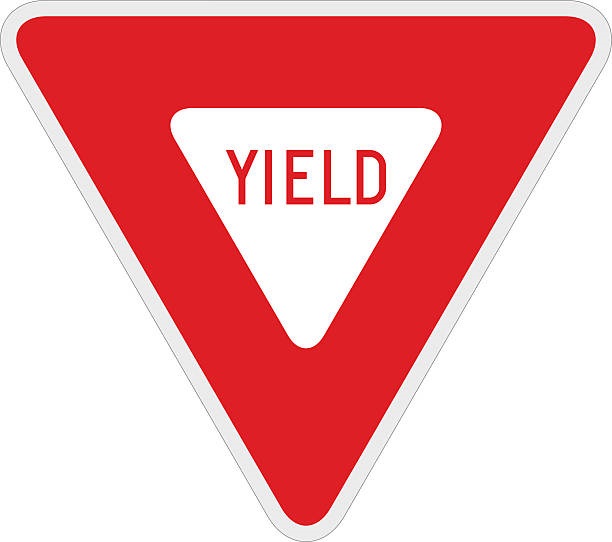
38. This sign means:
A. Cars on the right move first.
B. You have the right-of-way.
C. Let cross traffic pass before proceeding.
39. To turn left from a multilane one-way street onto a one-way street, you should start your turn from:
A. Any lane (as long as it is safe).
B. The lane closest to the left curb.
C. The lane in the center of the road.
40. A driver should:
A. Assume all drivers automatically obey the right-of-way rules.
B. Assume most drivers obey the right-of-way rules.
C. Always be prepared to yield the right-of-way.