Dmv Permit Test 14

By Teacher David Global  •  Free

1. If you plan to pass another vehicle, you should:
A. Not assume the other driver will make space for you to return to your lane.
B. Assume the other driver will let you pass if you use your turn signal.
C. Assume the other driver will maintain a constant speed.
2. How many alcoholic drinks does it take to affect your driving ability?
A. Three
B. Two
C. One
3. When a gate at a railroad crossing is lowering, you should:
A. Speed up and cross the tracks before the gate lowers completely.
B. Come to a complete stop and wait.
C. Drive around the gate.
4. On a freeway, you should look farther ahead than you would on a city street:
A. In order to see potential hazards early.
B. Because it takes a quarter of a mile to stop your vehicle completely.
C. Because it helps you keep up with traffic.
5. Always stop before crossing railroad tracks when:
A. There isn't room on the other side for you to completely cross the tracks.
B. The railroad crossing is located in a city or town that has frequent train traffic.
C. You are transporting two or more young children in a passenger vehicle.
6. After you have passed a vehicle moving in the same direction, it is safe to move back into the right lane:
A. After about three seconds.
B. When you can no longer see the passed vehicle over your right shoulder.
C. When you can see the entire front of the passed vehicle in your rearview mirror.
7. To help others see you when daylight begins to fade, you should use your:
A. Parking lights.
B. Low beam headlights.
C. Emergency flashers.
8. What does this road sign mean?
A. Falling rocks
B. Trucks use second gear
C. Steep hill
9. As the percentage of alcohol (BAC) in your blood increases, you become:
A. More intoxicated.
B. More sober.
C. More coordinated.
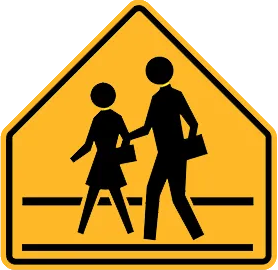
10. This yellow warning sign means:
A. You are approaching a school or school crosswalk.
B. Slow down, drive with caution, and watch for children.
C. Both of the above.
11. "No passing zone" signs tell drivers:
A. To speed up slightly.
B. That it is not safe to pass.
C. To maintain a steady speed.
12. Before switching on the ignition, you should:
A. Buckle your safety belt.
B. Be sure all passengers have buckled their safety belts.
C. Both of the above.
13. To prevent eye fatigue when driving at night, drivers should:
A. Stare straight ahead.
B. Continue moving their eyes and scanning the road.
C. Rest their eyes by closing them for a couple of seconds at a time.
14. Children on bicycles should be given extra space by motor vehicle operators because:
A. They do not have the same physical reflexes as adults.
B. They are smaller and more difficult to see than adults.
C. Both of the above.
15. Vehicles stopped behind a school bus with its red lights flashing must remain stopped until:
A. All students are off the bus.
B. The stop arm is retracted.
C. The stop arm is retracted and the bus resumes motion.
16. If bad weather makes it difficult for you to see clearly, you should:
A. Speed up to get off the road quickly.
B. Drive in the lane closest to oncoming traffic.
C. Increase your following distance.
17. This is the shape and color of a ____ sign.
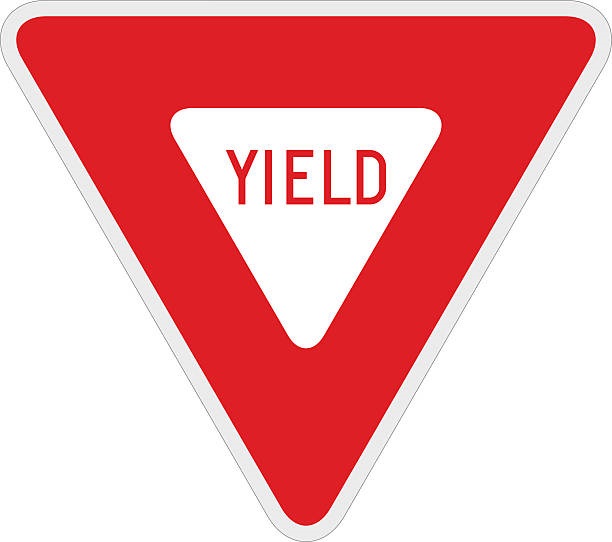
A. Stop
B. Wrong way
C. Yield
18. To improve visibility lowered by rain or fog, drivers should use their:
A. Low beam headlights.
B. High beam headlights.
C. Parking lights.
19. As you approach an intersection with a flashing yellow light:
A. Stop before crossing the intersection.
B. Slow down and proceed with caution.
C. Wait for a green light before proceeding.
20. Posters and signs on car windows:
A. Are a fun way to personalize your vehicle.
B. Are prohibited by state law if they obstruct a driver's view of the road.
C. Are allowed only if they do not contain offensive language.
21. A red traffic signal indicates that approaching drivers should:
A. Come to a complete stop.
B. Increase their speed to quickly clear the intersection.
C. Continue driving through the intersection without stopping.
22. Fatigue increases the risk of:
A. Missing an exit.
B. Being late for an appointment.
C. Falling asleep behind the wheel and crashing.
23. When driving in work zones, you should:
A. Increase your speed to get through the zone as quickly as possible.
B. Reduce your speed and be prepared to stop suddenly.
C. Maintain your normal speed the whole way through the zone.
24. If a traffic signal light is green and a police officer signals for you to stop, you should:
A. Obey the officer.
B. Obey the traffic signal.
C. Do what the vehicle in front of you does.
25. Roads with double solid yellow line markings down the center indicate that passing is:
A. Allowed from both directions.
B. Allowed only from your direction of travel.
C. Not allowed from either direction.
26. Reaction time is slower after:
A. Drinking alcohol.
B. Sleeping.
C. Working hard.
27. Hydroplaning occurs when tires ride on a thin film of water instead of on the road. To prevent hydroplaning in wet weather, you should:
A. Put on your cruise control to maintain a constant speed.
B. Slow down.
C. Move to the shoulder of the road as soon as it starts to rain.
28. When driving under snowy or icy conditions:
A. It is safe to use your cruise control.
B. Make speed and directional changes more gradually than you would otherwise.
C. Drive as you would under normal conditions.
29. Which statement is true?
A. You should put on your cruise control near a railroad crossing to maintain a constant speed.
B. You must stop at a railroad crossing when directed to do so by a flagger or stop sign.
C. You have the right-of-way at a railroad crossing and do not need to stop.
30. When should you yield your legal right-of-way?
A. Often, even at controlled intersections.
B. Whenever it helps prevent collisions.
C. Never. It confuses other drivers.
31. If your car becomes disabled while on the highway, you should:
A. Stop in the right lane.
B. Park with all four wheels off the traveled highway, if possible.
C. Stop where you are.
32. If a road is slippery, maintain a following distance that is:
A. No different than normal.
B. Farther from the car ahead than normal.
C. Closer to the car ahead than normal.
33. Slowing down just to look at collisions or anything else out-of-the-ordinary:
A. Causes traffic congestion.
B. Prevents rear-end collisions.
C. Improves traffic flow by preventing collisions.
34. You can help keep the driver behind you a safe distance away from your vehicle by:
A. Driving 10 mph faster than the car behind you.
B. Driving 10 mph slower than the car behind you.
C. Maintaining a steady speed.
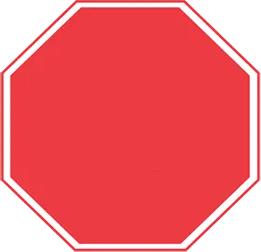
35. When you approach an octagonal sign, you must:
A. Slow.
B. Stop.
C. Turn.
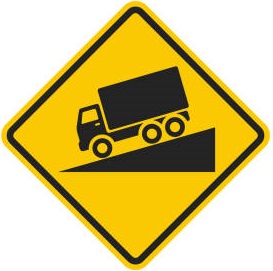
36. This sign means:
A. Trucks entering.
B. Truck exit only.
C. Steep downgrade ahead.
37. You see pedestrians near the road. You should:
A. Sound your horn and maintain your speed.
B. Speed up to clear the area quickly.
C. Slow down and pass with caution.
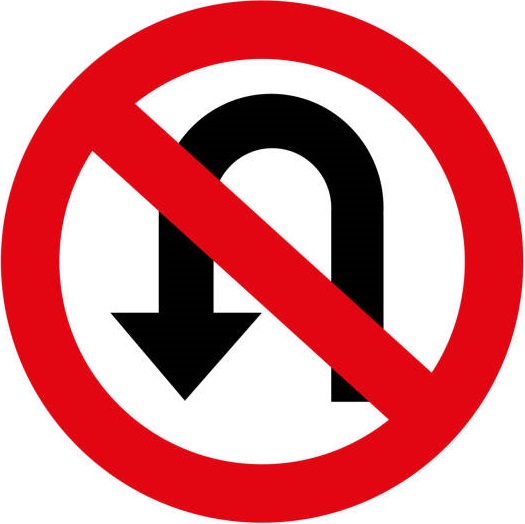
38. This sign means:
A. No turns.
B. No outlet.
C. No U-turns.
39. When you see an emergency vehicle approaching while using its flashing lights, you must:
A. Maintain your speed and stay in your lane until the vehicle has passed.
B. Move into the right lane and drive slowly until the vehicle has passed.
C. Pull over to the curb or edge of the road and stop until the vehicle has passed.
40. Which of the following statements about driving speed is true?
A. As your speed increases, the chance of a fatality increases.
B. As your speed increases, so should your following distance.
C. Both of the above.