Unconsciousness And The Airways
An unconscious person is someone who cannot respond to voice or touch.
Their awareness of surroundings is lost.
COMMON CAUSES OF UNCONSCIOUSNESS
Severe blood loss – the body cannot maintain blood flow to the brain.
Inability to breathe – blocked airway or respiratory failure.
Lack of heartbeat – cardiac arrest prevents oxygen from reaching the brain.
Allergic reaction – severe allergies can cause swelling or shock.
Severe head injury – trauma can impair brain function.
Many unconscious people have difficulty keeping their airway clear, which can lead to suffocation.
The tongue, vomit, or other objects can block the airway.
Check the airway for any blockages (tongue, vomit, objects).
Tilt the head back slightly to open the airway if no spinal injury is suspected.
Use the recovery position (lying on the side) to prevent choking if vomiting occurs.
Monitor breathing and circulation
Call for medical help immediately if the person does not regain consciousness.
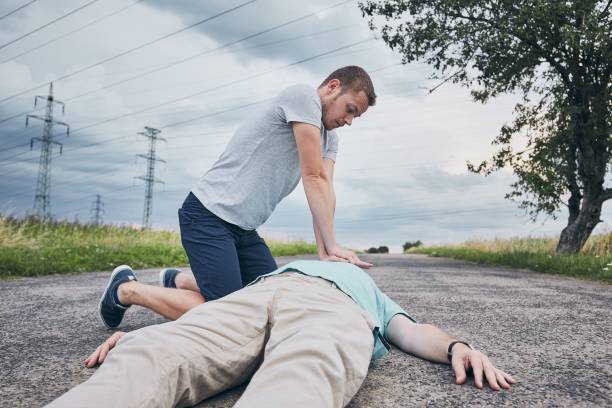
UNCONCIOUS AND NOT BREATHING?
If a person is unconscious and not breathing, it is a life-threatening emergency.
Call for medical help immediately – have someone contact emergency services.
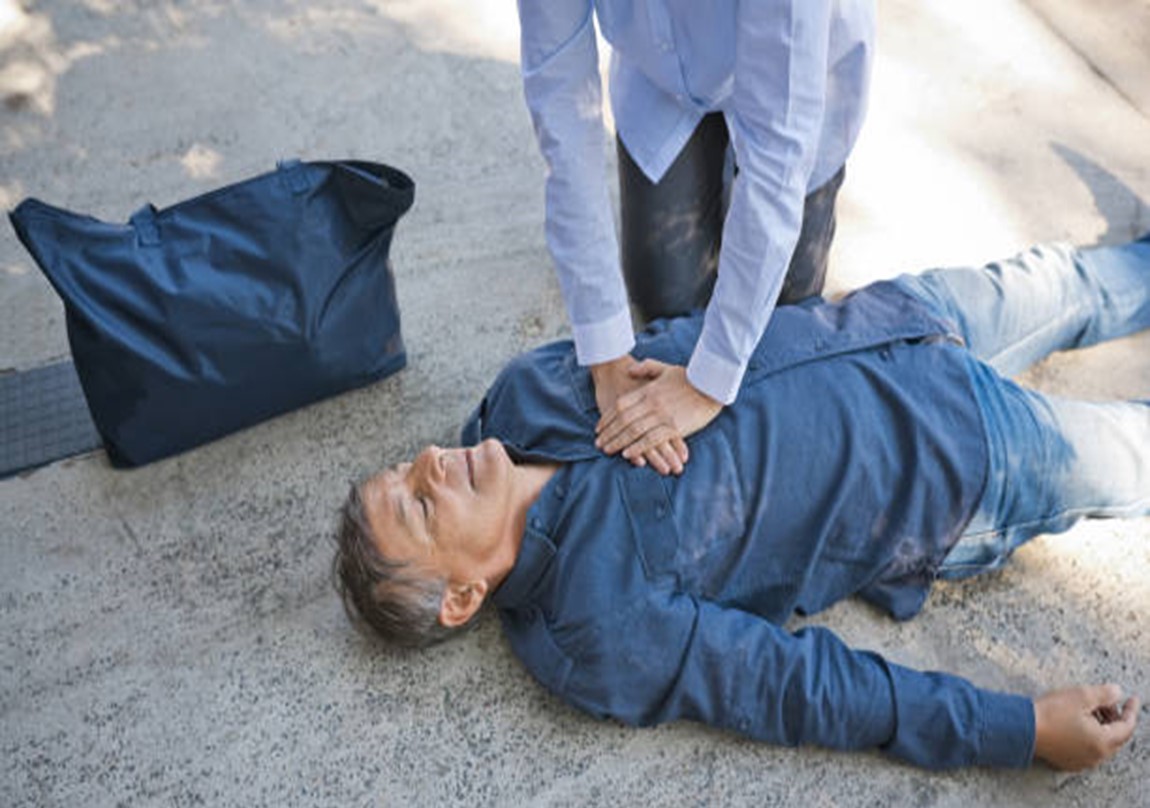
Start CPR (Cardiopulmonary Resuscitation):
Combines chest compressions and rescue breaths to circulate blood and provide oxygen.
Continue CPR until the person starts breathing or professional help arrives
IMPORTANT
Do not delay CPR to check for other things.
Make sure the scene is safe before approaching the person.
If alone, perform CPR first, then call for help if possible.
UNCONCIOUS BUT BREATHING WITH HEAD, NECK AND BACK INJURIES?
Some unconscious people are breathing, but may have a suspected head, neck, or back injury.
Treat these patients carefully to avoid causing further injury to the spine.
Do not tilt the head or neck as in normal airway techniques.
JAW THRUST MANEUVER
To perform this maneuver, position yourself above the patient’s head and place your hands on the angles of their lower jaw.
Keep the head, neck, and spine as straight as possible.
Check that the person’s tongue is not blocking the throat.
Ensure the airway is open and the person can breathe without moving their head or neck.
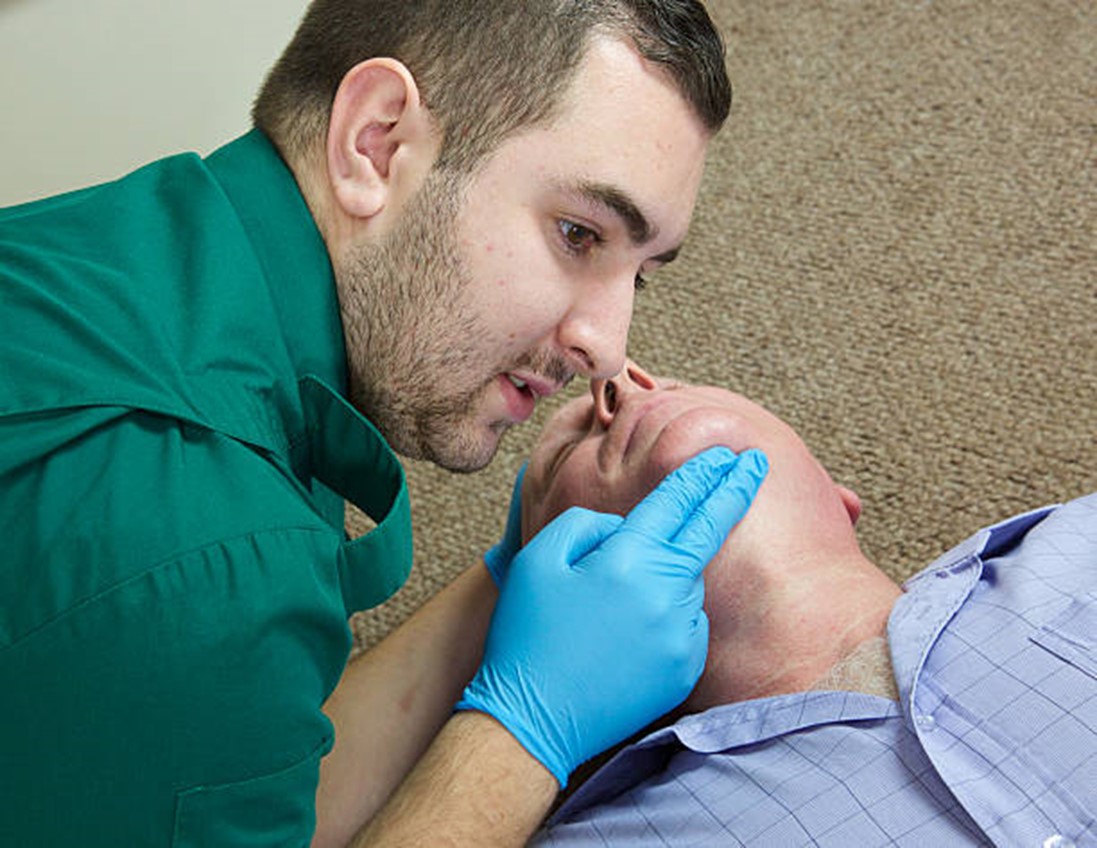
This technique for opening the airway should be used on people who are unconscious or may have sustained injuries to the head, neck, or back.
It allows you to keep the injured person’s spine aligned while opening the airway.
UNCONCIOUS WITHOUT BREATHING
WITHOUT HEAD, NECK OR BACK INJURIES?
When following the DR ABC procedure, it is important to check the airway of an injured person if they are having difficulty breathing, talking, or coughing.
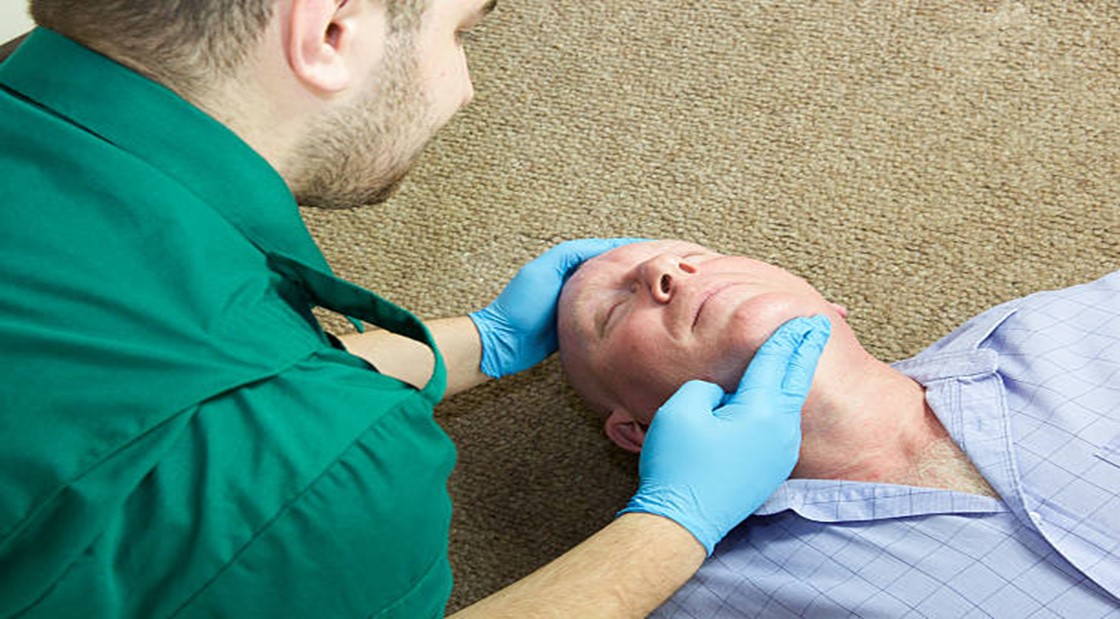
Sometimes the airway is blocked by secretions, saliva, or the tongue. Simply opening the airway can resolve this.
The technique used in such cases is called the Head-Tilt, Chin-Lift Maneuver.
This maneuver is used when the person’s head, neck, or back is not injured.
It opens the airway by moving the tongue out of the way, allowing the person to breathe.
To perform the maneuver, place one hand on the forehead and gently tilt the head backward, while using your other hand to lift the chin upward.
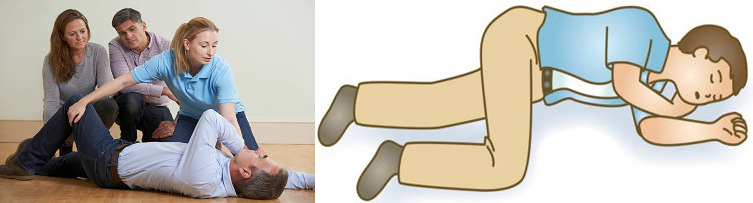
If the person is unconscious but breathing normally and has no injuries, they should be placed on their side.
This position is called the recovery position.
The recovery position helps maintain an open airway because the tongue and any saliva or secretions will not fall back into the throat.
If an unconscious person lies on their back, their tongue or fluids could block the airway. The recovery position prevents this.
RECOVERY POSITION FOR ADULTS
Take the arm nearest to you and place it at a right angle (about 90°) to the person’s body, with the elbow slightly bent.
Take the arm farthest from you and place the back of the hand against the person’s cheek that is facing you, holding it in place.
Bend the knee farthest from you by placing your hand behind it and raising it so that the leg forms a right angle.
Gently roll the person towards you onto their side, using the bent knee as leverage.
Tilt the head slightly back and lift the chin to open the airway, confirming that the person is still breathing (using the Head-Tilt, Chin-Lift Maneuver).
Remember: even in the recovery position, the Head-Tilt, Chin-Lift Maneuver should be used to maintain an open airway.
RECOVERY POSITION FOR BABIES
“Cradle the baby on their side in your arms, keeping the head gently tilted back.”

The recovery position is for people who are unconscious, breathing, and do not have any head, neck, or back injuries.