
Parts Of A Motor Vehicle
A motor vehicle is made up of several main parts that work together to ensure safe movement, control, and comfort.
These parts can be grouped into five major systems:
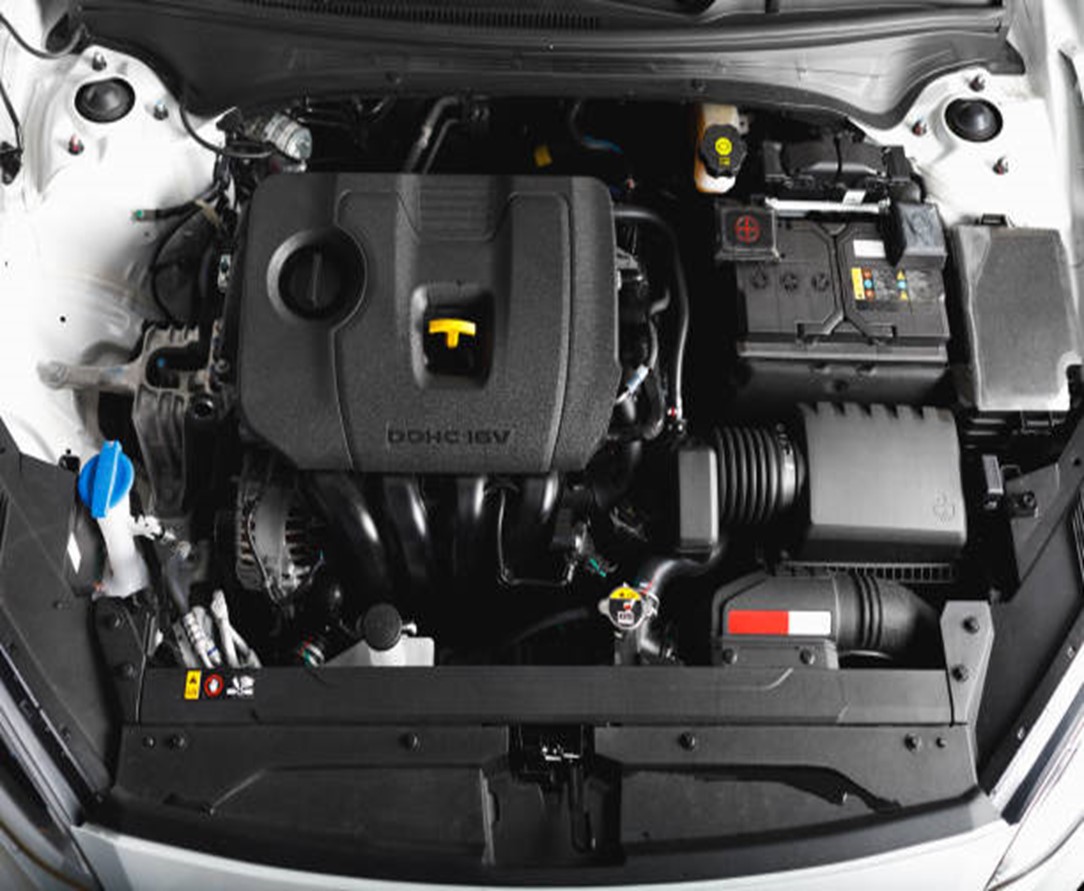
THE ENGINE SYSTEM
The engine is the heart of the vehicle.
It converts fuel into power to move the vehicle.
Main components include:
Cylinder block – the main part of the engine.
Pistons – move up and down to create power.
Valves – control the flow of air and fuel.
Spark plugs – ignite the fuel mixture.
Crankshaft – converts piston movement into rotation.
THE TRANSMISSION SYSTEM
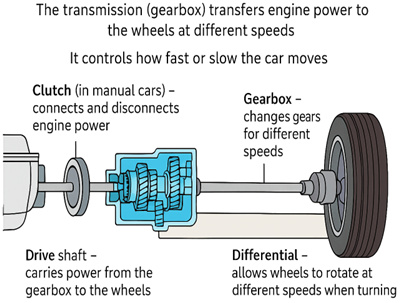
The transmission (gearbox) transfers engine power to the wheels at different speeds.
It controls how fast or slow the car moves.
Main parts include:
Clutch (in manual cars) – connects and disconnects engine power.
Gearbox – changes gears for different speeds.
Drive shaft – carries power from the gearbox to the wheels.
Differential – allows wheels to rotate at different speeds
THE SUSPENSION AND STEERING SYSTEM
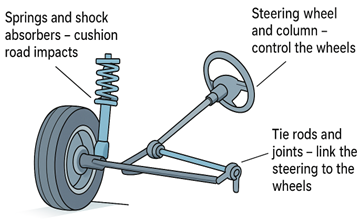
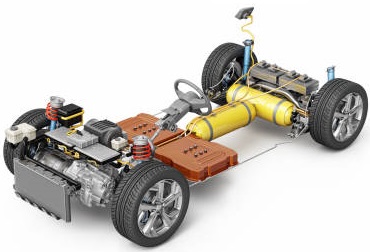
The suspension system supports the vehicle, absorbs shocks, and keeps the tires in contact with the road.
The steering system allows the driver to control direction.
Main parts include: Springs and shock absorbers – cushion road impacts. Steering wheel and column – control the wheels.
Tie rods and joints – link the steering to the wheels.
THE BRAKING SYSTEM
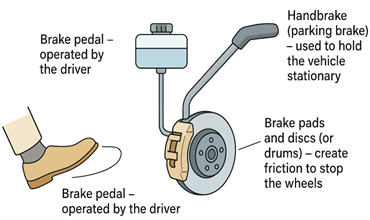
The braking system helps slow down or stop the vehicle safely.
Main parts include:
Brake pedal – operated by the driver.
Brake fluid – transfers pressure.
Brake pads and discs (or drums) – create friction to stop the wheels.
Handbrake (parking brake) – used to hold the vehicle stationary.
THE ELECTRICAL SYSTEM
Provides power for starting, lighting, and accessories.
Main components include:
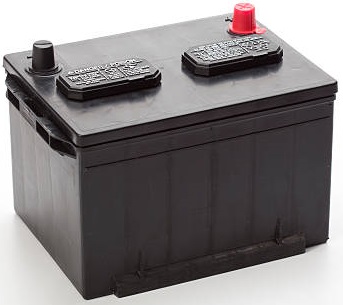
Battery – stores and supplies electricity.
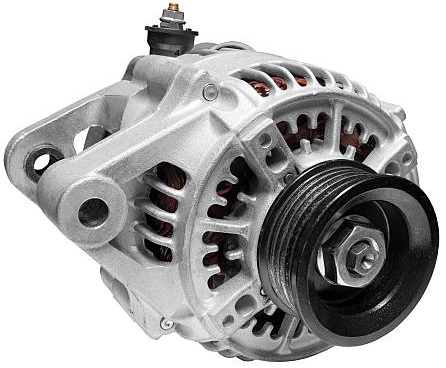
Alternator – charges the battery while the engine runs.
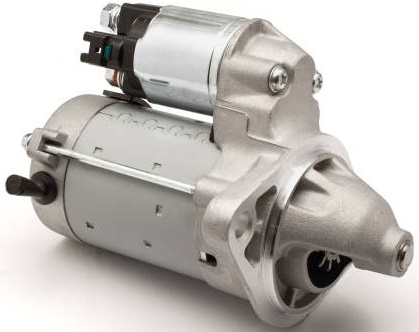
Starter motor – starts the engine.
Lights, indicators, wipers, and dashboard instruments.
THE BODY AND CHASSIS
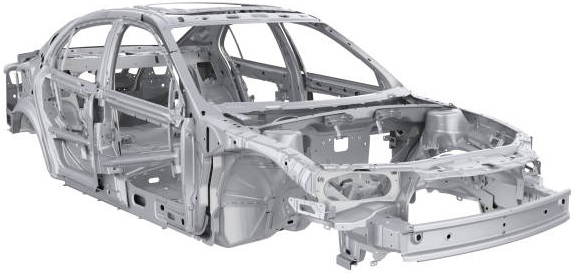
The body forms the outer shell of the vehicle (roof, doors, windows).
The chassis is the strong metal frame that supports all components of the car.
Together, they give the vehicle its shape, strength, and safety.
STEERING WHEEL
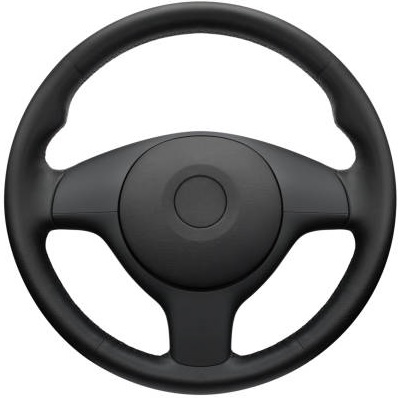
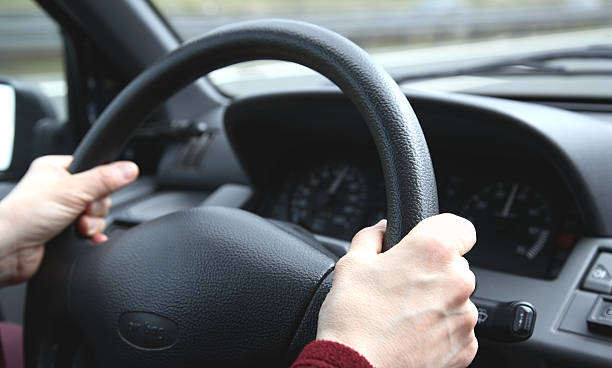
The steering wheel is one of the most important control parts of a motor vehicle.
It allows the driver to control the direction of the vehicle safely and accurately.
The steering wheel should have a full range of motion i.e.; it should be able to turn at 360 degrees. It should also effectively turn the front wheels.
FUNCTION OF THE STEERING WHEEL
It connects to the steering system, which turns the vehicle’s front wheels.
When the driver rotates the steering wheel:
The steering column transfers movement to the rack and pinion (or steering box).
This movement causes the front wheels to turn left or right.
The steering wheel gives the driver control, stability, and safety while driving.
TYPES OF STEERING SYSTEMS
MANUAL STEERING
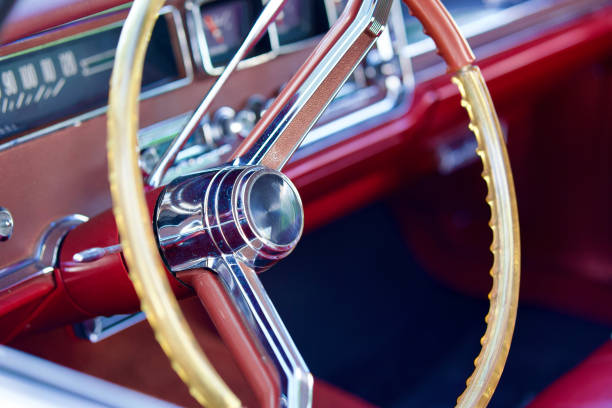
The driver uses more effort to turn the wheel.
Found in older or smaller vehicles.
POWER (HYDRAULIC OR ELECTRIC) STEERING
Uses hydraulic or electric pressure to make steering easier and smoother.
Common in most modern vehicles.
CORRECT STEERING POSITIONS
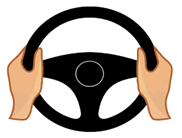
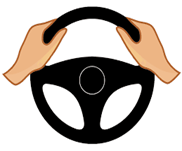
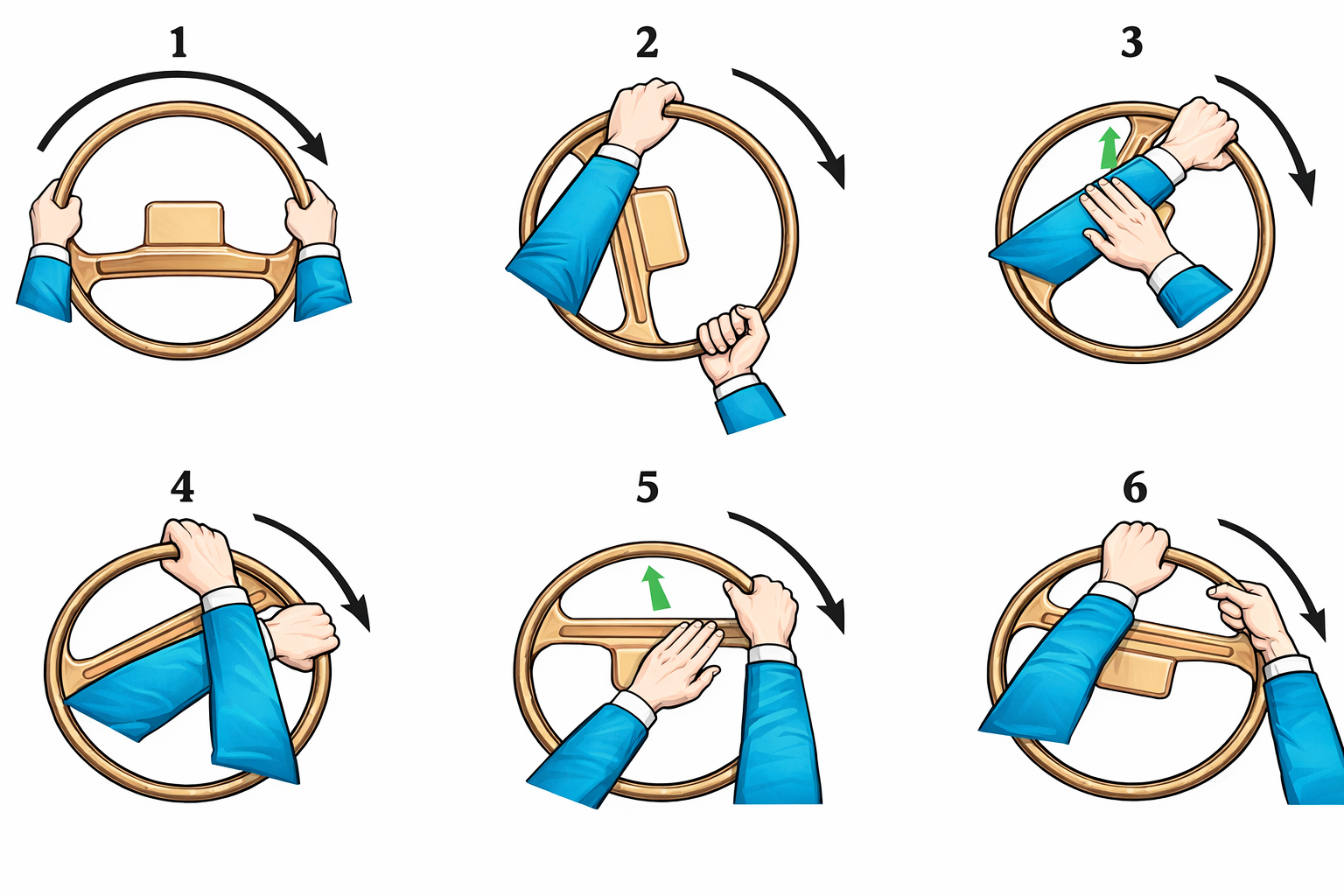
10 and 2 o’clock position: Traditional method for strong control on older vehicles.
9 and 3 o’clock position: Recommended for modern vehicles with airbags, safer in case of airbag deployment.
Both hands should always be on the wheel except when changing gears or signaling.
STEERING TECHNIQUES
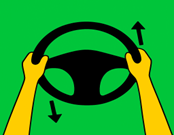
PULL–PUSH METHOD (RECOMMENDED)
One hand pulls the wheel down while the other pushes up in the opposite direction.
Keeps both hands on the wheel for better control.
HAND-OVER-HAND METHOD
One hand cross over the other when turning sharply.
Used for tight corners or three-point turns.
SAFETY TIPS
Avoid holding the wheel with one hand or crossing your arms when turning sharply.
Keep your thumbs outside the wheel spokes to prevent injury in case of impact.
Do not grip the wheel too tightly; use a firm but relaxed hold.
Always straighten the steering wheel after a turn to stay in your lane.
Never rest your arm on the window or gear lever while steering.
COMMON STEERING PROBLEMS
Steering vibration: May indicate unbalanced tires or worn suspension parts.
Stiff steering: May be due to low power steering fluid or mechanical issues.
Loose steering: May mean worn steering joints or alignment problems.
CHECKING THE STEERING SYSTEM
Before driving, always inspect your steering wheel and system to make sure it is working properly.
Faulty steering can cause loss of control and serious accidents.
STEPS TO INSPECT THE STEERING SYSTEM
VISUAL CHECK (ENGINE OFF)
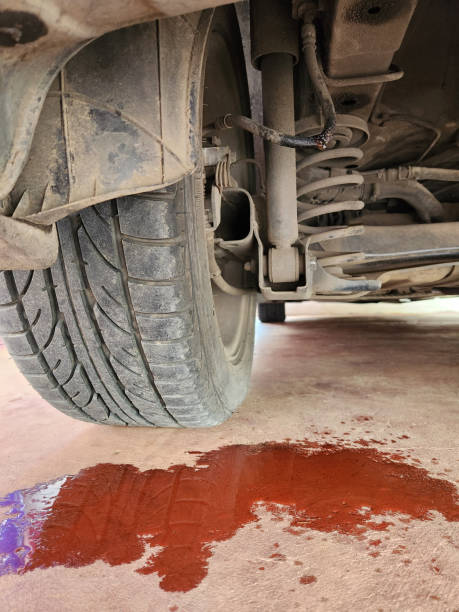
Look for leaks under the vehicle, especially power steering fluid (reddish or clear oil).
Check that the steering wheel and column are not damaged or loose.
Ensure no unusual noise comes from the steering area when turning the wheel gently side to side.
STEERING FREE PLAY TEST
With the engine off, turn the wheel slightly left and right.
The steering wheel should not move more than 2 inches (5 cm) without the tires also moving.
Excessive free play means the steering linkage or joints may be worn and need repair.
START THE ENGINE (POWER STEERING CHECK)
Turn the wheel left and right, it should feel smooth and easy.
If it feels stiff or jerky, there may be low fluid or air in the system.
Listen for squealing or whining noises, these could mean the power steering belt or pump is faulty.
CHECK POWER STEERING FLUID (IF APPLICABLE)
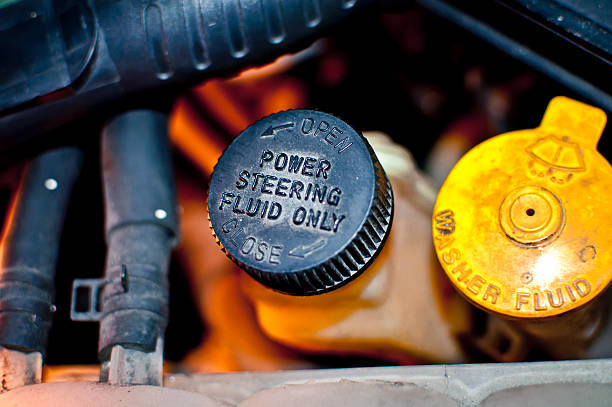
Open the hood and locate the power steering reservoir.
The fluid level should be between the MIN and MAX marks.
If low, refill with the manufacturer-recommended steering fluid only.
Never overfill, as this may cause leaks or pump damage.
DURING DRIVING
Make sure the vehicle does not pull to one side when driving straight.
If the steering feels vibrating, stiff, or uneven, stop and have the system inspected by a mechanic.
Never drive with stiff, loose, or noisy steering.
Always report and fix any unusual feel, sound, or resistance in the steering.
A properly working steering system keeps the vehicle stable, predictable, and safe on the road.
GEARS
A gear is a part of the vehicle’s transmission system that helps control the speed and power of the engine.
It allows the driver to move the vehicle smoothly under different road and load conditions.
PURPOSE OF GEARS
To help the vehicle start moving from rest.
To adjust speed according to road conditions.
To increase pulling power when climbing hills.
To allow smooth driving on flat roads or high speeds.
To enable reversing the vehicle.
To disconnect the engine from the wheels (Neutral).
TYPES OF GEARS
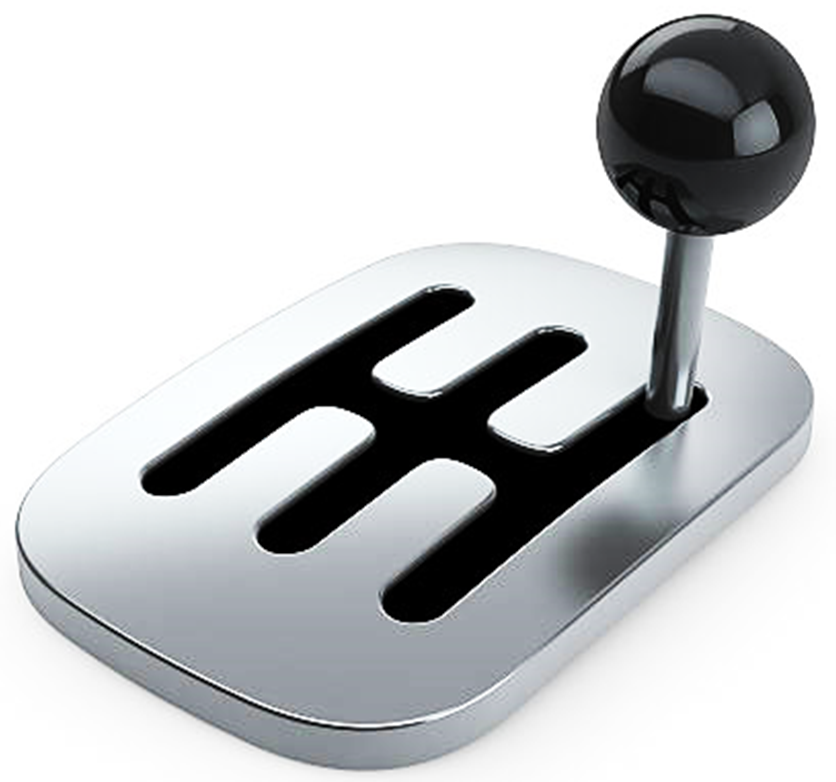
Manual transmission – The driver changes gears manually using the gear lever and clutch pedal.
Automatic transmission – The vehicle changes gears automatically depending on speed and acceleration.
COMMON GEAR POSITIONS IN MANUAL VEHICLES
NEUTRAL (N)
Disengages power from engine to wheels.
Used when starting the vehicle or idling.
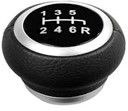
1st Gear – 0–30 km/h: For starting to move and driving at low speeds or uphill.
2nd Gear – 20–50 km/h: For slightly higher speeds, slow traffic, or descending hills.
3rd Gear – 35–70 km/h: For moderate speeds and general driving.
4th Gear – 60 –110 km/h: For higher speeds and smooth driving.
5th Gear – 80–120 km/h: For highway or long-distance driving at stable speeds.
Reverse (R): For moving the vehicle backward.

STEPS FOR CHANGING GEARS (MANUAL VEHICLE)
Release the accelerator slightly.
Press the clutch pedal fully.
Move the gear lever to the desired gear position.
Release the clutch slowly and smoothly.
Press the accelerator gently to continue moving.
Always look at the road, not the gear lever, while shifting gears.

P (Park) – Locks the transmission and prevents the vehicle from moving.
Used when parking or leaving the vehicle.
R (Reverse) – Engages reverse gear to move the vehicle backward. Always come to a complete stop before selecting Reverse.
N (Neutral) – Disengages the engine from the wheels. Used during short idling, pushing the vehicle, or some car wash procedures.
D (Drive) – Normal forward driving. The transmission automatically shifts through all forward gears.
D3 (Drive 3) – Limits the transmission to the first three gears only. Useful for moderate hills, overtaking at lower speeds, or extra engine braking.
2 (Second Gear) – Restricts the transmission to 2nd gear (or 1st and 2nd depending on the vehicle). Used for steep hills, slippery conditions, or when more control is needed.
1 (First Gear) – Locks the transmission in 1st gear only. Provides maximum torque and engine braking for very steep climbs or descents.
L (Low Gear) – Similar to 1 or 2 depending on the car model; keeps the vehicle in low gears. Used for towing, hills, mud, rough terrain, or slow driving requiring high power.
2 or L (Low) – Used when extra power is needed, such as on hills, during towing, or driving slowly on uneven surfaces.
SHIFT LOCK / SHIFT LOCK RELEASE
Shift Lock is a safety feature that prevents the gear lever from moving out of P (Park) unless the brake pedal is pressed.
This stops the car from rolling accidentally.
Shift Lock Release is a small slot/button near the gear lever.
It allows manual override when the car cannot shift out of Park normally.
Used when: the battery is dead, the brake light switch is faulty or you need to move the car without starting it
Insert the key (or a small flat tool) → press down → shift out of Park.
SAFE GEAR USE TIPS
Never change gears without pressing the clutch (manual).
Avoid resting your hand on the gear lever while driving.
Shift gears smoothly to prevent jerking.
Do not coast downhill in Neutral, it reduces control.
Practice matching your gear to your speed and road
BRAKES
A device for arresting or preventing the motion of a mechanism usually by means of friction.
CLUTCH
A clutch is a mechanical device that engages and disengages power transmission especially from driving shaft to drive shaft.
A clutch connects and disconnects two rotating shafts (drive shafts or line shafts).
The main function of clutch is to engage and disengage the engine to transmission, when the driver needs or during shifting of gear.
ACCELERATOR
An Accelerator is a pedal in a vehicle that is pressed down to make the vehicle go faster.
The Accelerator in a car or any vehicle controls the Flow Rate of the fuel into the Combustion Chamber.
The function of an accelerator in a car is to increase the speed of the car.