Dmv Permit Test 58

By Teacher David Global  •  Free

1. At an intersection with a yield sign, you:
A. Must yield the right-of-way to cross traffic that is close enough to cause conflict.
B. Must yield to vehicles only on your right.
C. Should slow down but never stop.
2. Which of these statements is true about large trucks?
A. They take longer to stop than passenger vehicles.
B. They all have air brakes that allow them to stop quickly.
C. They are more maneuverable than passenger vehicles.
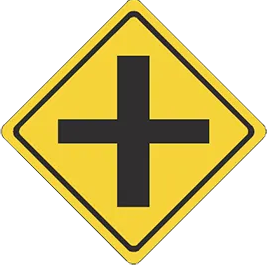
3. This sign shows one type of:
A. Intersection.
B. Road curve.
C. Right turn.
4. You should not start across an intersection if you know you will block the intersection when the light turns red:
A. Under any circumstances.
B. Unless you entered the intersection on a yellow light.
C. Unless you entered the intersection on a green light.
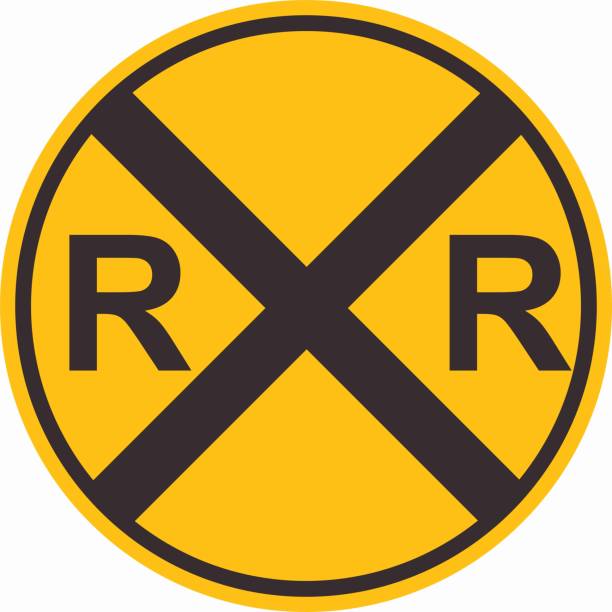
5. This sign means:
A. Stop sign ahead.
B. Railroad crossing ahead.
C. Construction ahead.
6. Double solid yellow line markings down the center of a road indicate that passing is:
A. Allowed from both directions.
B. Allowed only from your direction of travel.
C. Not allowed from either direction.
7. To turn left from a multilane one-way street onto a one-way street, you should start your turn from:
A. Any lane (as long as it is safe).
B. The lane closest to the left curb.
C. The lane in the center of the road.
8. Which of the following statements about blind spots is true?
A. They are eliminated if you have one outside mirror on each side of the vehicle.
B. Large trucks have bigger blind spots than most passenger vehicles.
C. Blind spots can be checked by looking in your rearview mirrors.
9. Drivers turning left must yield to:
A. Oncoming vehicles traveling straight or turning right.
B. Passing cars.
C. No one in particular.
10. If you come upon a severe dust storm, you should:
A. Slow and pull off the road.
B. Turn on your high beams.
C. Maintain your speed and stay in your lane.
11. Excessive speed:
A. Saves time so you can get to your destination more quickly.
B. Helps you maneuver around obstacles.
C. Increases the likelihood of serious bodily injury and death.
12. When a school bus is stopped on the road ahead to load or unload children, you must:
A. Come to a complete stop until all the children have left the bus.
B. Come to a complete stop until the red lights stop flashing and the stop arm is withdrawn.
C. Change lanes, drive slowly, and pass the bus cautiously.
13. When passing another vehicle, it is safe to return to your lane if you:
A. Cannot see the vehicle directly to your right.
B. See the vehicle’s headlights in your rearview mirror.
C. Have passed the other vehicle’s front bumper.
14. When parking next to a curb, you should use your turn signals:
A. Only when pulling away from the curb.
B. When pulling next to, but not away from, the curb.
C. When pulling next to or away from the curb.
15. Drivers are required to obey instructions from:
A. Security guards patrolling parking lots.
B. Other drivers whose vehicles are broken down on the roadway.
C. Flaggers (signal persons) at construction sites.
16. To see vehicles in your blind spots, you should check:
A. The inside rearview mirror.
B. The outside rearview mirror.
C. Over your shoulders.
17. When a car with bright headlights drives toward you at night, you should:
A. Stop until the other driver passes.
B. Look below their headlights.
C. Glance toward the right edge of your lane.
18. Prior to entering a curve:
A. Activate your turn signal.
B. Reduce your speed.
C. Brake hard.
19. If you are driving in another driver's blind spot, you should:
A. Move forward or drop back so the other driver can see you.
B. Keep a steady pace.
C. Stay in the driver's blind spot.
20. When passing another vehicle:
A. Pass the vehicle as slowly as possible.
B. Drive at the same speed as the vehicle you are passing.
C. Pass the vehicle as safely and as quickly as possible.
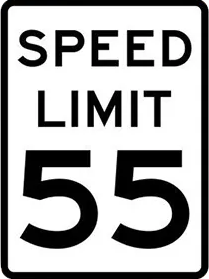
21. This road sign means:
A. You must travel through the intersection at the posted speed limit.
B. The maximum speed limit under ideal conditions is 55 mph.
C. You must not travel below the speed indicated.
22. After passing a vehicle, it is safe to return to your driving lane when:
A. The driver you passed signals for you to return to your lane.
B. You signal your intention for three seconds.
C. You see the headlights of the passed vehicle in your rearview mirror.
23. If the rear of your vehicle is skidding to the left, you should:
A. Not turn your steering wheel.
B. Turn your steering wheel to the left to correct the skid.
C. Turn your steering wheel to the right to correct the skid.
24. It is very foggy. You should slow down and:
A. Turn on your emergency flashers.
B. Turn your lights to their high beam setting.
C. Turn your lights to their low beam setting.
25. A flashing red traffic light at an intersection means:
A. The same thing as a yield sign.
B. The light is about to turn green.
C. The same thing as a stop sign.
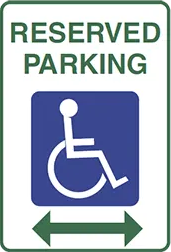
26. This sign means:
A. Reserved parking for persons with disabilities.
B. Slow-moving vehicle.
C. No U-turn.
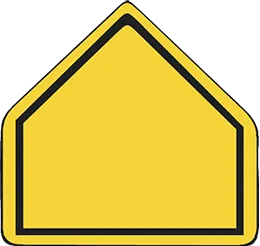
27. A pentagon-shaped sign is a:
A. Stop sign.
B. Regulatory sign.
C. School zone or school crossing sign.
28. Driving more slowly than surrounding traffic is:
A. A good idea if the weather is bad.
B. Appropriate if you don’t know the speed limit.
C. Often a hazard because other drivers may become frustrated and try to pass you.
29. If you are driving near a large commercial vehicle, you should:
A. Follow the large vehicle closely to reduce wind drag on your vehicle.
B. Avoid driving beside it for long stretches of time.
C. Drive on its right side when on curves and hills.
30. When driving behind another vehicle at night, you should:
A. Keep your headlights on the low beam setting.
B. Use your high beam headlights until you are within 10 feet of the vehicle ahead.
C. Use your high beam headlights.