Bicyclists and motorcyclists have the same rights and responsibilities on the road as other drivers.

However, because they are much less protected in the event of a collision, careful drivers must take extra precautions when driving near them.
CYCLISTS
Cyclists are slow-moving, harder to see, and extremely vulnerable in collisions, requiring special care from drivers.

Cyclists have the same right to the roadway as motor vehicles.
Be prepared for a cyclist to move into traffic to turn left, pass another bicycle, or avoid obstacles.
Passing a bicycle: Wait until there is enough space to pass safely without crowding the cyclist.
When parked, check for cyclists and motorcyclists before opening your car door.

Know cyclist hand signals:
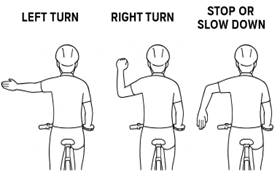
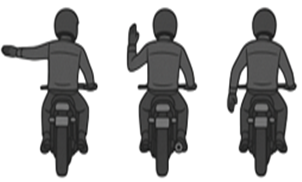
Left hand out: Left turn
Left hand down: Stop
Left hand up or right hand out: Right turn
Be extra vigilant for cyclists on winding rural roads, often used by recreational riders.
MOTORCYCLISTS
Motorcycles are lighter than cars and can stop much faster, making their behavior less predictable.
When driving behind a motorcycle, maintain a minimum four-second following distance to give extra reaction time in case of sudden stops or falls.

Check blind spots carefully when changing lanes or turning, motorcycles are small and easily missed.
In some areas, motorcycles can legally travel between lanes (“lane splitting”), especially in heavy, slow-moving traffic. Be alert for motorcycles moving quickly between lanes.

Motorcyclists are more affected by road hazards like potholes, slippery surfaces, or debris, which can cause sudden changes in speed or direction.
Always anticipate that a motorcyclist may change position suddenly to avoid hazards.
KEY TAKEAWAY
Drive patiently and attentively around cyclists and motorcyclists.
Give space, anticipate movements, and stay alert for their smaller size and sudden maneuvers.
Protecting these vulnerable road users reduces accidents and promotes safer traffic for everyone.