Dmv Permit Test 4

By Teacher David Global  •  Free

1. When approaching a person who is crossing the street while using a white cane or guide dog, you should:
A. Stop until the person is well away from your path of travel.
B. Honk your horn as you proceed past them.
C. Carefully drive around them.
2. To enter a gap in highway traffic:
A. Watch only the vehicles behind the gap.
B. Check behind you, then watch the vehicle ahead.
C. Speed up and let the other vehicles make way.
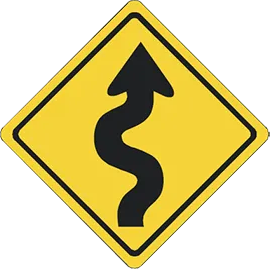
3. This sign tells you that:
A. No turns are allowed on the road.
B. The road narrows ahead.
C. There is a series of curves ahead.
4. If a truck or bus is making a right turn where you also need to make a right turn, you should:
A. Quickly turn before the truck or bus is able to.
B. Wait until the truck or bus turns before you turn.
C. Squeeze between the truck or bus and the curb.
5. If you are feeling fatigued while driving, you should:
A. Increase your speed to reach your destination more quickly.
B. Increase the volume of your radio.
C. Find a safe parking area to take a short nap.
6. If you are driving and a tire suddenly goes flat, you should:
A. Rapidly pump the brake pedal several times.
B. Slow down gradually and not brake.
C. Press down on the brake pedal as hard as you can.
7. When you are behind a motorcycle, you should:
A. Be ready to use your horn.
B. Drive more slowly.
C. Allow a larger following distance.
8. When driving in fog, it is best to drive with:
A. High beam headlights.
B. Low beam headlights.
C. Four-way flashers.
9. As you enter into a roundabout, you should slow down and:
A. Yield to any crossing pedestrians and bicyclists.
B. Yield to any car already within the roundabout.
C. Both of the above.
10. You may be able to identify an aggressive driver by:
A. Their erratic and improper lane changes.
B. The number of passengers in their car.
C. Their tendency to drive slowly.
11. Which of the following blocks the smooth flow of traffic?
A. Slowing down to look at collision scene.
B. Avoiding unnecessary lane changes.
C. Using public transportation instead of your vehicle.
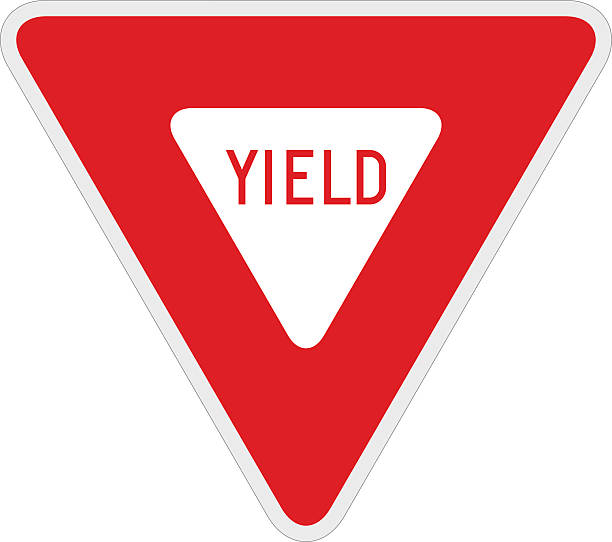
12. This sign is a:
A. Yield sign.
B. School crossing sign.
C. Stop sign.
13. What should a driver do when approaching a traffic control signal that is not in operation?
A. Come to a full stop and yield the right-of-way before entering the intersection.
B. If the intersection is clear, the driver does not need to stop.
C. Drive quickly through the intersection to get out of the way of other vehicles.
13. What should a driver do when approaching a traffic control signal that is not in operation?
A. Come to a full stop and yield the right-of-way before entering the intersection.
B. If the intersection is clear, the driver does not need to stop.
C. Drive quickly through the intersection to get out of the way of other vehicles.
14. If your vehicle has a mechanical problem:
A. Signal and pull into the slow lane.
B. Stop in your lane and put on your hazard lights.
C. Put on your hazard lights and pull off the road.
15. When should drivers yield the right-of-way to pedestrians in a crosswalk?
A. Only if the pedestrians first wave to the driver.
B. Only if the pedestrians are not texting while walking.
C. At all times.
16. To prevent yourself from becoming an aggressive driver:
A. Relax and concentrate on driving.
B. Drive above the posted speed limit.
C. Tailgate the driver in front of you.
17. If you are getting tired while driving, you should:
A. Stop and either get rest or change drivers.
B. Drink something with caffeine.
C. Open a window.
18. If you have had several beers, the effects of alcohol will be reduced only by:
A. Taking a cold shower.
B. Waiting several hours.
C. Drinking several cups of coffee.
19. Before you change lanes, you should check your mirrors and:
A. Never look over your right shoulder.
B. Always slow down in your traffic lane.
C. Glance over your shoulder.
20. Which of the following statements is true?
A. Driving too slowly is not an unsafe practice.
B. Driving too slowly on certain highways can be dangerous.
C. The speed at which you drive a vehicle does not affect safety.
21. Which of these statements is true about changing lanes?
A. You only need to turn and look over your right shoulder for lane changes to the right or left.
B. Look over your right shoulder for a right lane change and your left shoulder for a left lane change.
C. Vehicles with two outside mirrors do not have blind spots.
22. If you drive more slowly than the flow of traffic, you will most likely:
A. Interfere with traffic and receive a ticket.
B. Improve traffic flow.
C. Demonstrate defensive driving techniques.
23. If you drive faster than other vehicles on a road with one lane moving in each direction and continually pass the other cars, you will:
A. Get you to your destination much more quickly and safely.
B. Increase your chances of an collision.
C. Help prevent traffic congestion.
24. Before returning to your original lane after passing another vehicle, you should:
A. Beep your horn.
B. See both headlights of the passed vehicle in your rearview mirror.
C. Flash your headlights.
25. If your vehicle has a two-part safety belt system, you should:
A. Use only the lap belt.
B. Use both the lap and shoulder belts.
C. Use only the shoulder belt.
26. Reaction time is slower after:
A. Drinking alcohol.
B. Sleeping.
C. Working hard.
27. In a vehicle equipped with airbags, the safest place for children age 12 and under to ride is in:
A. The front seat.
B. The back seat.
C. The bed of a pick-up truck.
28. If you are driving and you see animals standing near the roadway:
A. Speed up to scare them away.
B. Slow down and proceed with caution.
C. Quickly swerve into the next lane.
29. Changing from one lane to another is best done:
A. Quickly and often.
B. When a car is in your blind spot.
C. Gradually and carefully.
30. Drivers are required to obey instructions from:
A. Security guards patrolling parking lots.
B. Other drivers whose vehicles are broken down on the roadway.
C. Flaggers (signal persons) at construction sites.
31. What is a potential effect of taking a prescription drug while drinking alcohol?
A. There will likely be no effect.
B. It will make you more alert.
C. It can make you unfit to drive.
32. Before you enter an intersection, you should look to your:
A. Left, your right, then your left again.
B. Right.
C. Left.
33. Various traffic control devices in construction and maintenance work areas are the color:
A. Red.
B. Orange.
C. Yellow.
34. Which of the following is not a safe driving practice when driving on the interstate?
A. Slower traffic must keep to the right.
B. Change lanes without signaling.
C. If you miss your exit, you must go to the next exit.
35. The driver ahead of you stops at a crosswalk. What should you do?
A. Cautiously pass the vehicle at 10 mph or slower.
B. Stop, proceeding only when all the pedestrians have crossed.
C. Change lanes, look carefully, and pass the stopped vehicle.
36. Adjust your rearview and side mirrors:
A. Before you start driving.
B. Whenever you need to use them.
C. Before you get into the car.
37. If pedestrians are illegally crossing in the middle of the street instead of in a crosswalk, you:
A. Must stop for them.
B. Do not have to stop for them.
C. Should honk your horn at them.
38. What message will be found on a red octagon-shaped sign?
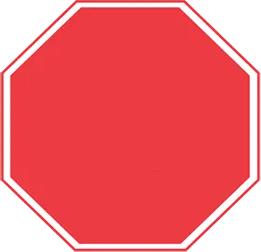
A. Do not enter.
B. One-way.
C. Stop.
39. Drivers turning left must yield to:
A. Overtaking cars.
B. Oncoming cars.
C. No one.
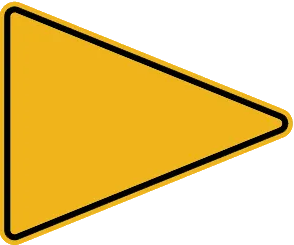
40. This sign means:
A. No passing zone.
B. Slow-moving vehicle.
C. Two-way traffic.