Dmv Permit Test 27

By Teacher David Global  •  Free

1. The consumption of alcohol while taking drugs can:
A. Decrease the effects of the drugs and alcohol.
B. Increase the effects of both the drugs and alcohol.
C. Help cure your illness.
D. Improve your driving ability.
2. A telltale sign of a drunk driver is:
A. They are weaving between lanes.
B. They are driving more slowly than the normal traffic flow.
C. They are making quick and sudden stops.
D. All of the above.
3. When stopped for a traffic violation or at an equipment check, the driver must produce:
A. Proof of insurance.
B. Their license.
C. Proof of registration.
D. All of the above.
4. When approaching a steady green traffic light, drivers should:
A. Continue driving, unless there are vehicles or pedestrians already in the intersection.
B. Stop if a police officer is nearby.
C. Treat the intersection like a four-way stop.
D. Come to a complete stop before proceeding.
5. Drivers who eat and drink while driving:
A. Make no driving errors.
B. Have trouble driving slowly.
C. Are better drivers because they are not hungry.
D. Have trouble controlling their vehicles.
6. Stress can affect your driving by:
A. Lowing your ability to focus on driving.
B. Decreasing your chances of an accident.
C. Causing you to fall asleep at the wheel.
D. Making you more aware of others around you.
7. Seat belts are most effective when they are worn by:
A. The person driving the car.
B. Passengers when they are on a long drive.
C. All occupants of a car being driven on an expressway.
D. All occupants of a car every time the car is driven.
8. Consuming which of the following substances may impair your ability to drive safely and may result in an arrest for driving under the influence of intoxicants (DUII)?
A. Beer, wine, and other liquor
B. Controlled substances, such as illegal drugs or prescription medicines
C. Inhalants, such as glue or paint
D. All of the above
9. What should you do when an emergency vehicle is approaching while displaying flashing red or blue lights?
A. See if you can reach your destination before the emergency vehicle catches up to you.
B. Continue driving but try to stay out of its way.
C. Pull over to the side of the road and come to a complete stop.
D. Stop in the middle of an intersection.
10. Hand or mechanical turn signals must be given:
A. Only in city traffic.
B. Only when there is traffic to the rear of your vehicle.
C. Only when there is other traffic in sight.
D. When changing lanes or turning.
11. Signaling your intentions before turning, changing lanes, or driving away from a curb:
A. Is necessary only if other traffic is present.
B. Is a good driving habit and is required by law.
C. Is necessary only during the maneuver, not before.
D. Is not necessary if the maneuver is done slowly.
12. You are driving when it begins to rain. You should:
A. Drive faster than surrounding traffic.
B. Drive at the maximum posted speed limit.
C. Slow down.
D. Drive closely behind the vehicle in front of you.
13. Smoking and preparing to smoke while driving:
A. Do not affect driving abilities.
B. Help maintain driver alertness.
C. Are distracting activities.
D. Are not distracting activities.
14. You experience an incident at work that has left you feeling angry. When you get to your car, you should:
A. Play the radio loudly so you won’t think about it.
B. Drive fast on the interstate to let off steam.
C. Take a few minutes to cool off before you begin your drive home.
D. Stop at your favorite bar and have a few drinks before driving home.
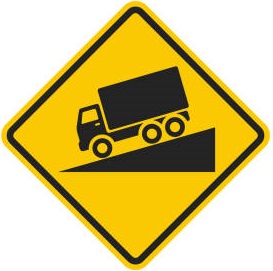
15. This sign means:
A. Trucks under 18,000 lbs. allowed.
B. Hill ahead.
C. Truck stop ahead.
D. No trucks allowed.
16. An orange sign with black letters means:
A. Stop.
B. No turning.
C. Roadwork is present.
D. Yield.
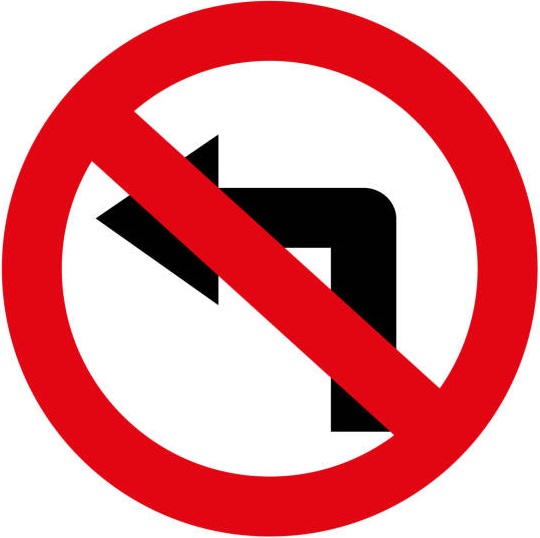
17. This sign means:
A. No left turn.
B. Flagger ahead.
C. Two-way left turn.
D. Turn right or go through.
18. The best way to avoid hydroplaning is to:
A. Keep your tires properly maintained.
B. Slow down when roads are wet or slushy.
C. Watch out for standing water or puddles.
D. All of the above.
19. An intersection has no traffic signs or signals. You arrive at the same time as a vehicle to your right. You should:
A. Speed up and get through the intersection.
B. Slow down and yield to the vehicle on your right.
C. Drive into the intersection and make the other vehicle stop.
D. Honk your horn and drive through the intersection.
20. What might happen when alcohol is combined with another drug?
A. The effects of the alcohol and the drug may both be increased.
B. Nothing will happen.
C. The effects of the alcohol and the drug may both be reduced.
D. The effects of only the alcohol may be reduced.