Dmv Permit Test 38

By Teacher David Global  •  Free

1. A diamond-shaped sign:
A. Warns of existing or possible hazards.
B. Alerts drivers to school zones.
C. Alerts drivers to public recreation areas.
D. Alerts drivers to upcoming food and gas locations.
2. You encounter a school bus stopped with its lights flashing on the opposite side of a divided highway. You should:
A. Proceed at a decreased speed.
B. Stop until the lights stop flashing.
C. Turn around.
D. Continue driving.
3. How long does it take, on average, to cancel the effects of one 12-ounce can of beer?
A. 30 minutes
B. One hour
C. 45 minutes
D. 15 minutes
4. If you are driving in another driver's blind spot, you should:
A. Move forward or drop back so the other driver can see you.
B. Keep a steady pace.
C. Stay in the driver's blind spot.
D. Honk to let them know you are there.
5. Downward-facing triangular signs:
A. Indicate school zones.
B. Tell drivers to yield.
C. Indicate construction zones.
D. Indicate railroad crossings.
6. You may drive around a railroad crossing gate that is being lowered:
A. Under no circumstances.
B. If the gate is malfunctioning.
C. If you have plenty of time to cross before the gate is fully lowered.
D. If there is a shoulder to the right of the gate.
7. You may avoid the risks of alcohol-related crashes by:
A. Deciding before you start drinking that you are not going to drive.
B. Simply saying, "No thanks, I'm driving," if someone offers you a drink.
C. Calling a taxi.
D. Doing any of the above.
8. Refusal to submit to chemical testing when requested by law enforcement:
A. Will add 10 points against your license.
B. Will result in revocation of your license.
C. Is a criminal offense.
D. All of the above.
9. Stop lines are solid white lines painted across traffic lanes:
A. In curves and on hills.
B. Next to churches and schools.
C. At intersections and pedestrian crosswalks.
D. On freeway on-ramps.
10. What kinds of drugs can affect your driving ability?
A. Allergy medicine
B. Marijuana
C. Cold remedies
D. All of these choices
11. Which of the following statements about railroad crossings is true?
A. It is against the law to go around lowered gates at a crossing.
B. You must stop at a railroad crossing when directed to do so by a flagger.
C. Not all railroad crossings are equipped with flashing red signals and gates.
D. All of the above.
12. When approaching an accident scene, you should:
A. Keep your attention on your driving.
B. Keep moving.
C. Stop if you are involved or if emergency help has not yet arrived.
D. All of the above.
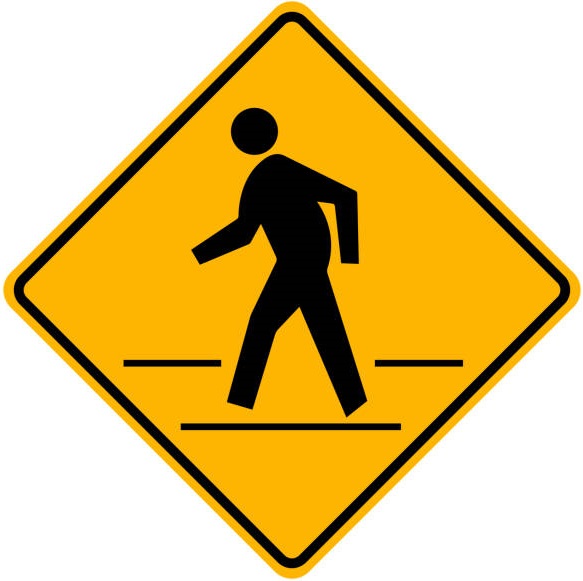
13. This sign means:
A. School ahead.
B. School crossing.
C. Pedestrian crossing.
D. Construction workers on or near the roadway.
14. You must stop for a school bus:
A. That is parked on the shoulder of the road with no one in it.
B. When it approaches you, even if its lights are not flashing.
C. If you are both driving on a two-lane highway and its red lights are flashing.
D. Whenever the driver waves at you.
15. When passing other vehicles:
A. Check your mirrors and blind spots.
B. Honk your horn at least three times.
C. Re-enter your lane within 10 feet of the passed vehicle.
D. There is no need to signal.
16. When is it illegal to drive below the speed limit?
A. When driving slowly disrupts the normal flow of traffic
B. When in heavy traffic in a construction zone
C. Only when driving in rural areas.
D. When driving under adverse weather conditions
17. When driving in fog:
A. Use your parking lights.
B. Use your low beams.
C. Use your high beams.
D. It makes no difference which lights you use.
18. To avoid collisions with vehicles in your blind spots, you should:
A. Quickly turn your head to see if your blind spot is clear before changing lanes.
B. Adjust your rearview mirrors every few minutes.
C. Honk your horn right before turning or changing lanes.
D. None of the above.
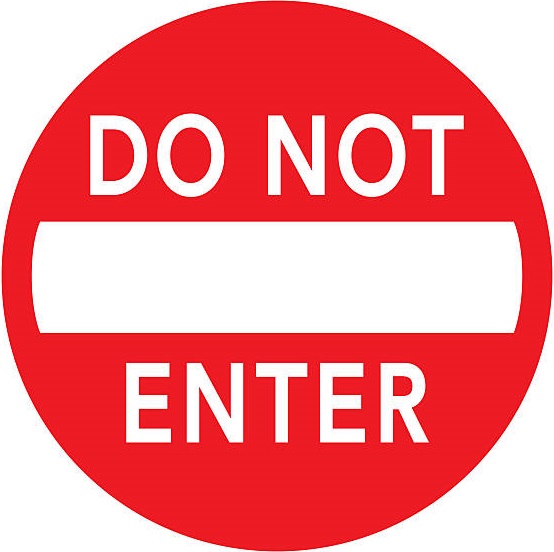
19. This sign means:
A. Stop.
B. No U-turn.
C. Yield.
D. Do not enter.
20. Under ideal driving conditions, maintain a following distance of at least:
A. Four seconds.
B. 500 feet.
C. Six seconds.
D. 300 yards.