Dmv Permit Test 34

By Teacher David Global  •  Free

1. An arrow painted on the pavement means:
A. Drivers in the proper lane may make the movement indicated by the arrow, if they choose to do so.
B. Drivers in the proper lane must make the movement indicated by the arrow, but only if traffic lights are not working.
C. Drivers in the proper lane must always come to a complete stop before making the movement indicated by the arrow.
D. Drivers in the proper lane must make the movement indicated by the arrow while following directions indicated by traffic signals.
2. A solid white line down the center of a two-lane road indicates:
A. Lanes are moving in opposite directions and drivers are not permitted to pass.
B. Lanes are moving in opposite directions and drivers are permitted to pass when it is safe to do so.
C. Lanes are moving in the same direction and drivers are not permitted to pass.
D. Lanes are moving in the same direction and drivers are permitted to pass when it is safe to do so.
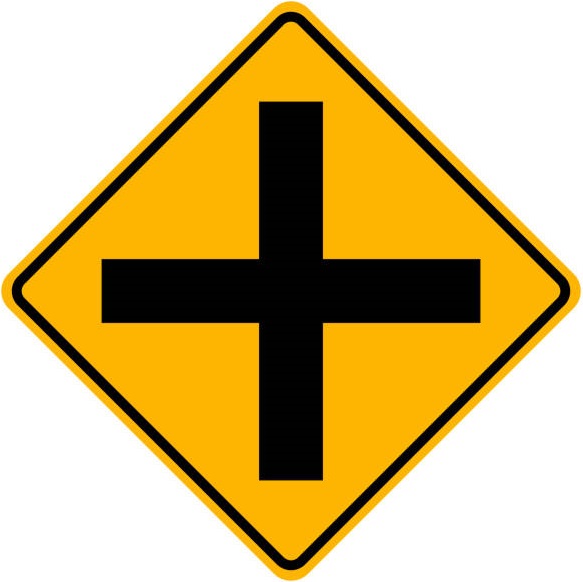
3. This sign means:
A. All traffic must turn.
B. Turn right at the intersection.
C. Parking area ahead.
D. Crossroad ahead. Watch for traffic.
4. While backing, you should:
A. Rely only on your mirrors.
B. Flash your lights.
C. Open your door to see if it is safe to proceed.
D. Turn your head and look through the rear window.
5. ____ limit your concentration, perception, judgment, and memory.
A. Only a blood alcohol level greater than the legal limit can
B. Alcohol does not
C. Even the smallest amount of alcohol can
D. Only a blood alcohol level greater than 0.05 percent can
6. Distracted driving is:
A. Very uncommon.
B. Extremely risky behavior.
C. Nothing to be concerned about.
D. No less safe than driving under any other conditions.
7. A driver approaching a flashing red traffic signal must:
A. Slow down at the light.
B. Drive carefully without stopping.
C. Merge to the right.
D. Stop before entering the intersection.
8. An orange triangle with red borders positioned on the rear of a vehicle means the vehicle is:
A. A slow-moving vehicle.
B. Broken.
C. A school bus.
D. An ambulance.
9. Before turning left, it is important to:
A. Sound your horn.
B. Yield to oncoming vehicles.
C. Swing to the right side of your lane.
D. Wait until oncoming traffic has a red light.
10. When faced with an oncoming car to the left and a bicyclist to the right, you should:
A. Pull onto the shoulder.
B. Split the difference.
C. Let the car pass and then pass the bike.
D. Pass the bike quickly.
11. If an aggressive driver cuts you off, you should:
A. Call the police immediately.
B. Stay calm and move out of the aggressive driver's way.
C. Flash your vehicle's lights to let the aggressive driver know he is wrong.
D. Use a driving action of your own to get back at the aggressive driver.
12. Round signs indicate:
A. No passing zones.
B. School zones.
C. Upcoming railroad crossings.
D. Hospitals.
13. An approaching emergency vehicle is using its siren. You must:
A. Slow down and drive with caution.
B. Stop where you are.
C. Drive to the nearest intersection and stop.
D. Pull over to the side of the road and stop, clear of any intersection.
14. When riding in a vehicle, small children:
A. May be safely held by a strong adult.
B. Will be safe if they are standing on the floor in the back of the vehicle.
C. Will not be hurt in an accident because they are small.
D. Must never be allowed to ride while standing in the vehicle.
15. Work zone signs mean:
A. It is summer.
B. You must immediately stop and back up.
C. Less than ideal conditions are present for driving.
D. You should drive faster to get out of the work zone.
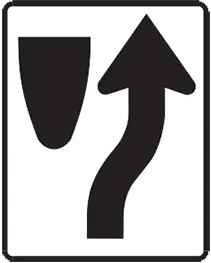
16. This sign means:
A. Keep right.
B. Low shoulder.
C. No parking at any time.
D. Lane ends.
17. You are presumed to be driving under the influence if your blood alcohol concentration (BAC) is a minimum of:
A. 0.02 percent.
B. 0.1 percent.
C. 0.05 percent.
D. 0.08 percent.
18. If you stop at a railroad crossing with more than one track:
A. Wait to proceed until you have a clear view of all tracks.
B. Stop on the first railroad track and watch for another train.
C. Go through as soon as the train passes.
D. Go through when one of the tracks is free.
19. If another car is in danger of hitting you, you should:
A. Sound your horn.
B. Wave your arms.
C. Use your emergency lights.
D. Flash your headlights.
20. If your vehicle begins to skid, you should:
A. Overcorrect.
B. Turn your steering wheel into traffic.
C. Turn your steering wheel in the direction of the skid.
D. Release the steering wheel.