Dmv Permit Test 25

By Teacher David Global  •  Free

1. This road sign means:
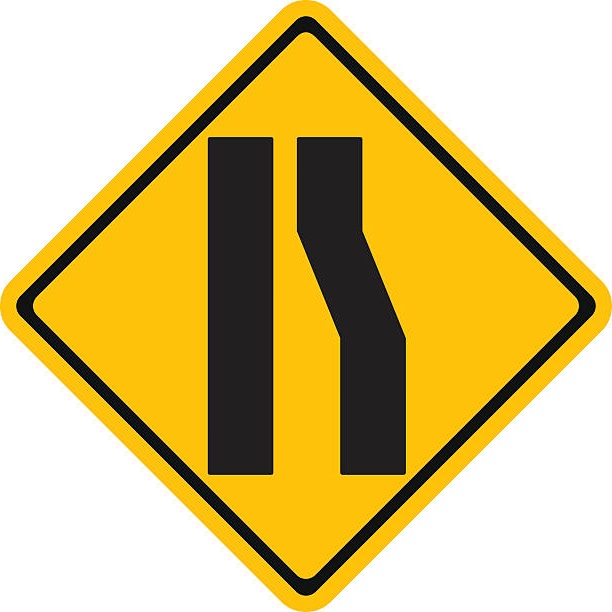
A. Road widens ahead.
B. Lane reduction; the right lane ends soon.
C. Highway entrance ramp ahead.
D. Lane reduction; the left lane ends soon.
2. Before changing lanes on a multilane highway, you should:
A. Sound your horn.
B. Turn on your headlights.
C. Reduce your speed.
D. Check your mirrors and blind spots.
3. What is the only way to reduce your blood alcohol concentration (BAC)?
A. Drink coffee.
B. Exercise.
C. Allow your body time to get rid of the alcohol.
D. Take a cold shower.
4. A pedestrian is crossing the street in a crosswalk. You must:
A. Honk your horn to alert them to your presence.
B. Slow down and move around the pedestrian at a slow pace.
C. Stop until the pedestrian is out of the crosswalk.
D. Accelerate as soon as the pedestrian has moved past your car.
5. You are borrowing an unfamiliar vehicle from a friend. You should:
A. Not put too much thought into it because all vehicles are the same.
B. Hide from your friend that you are unfamiliar with the vehicle.
C. Disregard any obvious defects to avoid embarrassing your friend.
D. Take a few minutes before driving to familiarize yourself with the operation and location of all the vehicle’s equipment.
6. Alcohol causes:
A. Loss of concentration.
B. Poor coordination.
C. Slower judgment.
D. All of the above.
7. You are driving on the roadway and hear a siren behind you. You should:
A. Stop where you are.
B. Pull over to the right and stop.
C. Speed up to get out of the way.
D. Slow down.
8. On a freeway, ou realize you missed your turn or exit. You should:
A. Make the turn quickly from your lane of travel.
B. Stop and back up.
C. Continue driving until you reach the next turn, exit, or other location where you can safely turn around.
D. Signal other drivers to stop so you can turn.
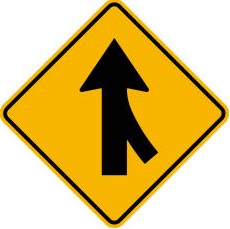
9. This sign means:
A. Merging traffic.
B. Multiple turns.
C. Lane shifting.
D. Do not block intersection.
10. If an officer is directing traffic at a working traffic light, drivers should:
A. Follow the directions indicated by the traffic light.
B. Follow the directions given by the officer.
C. Honk at the officer.
D. Check to see what the cars next to them are doing.
11. If you miss your exit on an interstate expressway:
A. Stop and make a U-turn.
B. Get off at the next exit and come back to the exit you missed.
C. Roll down your window and ask the driver next to you for help.
D. Back up on the highway.
12. A person who drives much slower than the speed limit:
A. Is a very safe driver.
B. Always has the right-of-way.
C. Should not let following cars pass.
D. May create a dangerous driving environment.
13. A driver entering public traffic from a driveway or private road:
A. Has the right-of-way.
B. Should yield to drivers already on the public road.
C. May force their way into traffic.
D. Can assume that other drivers will change lanes to make room.
14. When in a travel lane on the roadway:
A. You may stop to drop off passengers.
B. You may stop to look up an address.
C. You may make a U-turn or back up if you get on the wrong entrance ramp of the freeway.
D. Don’t stop for any reason. Keep moving until you can safely pull off the road.
15. When approaching a railroad crossing, you should:
A. Slow down.
B. Look for a train.
C. Be ready to stop.
D. All of the above.
16. You must stop at a railroad crossing when:
A. Directed to do so by a flagger.
B. It is controlled by a stop sign.
C. Flashing red signals and gates are present and operating.
D. All of the above.
17. When turning right from a two-way street onto another two-way street, you should:
A. Signal your intention to turn for at least 100 feet.
B. Look out the right side of the windshield for pedestrians.
C. Get into right lane well ahead of the turn.
D. All of these.
18. The most effective safety restraints in a traffic crash are:
A. Only a lap and shoulder belt.
B. Only an airbag.
C. Both a lap/shoulder belt and an airbag.
D. No safety restraints.
19. When driving on major highways:
A. Stay alert.
B. Keep your eyes moving.
C. Be ready to react to road hazards.
D. All of the above.
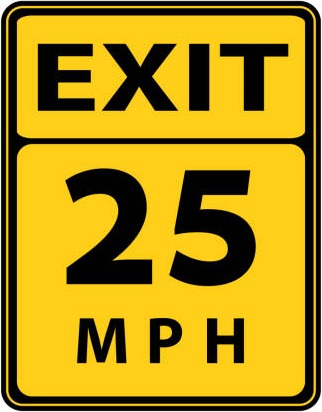
20. This road sign indicates:
A. The maximum safe speed for a residential area.
B. The maximum safe speed for an expressway exit.
C. The maximum safe speed for an expressway entrance.
D. The maximum safe speed for a work zone.