Dmv Permit Test 3

By Teacher David Global  •  Free

1. What can you do to reduce road rage?
A. Always signal your intention when changing lanes.
B. Talk on your cell phone while driving.
C. Use your horn frequently.
2. What is the only medically proven method of removing alcohol or other drug combinations from your system?
A. Breathe in some fresh air.
B. Give your body time.
C. Drink coffee.
3. Before changing lanes or attempting to pass another vehicle, you should:
A. Check your blind spots and mirrors.
B. Signal your intention before changing lanes.
C. All of the above.
4. A distraction when driving is:
A. Anything that causes evasive action while driving.
B. Anything that takes your attention away from driving.
C. Anything that causes you to pay more attention to driving.
5. Temporary signs used in construction and maintenance work areas:
A. Have a red background with green writing.
B. Have an orange background with black writing.
C. Have a yellow background with blue writing.
6. To improve visibility lowered by rain or fog, drivers should use their:
A. Low beam headlights.
B. High beam headlights.
C. Parking lights.
7. Double solid yellow line markings down the center of a road indicate that passing is:
A. Allowed from both directions.
B. Allowed only from your direction of travel.
C. Not allowed from either direction.
8. When double solid yellow lines separate lanes of traffic:
A. Passing is permitted from the left.
B. Passing is permitted from the right.
C. Passing is not permitted from either direction.
9. Children on bicycles should be given extra space by motor vehicle operators because:
A. They do not have the same physical reflexes as adults.
B. They are smaller and more difficult to see than adults.
C. Both of the above.
10. A red traffic signal indicates that approaching drivers should:
A. Come to a complete stop.
B. Increase their speed to quickly clear the intersection.
C. Continue driving through the intersection without stopping.
11. A pedestrian starts to cross the street after the "Don't Walk" signal begins to flash. The pedestrian is in the middle of the street when your signal light changes to green. You should:
A. Proceed if you have the right-of-way.
B. Proceed if the pedestrian is not in your lane.
C. Wait until the pedestrian crosses the street before proceeding.
12. You must yield to a pedestrian using a white cane or guide dog:
A. Only when the guide dog is leading the person across the street.
B. At all times.
C. Only if a crossing guard is present.
13. You are required to stop your vehicle:
A. At any intersection where a police officer orders you to stop.
B. Where there is a red traffic light.
C. Both of the above.
14. When driving on gravel or dirt roads:
A. Your tires grip the road better than when you are driving on pavement.
B. Your tires do not have as much traction as they do on pavement, so you must slow down.
C. Visibility is better than on pavement.
15. Which of the following substances can affect the ability to drive?
A. Tranquilizers, marijuana, and sedatives.
B. Cough syrups and cold tablets containing codeine or antihistamines.
C. All of the above.
16. You must obey instructions from school crossing guards:
A. At all times.
B. Only during school hours.
C. Unless you do not see any children present.
17. When you are facing a green light and there are pedestrians in the intersection:
A. You must yield the right-of-way to pedestrians.
B. You have the right-of-way over pedestrians.
C. Pedestrians must wait for you to cross.
18. You are merging onto an interstate highway. You should:
A. Select a safe gap and merge into the lane of traffic.
B. Merge across two lanes at once.
C. Always stop before entering the highway.
19. If you have an argument with another person and you are angry, you should:
A. Loudly play the radio while driving so you won’t think about your argument.
B. Take a few minutes to cool off before driving.
C. Drive on the interstate to let off steam.
20. If you encounter an aggressive driver, you should:
A. Challenge them.
B. Get out of their way.
C. Speed up.
21. When driving in work zones, you should:
A. Increase your speed to get through the zone as quickly as possible.
B. Reduce your speed and be prepared to stop suddenly.
C. Maintain your normal speed the whole way through the zone.
22. Remove all snow, frost, and ice from:
A. Just the windshield.
B. All windows.
C. Just the windshield and passenger window.
23. Which of the following driving skills are affected by the use of alcohol and/or drugs?
A. Alertness and concentration.
B. Reaction time and coordination.
C. All of the above.
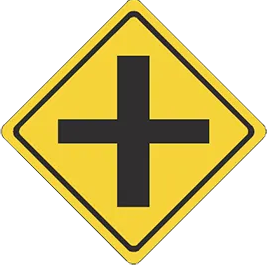
24. This sign shows one type of:
A. Intersection.
B. Road curve.
C. Right turn.
25. When passing a large truck, you should:
A. Re-enter your original lane and immediately slow down.
B. Give the truck plenty of space before re-entering the lane.
C. Re-enter the lane whenever you feel like it.
26. This sign means:
A. Slow-moving vehicle.
B. Road construction/maintenance area.
C. Traffic signal ahead.
27. A solid yellow line on your side of the centerline means:
A. Reduce your speed.
B. Traffic light ahead.
C. Do not pass.
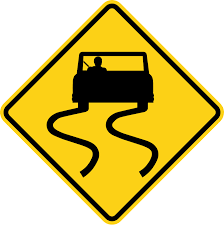
28. This sign means:
A. Slippery when wet.
B. Stop sign ahead.
C. No U-turn.
29. A curb painted red means:
A. Loading zone.
B. The area is reserved for picking up or dropping off passengers.
C. No parking, standing, or stopping.
30. What is the purpose of rumble strips?
A. They alert drivers to potential tire problems.
B. They test a vehicle's shock absorbers.
C. Through vibration and sound, they alert inattentive drivers to the fact that their vehicles have left the travel lane.
31. Which of the following statements is correct?
A. Use your left foot to brake.
B. Use your right foot for both braking and accelerating your vehicle.
C. You should always brake abruptly to ensure stopping.
32. If it is necessary to make an emergency stop while driving on an interstate, you should:
A. Sound your horn at passing cars to get their attention.
B. Get out of your vehicle and flag down the first vehicle that passes.
C. Pull off the road, turn on your emergency flashers, and stay in your vehicle, if you can.
33. If you find that the roadway ahead of you is flooded, you should:
A. Slam on the brakes.
B. Not drive through the flooded area. Turn around and find another route.
C. Drive only in the center of the roadway.
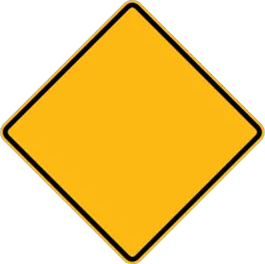
34. This sign is a:
A. Service sign.
B. Regulatory sign.
C. Warning sign.
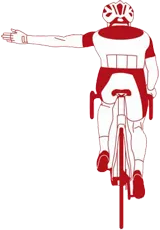
35. This bicyclist is signaling:
A. A left turn.
B. An upcoming stop.
C. A right turn.
36. Before stopping your vehicle at a traffic signal or sign, you should:
A. Press down hard on the accelerator.
B. Check your mirrors for surrounding traffic.
C. Set the parking brake.
37. Just like alcohol and other drugs, drowsiness can:
A. Help you to be a better driver.
B. Make you feel better.
C. Impair your judgment.
38. What is a crosswalk?
A. Another name for a four-way intersection.
B. An area designated for road construction workers.
C. The area where pedestrians may cross the roadway.
39. Should you always drive more slowly than other traffic?
A. No, you can block traffic when you drive too slowly.
B. Yes, it is a good defensive driving technique.
C. Yes, it is always safer than driving faster than other traffic.
40. When taking any medicine, you should:
A. Consult your doctor about the effects before driving.
B. Have someone follow you home.
C. Keep your window open and drive more slowly.