Dmv Permit Test 24

By Teacher David Global  •  Free

1. You are crossing an intersection and an emergency vehicle is approaching while using its siren and flashing lights. You should:
A. Stop immediately in the intersection until it passes.
B. Pull to the right of the intersection and stop.
C. Continue through the intersection, pull to the right, and stop.
2. When parking your vehicle on any hill:
A. One of your rear wheels should touch the curb.
B. Use your parking brake and leave the vehicle in "park."
C. Your front wheels should be parallel to the road, if there is no curb.
3. Drivers using windshield wipers in rain, snow, or sleet should also:
A. Honk intermittently to alert other drivers to the lowered visibility.
B. Use their high beam headlights.
C. Use their low beam headlights.
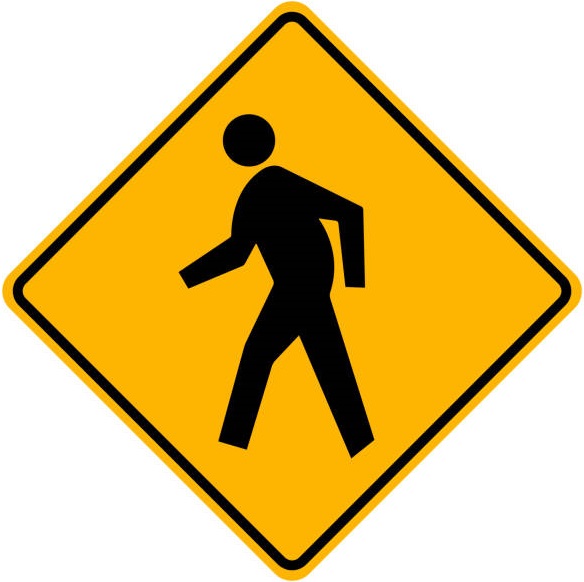
4. This road sign means:
A. Pedestrian crossing.
B. School crossing.
C. Jogging trail.
5. When changing lanes, you should never:
A. Cross the centerline in an intersection.
B. Check your blind spots by looking over your left or right shoulder.
C. Check for other drivers moving into the same lane.
6. If you are facing a green traffic light but the intersection ahead is blocked by traffic, you should:
A. Turn left and find another route.
B. Stay out of the intersection until traffic clears.
C. Follow the other vehicles and enter the intersection.
7. You drive defensively when you:
A. Put one car length between you and the car ahead.
B. Look only at the car in front of you while driving.
C. Keep your eyes moving to look for possible hazards.
8. You exit the freeway on a ramp that curves downhill. You should:
A. Slow to a safe speed before the curve.
B. Slow to the posted speed limit for the freeway.
C. Wait until you have entered the curve to begin braking.
9. If you approach a flashing red traffic light, you:

A. Are traveling in the wrong direction.
B. Must treat the intersection as if it is controlled by a stop sign.
C. May not proceed until it changes to green.
10. When driving on a slippery surface, such as snow or ice:
A. Shift to a low gear before going down steep hills.
B. Maintain traction by following other vehicles closely.
C. Pump your brakes to keep them from freezing.
11. When driving in fog, rain, or snow, use:
A. Low beams.
B. High beams.
C. Fog lights only.
12. Increase your following distance when driving behind a large vehicle:
A. To better see around the sides of the vehicle.
B. Because other drivers tend to pull behind large vehicles before trying to pass them.
C. Because following too closely will get you caught in the vehicle's slipstream.
13. Which lane must you be in before making a left turn from a one-way street?
A. The lane nearest the left curb.
B. The lane nearest the center of the street.
C. The lane nearest the right curb.
14. When preparing to make a left turn from a two-way street, you should drive:
A. Near the right-hand side of the road.
B. Near the centerline.
C. On the left of the centerline.
15. A dashed yellow line down the center of a two-lane road indicates that:
A. Lanes are moving in opposite directions and drivers are not permitted to pass.
B. Lanes are moving in opposite directions and drivers are permitted to pass.
C. Lanes are moving in the same direction and drivers are not permitted to pass.
16. When you see a flashing yellow light at an intersection, you should:
A. Yield to all traffic before crossing the intersection.
B. Stop, then enter the intersection when it is safe to do so.
C. Slow down and cross the intersection carefully.
17. You are on the freeway and traffic is merging into your lane. You should:
A. Make room for the merging traffic, if possible.
B. Assert your right-of-way by driving faster.
C. Always maintain your position.
18. Accruing ____ points on your license within a two-year period will result in suspension of your license for one year.
A. 18 to 20
B. 21 to 23
C. 24 or more
19. Before backing your vehicle, you should:
A. Walk completely around the vehicle to be sure no person or obstacle is behind it.
B. Look to the front, sides, and rear.
C. Both of the above.
20. Which of these statements is true about driving and taking medications?
A. Most cold medications can make a person drowsy.
B. Over-the-counter medications cannot impair driving ability if taken in the recommended dosages.
C. Medications are safe to take at any time, if prescribed by a doctor.
21. A U-turn is not permitted:
A. In a parking lot.
B. On or near any curve or hill.
C. On a straight roadway with a clear view for 500 feet in both directions.
22. When should you yield your legal right-of-way?
A. Often, even at controlled intersections.
B. Whenever it helps prevent collisions.
C. Never. It confuses other drivers.
23. If the driver of an oncoming vehicle fails to dim their headlights:
A. Look toward the center of the roadway.
B. Look toward the right side of the road.
C. Look straight ahead.
24. Driving more slowly than surrounding traffic is:
A. A good idea if the weather is bad.
B. Appropriate if you don’t know the speed limit.
C. Often a hazard because other drivers may become frustrated and try to pass you.
25. On a green arrow, you must:
A. Yield to any vehicle, bicycle, or pedestrian in the intersection.
B. Yield to pedestrians only in the intersection.
C. Wait four seconds before proceeding.
26. You are driving on a one-way street. You may only turn left onto another one-way street if:
A. You increase your speed before the turn.
B. Traffic on the street moves to the right.
C. Traffic on the street moves to the left.
27. When driving on an interstate, to avoid traffic merging from on-ramps to your right, the best thing to do is to:
A. Change lanes to the left.
B. Slow down.
C. Maintain your speed and position.
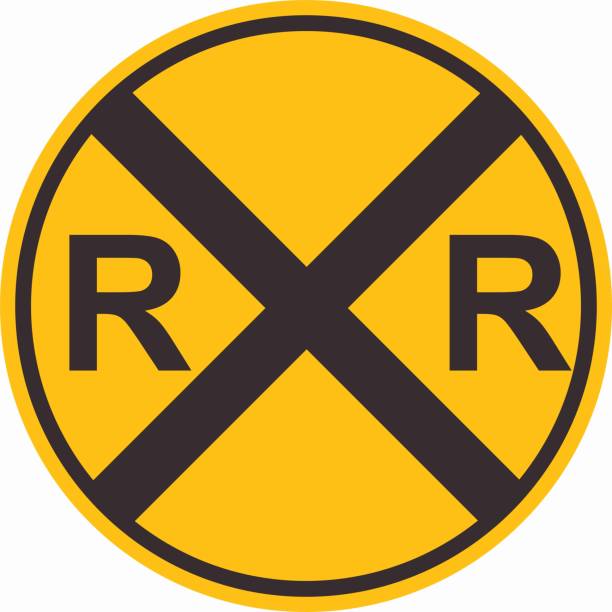
28. This sign means:
A. Stop sign ahead.
B. Railroad crossing ahead.
C. Construction ahead.
29. Extra space in front of a large truck is needed for:
A. Other drivers to merge onto the freeway.
B. The truck driver to stop the vehicle.
C. Other drivers when they want to slow down.
30. A red arrow pointing to the right on a traffic light means you may:
A. Turn in that direction after slowing and checking for traffic.
B. Not turn in that direction until the light turns green.
C. Turn in that direction after you come to a complete stop.
31. If you want to enter the freeway but you don't see a gap in traffic, you should:
A. Maintain your speed and force the other drivers to create a gap.
B. Slow down on the ramp to wait for a gap.
C. Stop at the end of the ramp to wait for a gap.
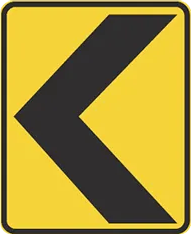
32. This sign means:
A. Change in direction or narrowing of roadway.
B. No right turn.
C. No passing zone.
33. You enter a designated turn lane to make a left turn at an upcoming intersection. There is oncoming traffic. You should:
A. Move to the left of the center lane.
B. Signal before you arrive at the intersection.
C. Turn your front wheels to the left to be prepared to turn.
34. A vehicle suddenly cuts in front of you, creating a hazard. What should you do first?
A. Honk and step on the brake firmly.
B. Take your foot off the gas pedal.
C. Swerve into the lane next to you.
35. This sign means:
A. Road construction/maintenance area.
B. Side road.
C. Railroad ahead.
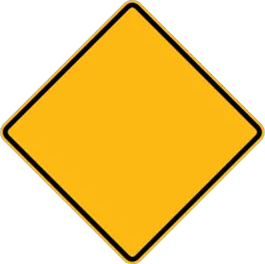
36. A sign with this shape means:
A. Railroad crossing.
B. Warning.
C. Signal ahead.
37. If you are about to be hit from the rear, you should consider each of the following, except for:
A. Applying your brakes.
B. Letting go of the steering wheel.
C. Pressing your head firmly against the head restraint.
38. You are entering a freeway. Check traffic on the freeway by:
A. Using your rearview and side mirrors.
B. Using your rearview mirror.
C. Using your side mirror and looking over your shoulder.
39. You should allow an extra cushion of space:
A. When following a station wagon.
B. When following a driver who cannot see the rear of their vehicle.
C. When following a small passenger car.
40. You are approaching an intersection at the posted speed limit when the signal turns yellow. You should:
A. Slow down and proceed through the intersection without caution.
B. Speed up to cross the intersection before the light turns red.
C. Stop before entering the intersection, if you can do so safely.