Dmv Permit Test 22

By Teacher David Global  •  Free

1. When changing lanes, you should never:
A. Look over your shoulder to check your blind spot.
B. Change lanes abruptly or spontaneously.
C. Check for other vehicles moving into the same lane.
2. You want to park uphill on a two-way road and there is no curb. Which direction do you turn your front wheels?
A. Straight ahead
B. Right, toward the side of the road
C. Left, toward the center of the road
3. A large truck is ahead of you and is turning right onto a street with two lanes in each direction. The truck:
A. May complete its turn in either of the two lanes.
B. May have to swing wide to complete the right turn.
C. Must stay in the right lane at all times while turning.
4. Which of these is a safe driving technique?
A. Using your high beam lights in the fog.
B. Staring at the road ahead of your vehicle.
C. Checking your rearview mirrors frequently.
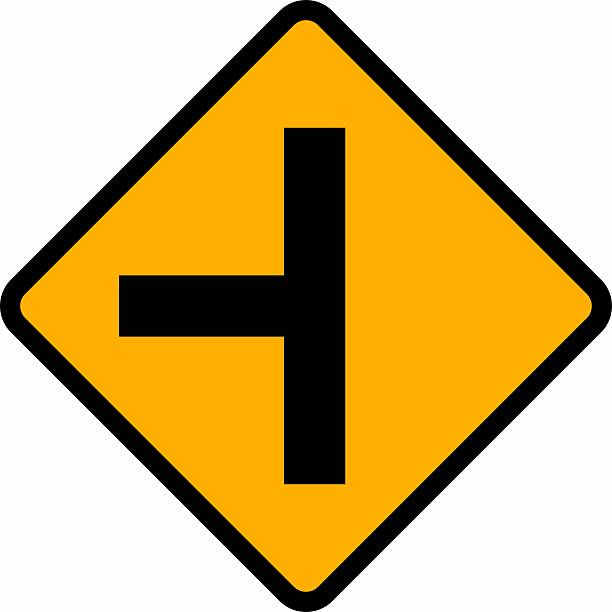
5. This sign means:
A. Side road.
B. Merge.
C. Yield the right-of-way.
6. Drivers turning left must yield to:
A. Oncoming vehicles traveling straight or turning right.
B. Passing cars.
C. No one in particular.
7. Which of the following is most likely to be slippery in cold weather after snow or rain?
A. A hilly, open road
B. A residential road
C. A road in a shaded area
8. Unless otherwise posted, the speed limit on a country paved road is:
A. 20 mph.
B. 30 mph.
C. 45 mph.
9. This sign means you are approaching a railroad crossing that does not have a signal. You should:
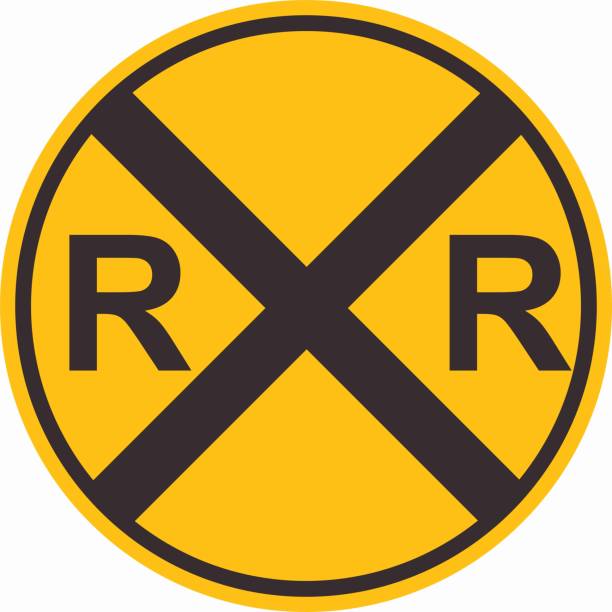
A. Come to a complete stop.
B. Proceed at a consistent speed while looking and listening for approaching trains.
C. Slow down, look both ways, listen for any trains, and be prepared to stop if any trains are nearby.
10. When passing another car, you have enough space to return to the driving lane:
A. If the other driver signals for you to re-enter the lane.
B. If you look over your shoulder and see the passed car behind you.
C. If you can see both of the passed vehicle's headlights in your rearview mirror.
11. When driving at night, you should:
A. Always use your high beams.
B. Look directly at the headlights of an oncoming vehicle.
C. Increase your following distance.
12. In which of the following scenarios should your wheels not be pointed straight ahead?
A. When waiting to make a left turn at a traffic light.
B. When parked on a hill or sloping driveway.
C. When parked on the side of a level roadway where there is no curb.
13. Which of the following factors affect an individual's absorption of alcohol?
A. Weight
B. Height
C. Intelligence
14. If you park facing uphill on a street with a curb, set the parking brake and:
A. Turn the front wheels toward the curb.
B. Turn the front wheels away from the curb.
C. Leave the front wheels straight.
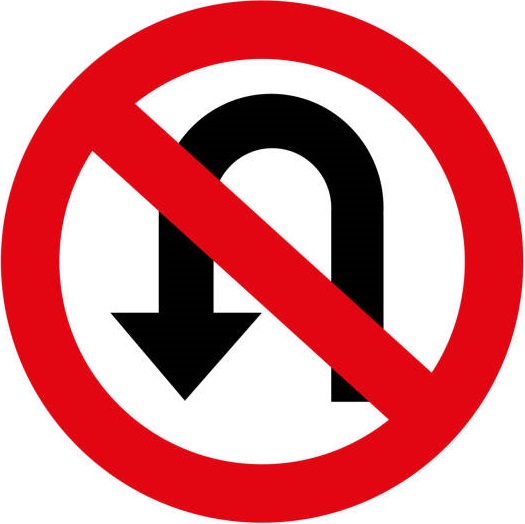
15. This road sign means:
A. Do not enter.
B. No parking.
C. No U-turn.
16. When a school bus is picking up or dropping off children, you must:
A. Stop, regardless of your direction of travel.
B. Stop if you are driving in the same direction.
C. Slow down and be prepared to stop.
17. You reach an intersection with stop signs on all four corners at the same time as the driver on your left. Who has the right-of-way?
A. The driver on your left has the right-of-way.
B. You have the right-of-way.
C. Whoever is signaling to make a turn has the right-of-way.
18. You are approaching an intersection with a steady yellow traffic light. If you have not already entered the intersection, you should:
A. Speed up to beat the red light.
B. Reduce you speed and proceed carefully through the intersection.
C. Come to a safe stop.
19. The first thing that alcohol effects is:
A. Vision.
B. Judgment.
C. Balance.
20. It is legal to make a left turn at a red traffic light after stopping only if:
A. You are traveling on a two-way street and turning onto a two-way street.
B. You are traveling on a one-way street and turning onto another one-way street.
C. You yield to all other traffic at the intersection.
21. If you are being passed in a no passing zone, you should:
A. Pull off the road.
B. Maintain your speed and position.
C. Slow down and let the other driver safely return to the drive lane.
22. Streets and highways are most slippery:
A. When it has been raining hard for several hours.
B. When they are clean and dry.
C. Just after it starts to rain.
23. Having a driver license is a:
A. Right, not a privilege.
B. Privilege, not a right.
C. Requirement.
24. It is dangerous to follow a motorcycle too closely because:
A. They do not follow the same rules as motor vehicles.
B. A motorcycle can stop much faster than a standard vehicle.
C. They brake more slowly than motor vehicles.
25. When driving in fog, you should:
A. Slow down and use your low beam headlights.
B. Slow down and use your high beam headlights.
C. Turn your lights on and off to warn other drivers.
26. If oncoming headlights are blinding you while you are driving at night, you should:
A. Look toward the right edge of the road.
B. Switch your lights to high beams.
C. Turn your lights on and off.
27. You want to park downhill on a two-way road and there is no curb. Which way do you turn your front wheels?
A. Straight ahead
B. Right, toward the side of the road
C. Left, toward the center of the road
28. If a tire blows out, you should:
A. Apply the brake and hold it.
B. Hold the steering wheel tightly and use the brakes lightly.
C. Pull over quickly.
29. To avoid hydroplaning while driving in rainy conditions, you should:
A. Drive at a speed appropriate for ideal conditions.
B. Apply your brakes as soon as your car starts to skid.
C. Slow down.
30. Which of the following road surfaces freezes first?
A. A tunnel
B. An intersection
C. A bridge
31. If you parallel park facing downward on a hill:
A. Turn your wheels sharply toward the side of the road.
B. Turn your wheels away from the side of the road.
C. Keep your wheels straight.
32. If your car begins to skid out of control, you should:
A. Pump the brakes.
B. Apply the brakes lightly.
C. Stay off the brakes.
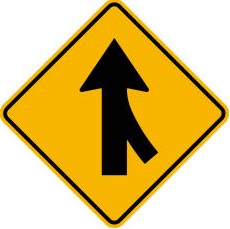
33. This road sign means:
A. Cars in the right lane must slow down.
B. No left turn.
C. Merge.
34. If you are driving a vehicle and are 21 years old or older, you are considered to be driving under the influence when your blood alcohol concentration (BAC) is:
A. 0.02 percent.
B. 0.04 percent.
C. 0.08 percent.
35. If it feels like your tires have lost contact with the surface of the road, you should:
A. Slow down by shifting into a lower gear.
B. Ease your foot off the gas pedal.
C. Slow down by pumping the brakes quickly and firmly.
36. At intersections with a "Yield" sign, you must:
A. Yield the right-of-way to cross traffic that is near enough to cause conflict.
B. Yield the right-of-way only to vehicles on your right.
C. Always slow down and proceed without stopping.
37. When passing, you should move back into the right lane when:
A. You are one vehicle length ahead of the passed vehicle.
B. You can see both headlights of the passed vehicle in your rearview mirror.
C. You are 50 feet ahead of the passed vehicle.
38. When arriving to an uncontrolled intersection at the same time as vehicles to your right and left, you should:
A. Yield the right-of-way to the vehicle on your left.
B. Yield the right-of-way to the vehicle on your right.
C. Wait until there are no vehicles at the intersection before proceeding.
39. Unless otherwise posted, the speed limit in an urban district is:
A. 20 mph.
B. 30 mph.
C. 45 mph.
40. If you are about to be hit from the rear, you should not:
A. Release your seat belt.
B. Brace yourself.
C. Press your head against the head restraint.